Middle East War Escalates: Iran, U.S., Israel Clash as Oil Supply and Shipping Disrupted
As the American-Israeli war on Iran enters its second month, missile strikes, drone attacks, and threats to energy and educational infrastructure spark a humanitarian and economic crisis with worldwide consequences.
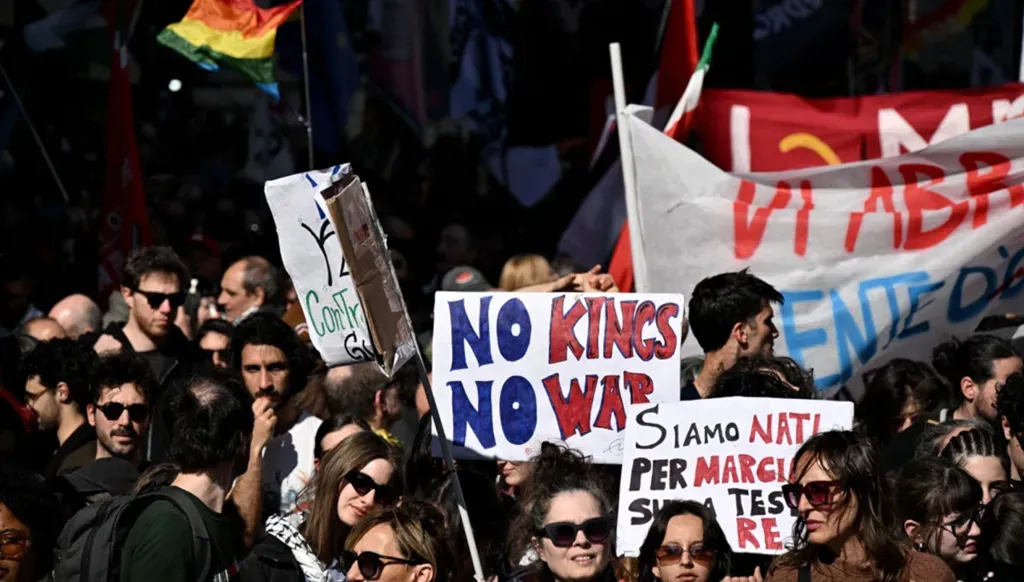
Protest against the Middle East war titled "No Kings" in Rome on March 28, 2026 (AFP)
Entering its second month, the American-Israeli war on Iran has become a devastating war of attrition, following coordinated military strikes on February 28, 2026, with the United States launching Operation 'Epic Fury' and Israel launching Operation 'Lion's Roar.' The air raids targeted missile launch platforms, air defenses, strategic sites, and vital facilities, as well as various military and civilian infrastructures across Iran.
Iran responded with intensive missile and drone strikes, initially targeting U.S. bases in the Gulf countries and later extending to vital, oil-related, and civilian infrastructure. In retaliation for Iranian attacks on U.S. bases in the Gulf and Israeli targets, Washington and Tel Aviv intensified their bombing campaigns across Iran. This military escalation unfolded alongside an economic collapse in Iran and disruptions to global energy supplies, amid Arab and international condemnation and the United Nations’ inability to ease tensions.
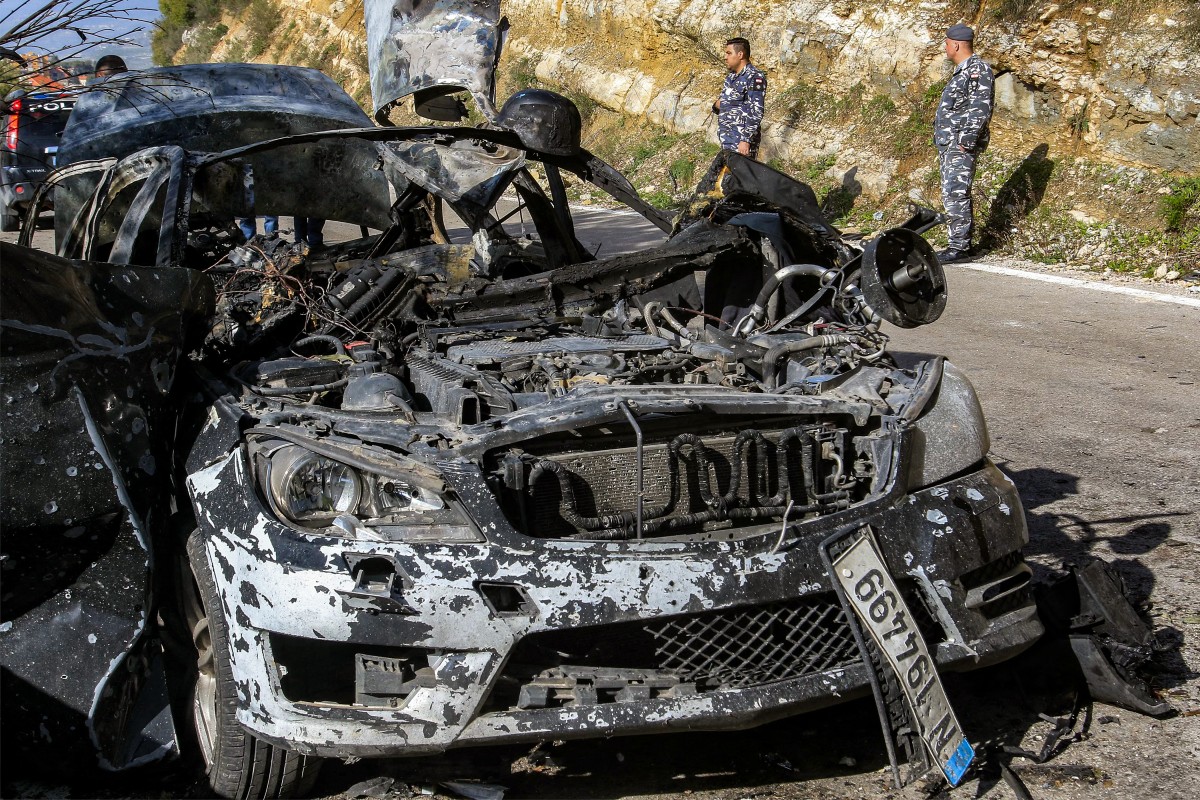
A media crew's car destroyed in an Israeli airstrike in the Jezzine area in southern Lebanon on March 28, 2026 (AFP)
Hezbollah and Iraqi factions
The war spread across multiple frontlines, with Hezbollah and Iraqi factions joining the conflict after the governments of Iraq and Lebanon failed to prevent escalation. On March 2, 2026—just three days after the U.S. and Israeli attacks on Iran and the assassination of Supreme Leader Ali Khamenei—Hezbollah launched six rockets toward Israel and three military drones toward Cyprus. Iraqi factions followed suit, targeting U.S. military and diplomatic sites in Baghdad and Erbil.
Houthis
In recent hours, the conflict has further escalated, with the Houthis officially joining the war yesterday, Saturday, marking one month since its onset. They announced two cruise missile and drone attacks on military sites in southern Israel, while the Yemeni government condemned Yemen being dragged into the conflict.
Military escalation
Israel continued targeting vital infrastructure in Iran, with its warplanes bombing two of the largest steel factories in Isfahan and Khuzestan, along with strikes on the Arak heavy water nuclear facility and other strategic sites such as the Firoz Abad cement plant and various energy and civilian facilities last Friday.
Conversely, Iran intensified its attacks on Israel, causing material and human damage in multiple areas. The assaults included ballistic missiles, suicide drones, and warheads designed to maximize destruction.
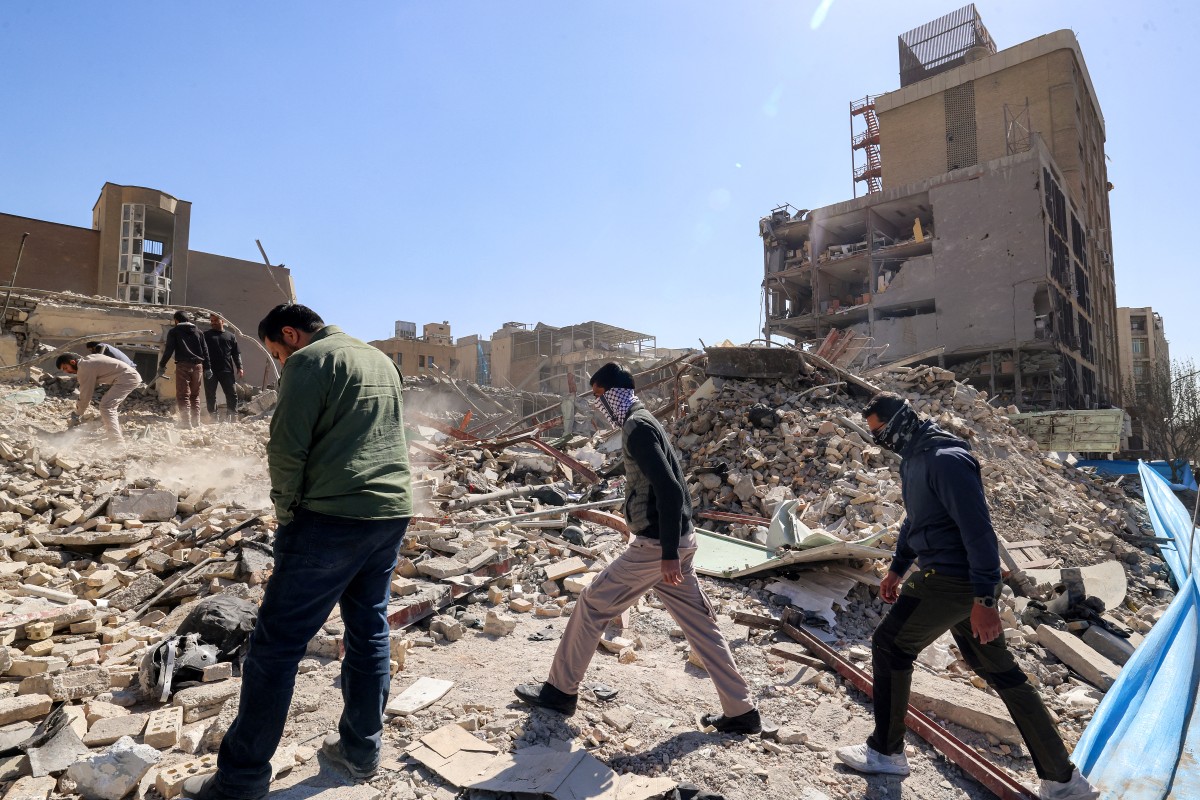
Iranian citizens inspecting the ruins of a collapsed building near Ferdowsi Square in Tehran on March 3, 2026 (AFP)
Strait of Hormuz
The Strait of Hormuz has become a major focus of the conflict, with the Revolutionary Guard targeting container ships and oil tankers passing through, declaring the strait unsafe for any vessel bound for countries supporting attacks on Iran. Meanwhile, the United States is preparing a military operation to forcibly reopen the waterway.
Energy prices have soared to record levels following the halt of oil and gas shipments through the Strait of Hormuz, which handles about 20% of global oil consumption. Brent crude futures currently stand at $105.32 per barrel. The threat to global food security also looms, with UN Secretary-General Antonio Guterres warning last Wednesday that a fertilizer shortage could heighten the risk of famine, particularly as the global planting season approaches.
Kharg Island
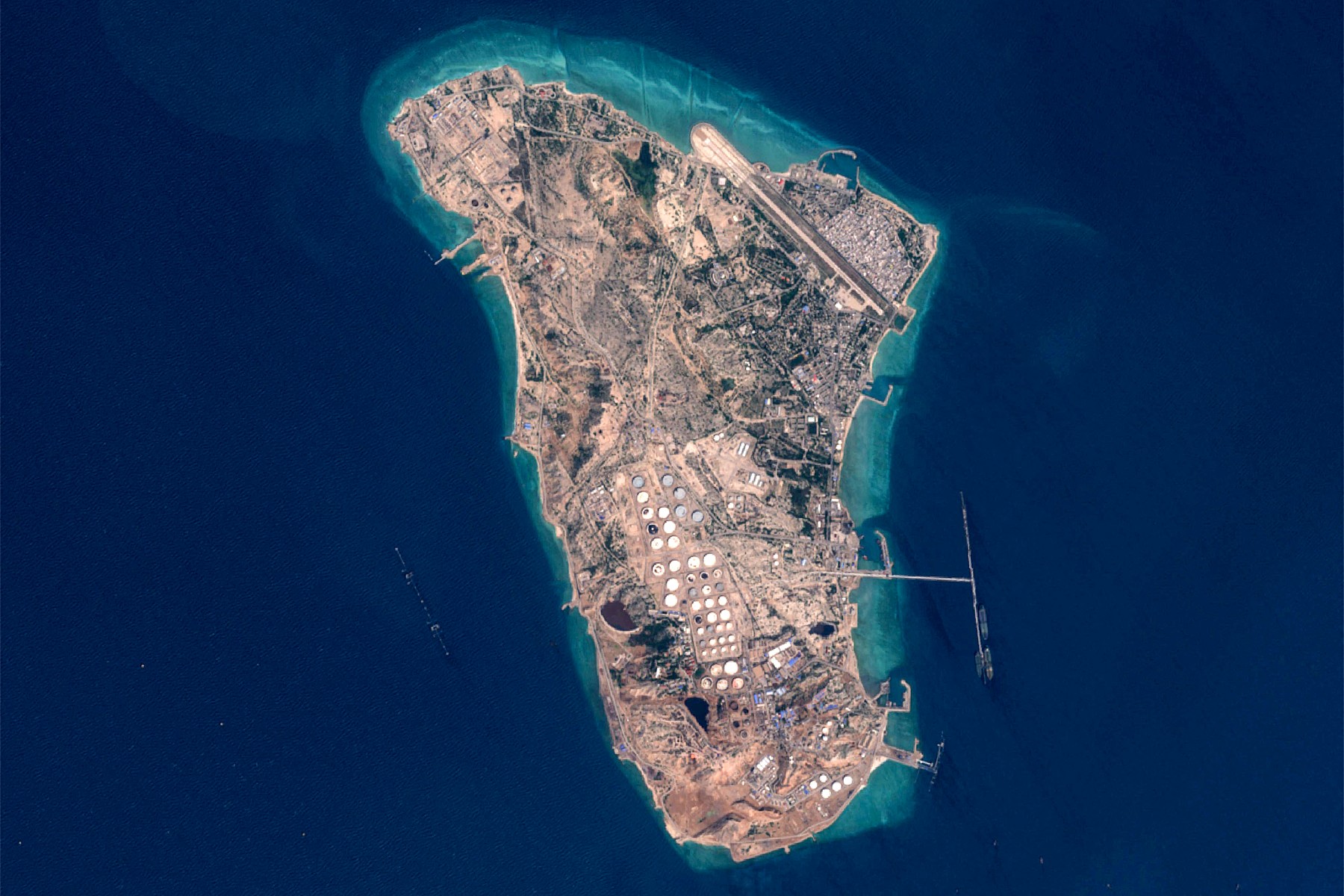
Kharg Island exports about 90 % of Iran’s crude oil to the world, located approximately 21 miles (33 km) off the Iranian coast in the Persian Gulf. In mid‑March, U.S. President Donald Trump said U.S. forces struck military targets on the island while deliberately sparing its oil infrastructure.
Reports indicate that the U.S. is preparing for limited ground operations on Kharg Island, deploying forces that include units from the 82nd Airborne Division and Marine Expeditionary Units, with the amphibious assault ship USS Tripoli also arriving in the region.
Photo of Iran's Kharg Island, which houses the main crude oil export terminal on March 17, 2026 (AFP)
15 American points
Washington proposed a 15-point plan to end the war, calling for a reduction of Iran’s nuclear program, limitations on its missile capabilities, and the reopening of the Strait of Hormuz for international navigation, in exchange for the gradual easing of sanctions on Iran. Tehran, however, rejected any dialogue under military pressure, while President Trump assigned Vice President J.D. Vance the task of ending the conflict, aiming for a resolution within a few weeks.
Trump's deadline
Trump set a defined timeframe for Iran before potentially targeting its energy facilities. He posted on Truth Social last Thursday that “As per Iranian Government request, please let this statement serve to represent that I am pausing the period of Energy Plant destruction by 10 Days to Monday, April 6, 2026, at 8 P.M., Eastern Time.”
Universities threat
The Revolutionary Guard declared, following an attack on the University of Science and Technology in Tehran, that all Israeli and American universities in Western Asia are now considered legitimate targets. They warned staff, faculty, and students at US universities in the region to “stay at least one kilometer away from these institutions,” giving the US a deadline until noon on Monday to officially condemn the strikes on Iranian universities.



 Messenger
 Whatsapp
 Threads
 Email
Email
 Print
Print
 X
X
 Facebook