Middle East conflict at three weeks: Energy stakes could decide the outcome
As Iran and the U.S.-Israel coalition clash, control of the Strait of Hormuz has become the decisive factor, with both sides testing the limits of military strategy and regional influence.


 Messenger
 Whatsapp
 Threads
 Email
Email
 Print
Print
 X
X
 Facebook


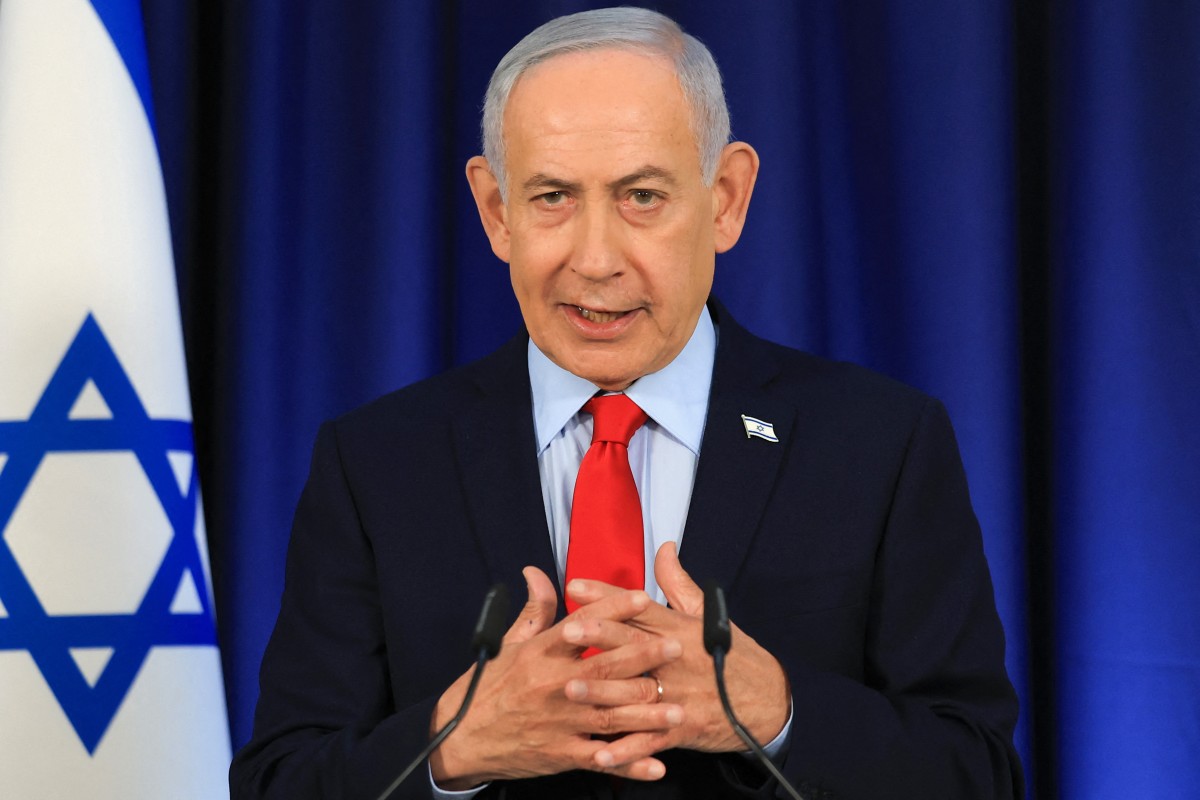
Three weeks have passed since the joint United States and Israel offensive against Iran began, and each side continues to claim daily that victory is near. Trump says the U.S. is ahead of its war objectives and has destroyed seven thousand military targets inside Iran. Netanyahu also announced at his Thursday evening press conference that two of Israel’s three war objectives have been achieved: weakening Iran’s nuclear and missile capabilities. Meanwhile, the Islamic Republic reported that it has carried out 65 stages of missile attacks on Israel and U.S. military bases in Arab countries. On Thursday evening, an American F-35 fighter jet was reportedly shot down. At the same time, Iran’s air defense systems are recovering and regaining capability.
Iranian strategists see the United States’ retreat from goals such as toppling the regime within four days, and its current focus on limiting Iran’s control over the Strait of Hormuz, as proof of Iran’s success rather than America’s.
These developments show that the “Ramadan War” did not end with the conclusion of the month but has entered a new phase, especially with the gradual opening of two additional fronts. On one side, Arab countries have expressed strong anger over Iran’s military policies targeting them, as reflected in the Doha meeting, and have confirmed their right to respond. On the other side, the European Union, although it does not support the United States—which caused frustration in Washington—expressed concern over Iran’s threats to energy transport routes and called for them to stop.
These positions indicate that the fourth week of the war may see the conflict shift toward the Arabian Gulf. After Israel attacked the Asaluyeh refinery in southwestern Iran two nights ago, which Washington said occurred without its coordination, Iran retaliated with attacks on oil refineries in Kuwait, Saudi Arabia, Qatar, and Israel.
These attacks stretch along a 2,500-kilometer belt, from oil facilities in Abu Dhabi and Doha in the east, through Riyadh and Yanbu in Saudi Arabia, to the refineries in Haifa and Ashdod in Israel in the west. This escalation shows that Tehran does not recognize any red lines in responding to U.S. and Israeli attacks.
From an operational perspective, targeting the port of Yanbu in Saudi Arabia is highly significant, because if the Strait of Hormuz is closed, oil and gas exports from all regional countries except Iran and Saudi Arabia would stop. Saudi Arabia built a 1,200-kilometer pipeline from the Persian Gulf to the Red Sea as an alternative route in case Hormuz is closed, ending at the port of Yanbu, which was struck by an Iranian missile on Wednesday evening.
Concerns are growing over attacks on civilian infrastructure. Trump warned that if Iran continues targeting civilian sites, the United States will carry out destructive and irreparable strikes on Iran’s infrastructure, including power plants and refineries.
Tensions have also pushed oil prices up to $115 per barrel, prompting Japan’s Prime Minister to visit Washington seeking a solution to the crisis. However, these diplomatic efforts do not signal the end of the war.
These developments indicate that the decisive factor in determining the outcome of the war will not be on land or in the air, but at sea, specifically in the Strait of Hormuz. Unofficial reports even suggest that the United States is planning to send 2,500 commandos to the region and may attempt to seize some Iranian islands in the Gulf to reduce Iran’s influence over the strait.
As a result, the Strait of Hormuz has become a critical element in the course of the war. Reopening it is essential for the United States, but doing so is complex and fraught with risk. If we assume that Trump orders an attack on Kharg and Qeshm islands, the most important question is: would this lead to the strait being reopened?
In theory, capturing Kharg (Iran’s main oil export hub) and Qeshm (the largest island in the Gulf, overlooking the strait) could reduce Iran’s operational capabilities, but it would not guarantee a safe reopening of the strait. Kharg is relatively far from the strait; controlling it might halt Iranian exports, but it would not prevent missile launches from mainland Iran.
As for Qeshm, despite its strategic location, its proximity to the Iranian coast makes forces stationed there vulnerable to direct fire from artillery and drones.
Even if these islands were taken, reopening the strait would face multiple challenges:
Clearing naval mines: Iran has a large stockpile of mines, and removing them is complex and slow, especially under fire.
Asymmetric threats: Fast boats and drones can attack ships from any point along Iran’s more than 2,000-kilometer coastline.
Ballistic and cruise missiles: Iran’s missile range extends beyond the islands, meaning securing the strait would require deep strikes inside Iranian territory, effectively a full-scale war.
Safe navigation: Even with control of the islands, ensuring the passage of supertankers requires a completely secure environment, which is not guaranteed.
Therefore, controlling Kharg and Qeshm, even if it reduces Iran’s offensive capabilities, is not enough to guarantee safe navigation through the Strait of Hormuz. Securing the strait would require control of Iran’s entire southern coast, which exceeds the limited operational capacity of the Marines.
If the United States, as stated by Trump and Defense Secretary Healy, intends to pursue this scenario, it would require broader military preparations, signaling that the war could enter a new phase in the coming week.