Israel faces growing threat from Iranian cluster missiles


 Messenger
 Whatsapp
 Threads
 Email
Email
 Print
Print
 X
X
 Facebook


Since the start of the war, Iran has launched dozens of missiles equipped with cluster warheads at Israel, creating a challenge for Israel’s missile defense systems, which must intercept the missiles before they break apart and scatter smaller explosives.
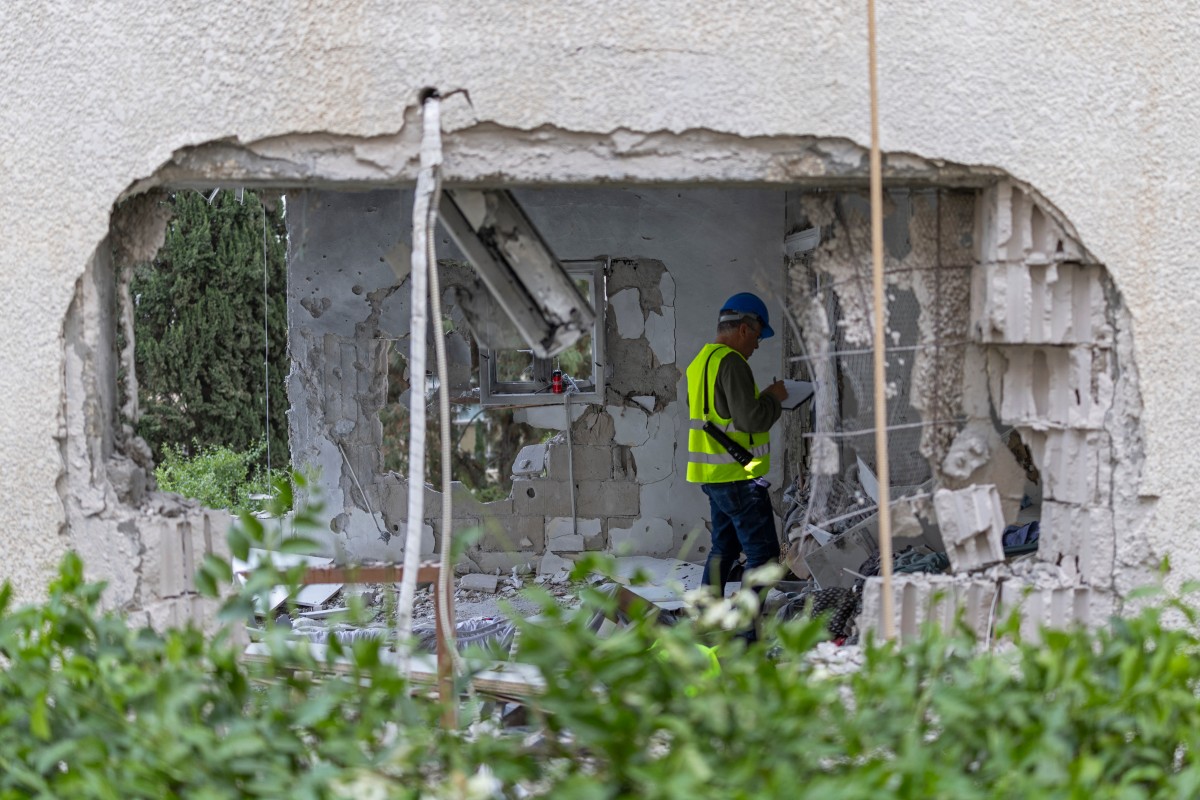
Israel failed to intercept one of the cluster missiles overnight, and its small bombs fell across civilian areas in Tel Aviv. A couple in their seventies was killed, and one of Tel Aviv’s main train stations was damaged.
Israeli military spokesperson Lieutenant Colonel Nadav Shoshani told reporters that the couple died in their apartment from the explosion of a small bomb, one of the cluster munitions.
He said, “The Iranian regime launched this cluster bomb at a densely populated area. They have fired dozens of missiles at civilians, deliberately targeting them. This is a war crime committed by the Iranian regime.”
Shoshani added that the military is doing its utmost to intercept these missiles at the highest possible level to minimize damage.
Banned munitions
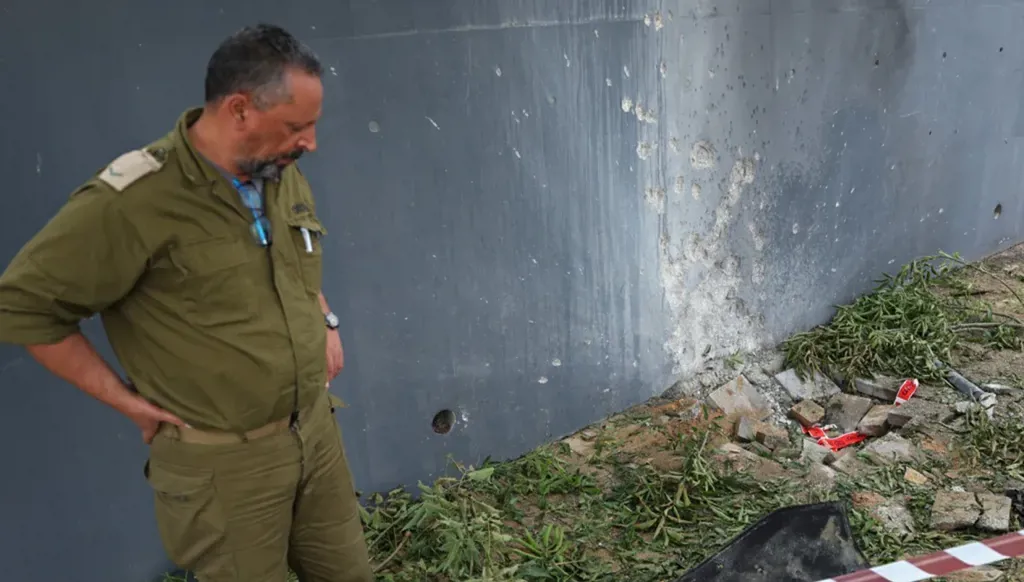
Cluster munitions explode in the air and spread hundreds of small bombs over a wide area. Many of these bombs fail to detonate, creating virtual minefields that can kill or injure anyone who encounters them later.
More than 100 countries agreed at an international conference in Dublin in 2008 to ban the use of cluster munitions. However, Israel and Iran did not join the ban, nor did major powers including the United States, China, and Russia.
Israel’s Home Front Command, which issues safety guidance to civilians during wartime, has released videos warning of the dangers of these munitions, saying they can become “dangerous explosive traps,” especially for young children or pets.
The military said that about half of the missiles Iran has launched since Israel and the United States conducted a joint strike on February 28 had cluster warheads. Iran also used these missiles during the 12-day war between Israel and Iran last June.
An Israeli military official said that Iranian cluster warheads contain about 24 small bombs, each carrying nearly two to five kilograms of explosives. They detonate at an altitude of seven to ten kilometers above the ground, affecting dozens of separate locations.
The official said, “Each submunition can explode on impact with the ground or any hard surface. Its effect is similar to a hand grenade—relatively limited in power and area, but extremely dangerous to anyone nearby.”