

Iran’s supreme leader’s inner circle mobilizes for war and leadership succession scenarios
Expansion of authority across military, political, and security apparatus reflects preparations for possible U.S. or Israeli strikes and leadership continuity.


 Messenger
 Whatsapp
 Threads
 Email
Email
 Print
Print
 X
X
 Facebook
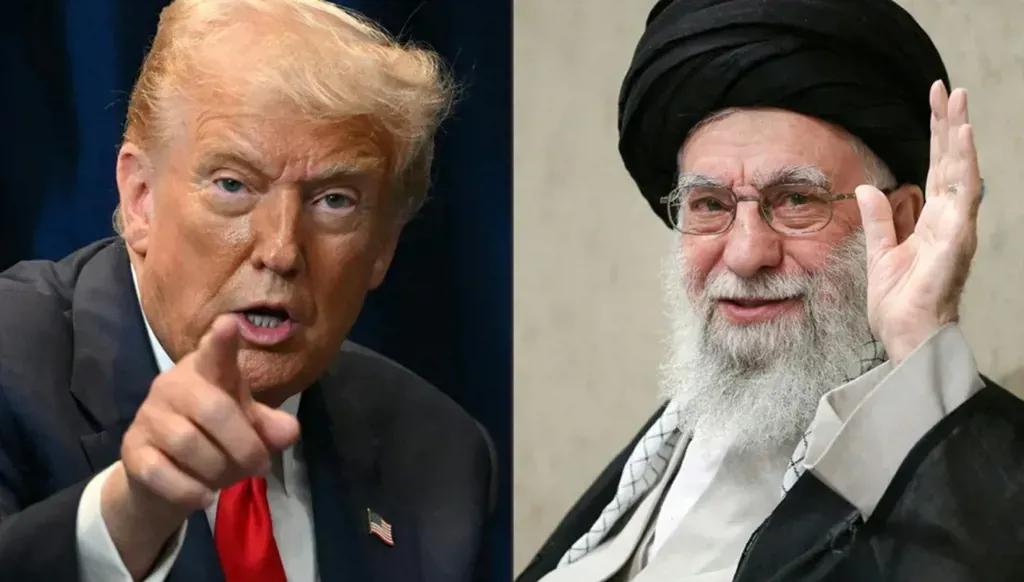


Iran is preparing for a possible period of turmoil that could follow any American or Israeli war, potentially threatening the succession of Supreme Leader Ali Khamenei, according to a report by The New York Times.
The newspaper says that Khamenei has issued a series of internal directives reflecting an unprecedented level of preparation for a possible period of unrest, whether in the context of war or succession.
According to the U.S. paper, these directives include establishing four levels of successors for each of the military and government positions that he personally appoints, as well as requiring leaders to name up to four replacements for each post to prevent any vacuum in case communication with him is cut off or he is assassinated.
The report reveals that during his period in hiding in the 12-day war with Israel, Khamenei named three potential candidates to succeed him without publicly disclosing their names.
According to the report, Ali Larijani, secretary of Iran’s Supreme National Security Council, holds a prominent position within Khamenei’s inner trusted circle, which also includes his top military advisor Major General Yahya Rahim Safavi, the parliament speaker Major General Mohammad Bagher Ghalibaf, and his office director, cleric Ali Asghar Hejazi.
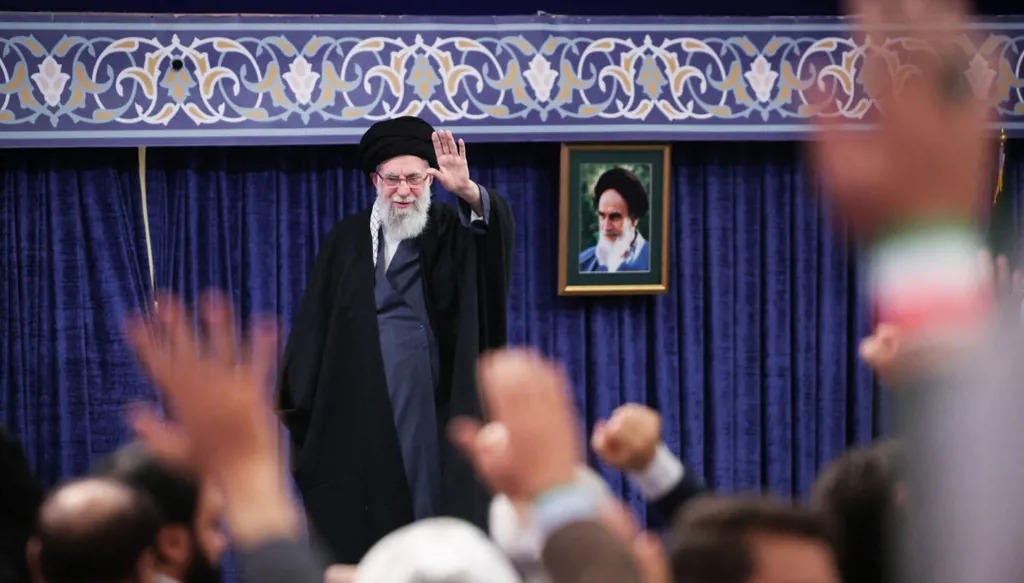
The New York Times says these arrangements are the result of hard lessons Tehran learned from the surprise Israeli attack last June, which paralyzed the top military command chain during the early hours of the confrontation. After the ceasefire, Khamenei appointed Ali Larijani as secretary of the Supreme National Security Council and established a new National Defense Council chaired by Ali Shamkhani to manage military affairs during wartime.
Over the past few months, Larijani’s responsibilities have steadily expanded. He has overseen the suppression of recent protests, is currently working to control any signs of opposition, and coordinates with powerful allies such as Russia and regional actors like Qatar and Oman. He also supervises nuclear negotiations with Washington and is developing plans for running the country in the event of a war with the United States, as American forces build up in the region.
In an interview with Al Jazeera during his visit to Doha this month, Larijani said, “We are prepared in our country. We are certainly stronger than before, and over the past seven or eight months, we have identified our weaknesses and addressed them. We do not seek war, and we will not start it. But if it is imposed on us, we will respond.”
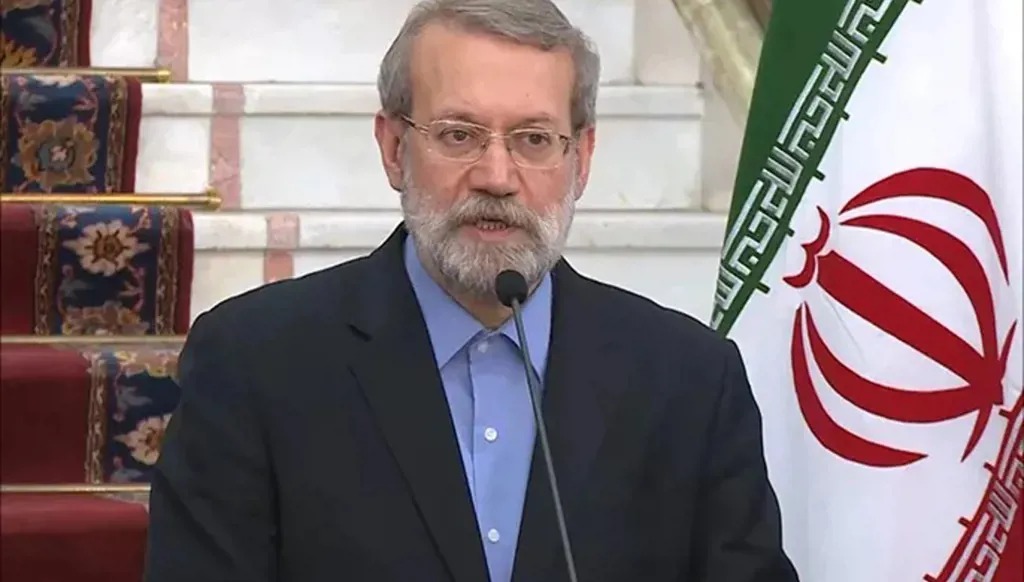
At the same time, Larijani’s media presence has risen noticeably over the past month, while the role of President Masoud Pezeshkian has clearly declined. He visited Moscow and met with Russian President Vladimir Putin, held regional meetings, and appeared in long interviews with local and international media, reinforcing the impression that the center of executive power in Iran is now closer to Larijani than to the presidency.
The New York Times also cited Vali Nasr, an Iranian affairs expert at Johns Hopkins University, saying that Khamenei “deals with reality as it is” and “is preparing for the worst-case scenarios, distributing powers in anticipation of a period that could combine war and a transfer of authority.”
According to the newspaper, citing Iranian officials, Tehran is acting on the assumption that U.S. strikes are “inevitable and imminent,” even as diplomatic and nuclear negotiations continue. The armed forces have been placed on the highest state of alert, and ballistic missile systems have been deployed along the western border with Iraq and on southern Gulf coasts, within range of U.S. bases and regional targets.
The plans also include domestic security preparations, with special units of police, intelligence, and the Basij, Organization for the Mobilization of the Oppressed, expected to deploy in major cities to set up checkpoints and prevent potential unrest or sabotage.
Preparations are not limited to the military sphere but extend to political arrangements to ensure the continuity of the regime in case of Khamenei’s assassination or the killing of senior officials. The newspaper notes that Larijani tops the list of figures capable of running the country in an emergency scenario, followed by Ghalibaf and former President Hassan Rouhani, despite Rouhani’s decline in influence within Khamenei’s inner circle in recent years.