

Iran’s internal opposition speaks out
As protests rage across hundreds of cities, prominent opposition figures Mir Hossein Moussavi and Mehdi Karroubi voice discontent with the regime's crackdown, calling for a peaceful democratic transition.


 Messenger
 Whatsapp
 Threads
 Email
Email
 Print
Print
 X
X
 Facebook
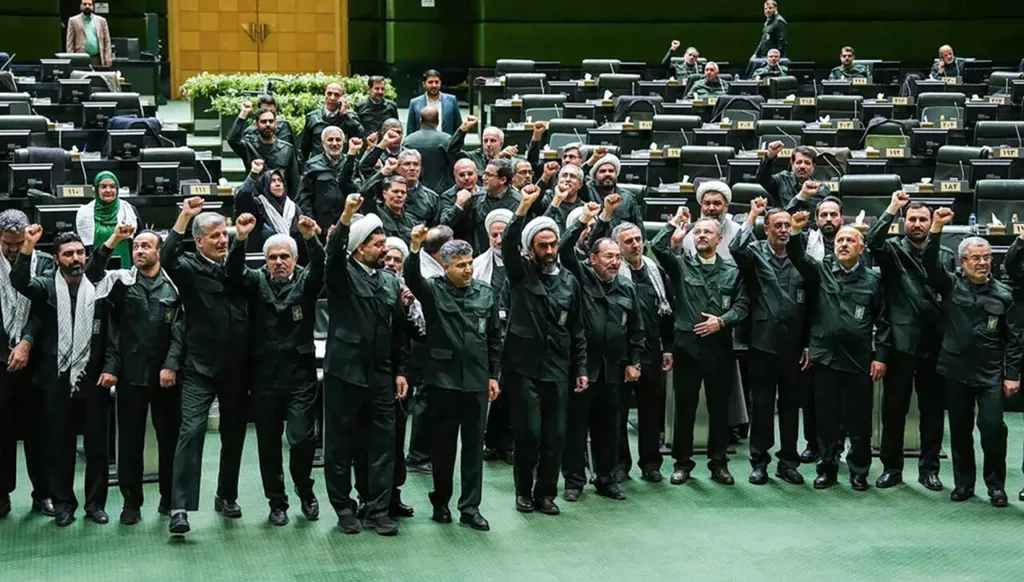


Nearly a month since the protests began in Iran, and twenty days since the demonstrations of January 8th and 9th—which spread to over 400 Iranian cities and reportedly resulted in the deaths of thousands of Iranians—disagreements have emerged among political factions within Iran.
From the onset, pro-regime factions claimed that the protests were the result of planning and support from the United States and Israel, and that the killing of citizens was carried out by “armed terrorists opposing the regime,” a claim these factions continue to reiterate to this day.
By contrast, critics of the Islamic Republic argue that the primary crackdown was carried out by security elements, and that protests of this magnitude are always at risk of infiltrations radical individuals. They warn that this decision will deepen the rift between the state and society more than ever before.
In this context, some reformists assert that even if it were proven that the killings were perpetrated by foreign-supported armed terrorist groups, this would not absolve the Iranian government of its responsibility to protect the security of protesters and ensure the safety of citizens.
The Public Narrative After Internet Restoration
After approximately twenty days of internet blackout, some Iranian citizens having regained access to social networks, using VPNs and under strict restrictions. Many have begun posting new photos and videos documenting the bloody events of January 8th and 9th.
Most of this material indicates that public opinion holds the government responsible for the killing of protesters, with some citizens explicitly calling on governments and international organizations to take a clear stance against the Islamic Republic and defend the Iranian people.
Statements from Mousavi and Karroubi Ignite New Dispute
As the public voices discontent, and the U.S. continues to threaten military strikes, the Iranian political sphere is seeing renewed concern by two veteran political operatives, Mir Hossein Mousavi and Mehdi Karroubi, both affiliated with Iran's "Green Movement." The Green Movement emerged after the 2009 election which returned Mahmoud Ahmadinejad to the presidency, and gradually came to represent reform in the protest movement which followed.
Mousavi and Karroubi have been under house arrest since 2010, with Karroubi having partially emerged from detention in recent months. The release of these statements has sparked a new wave of political disputes within the country.
Mir Hossein Mousavi: Direct Accusations Against the Regime
Mir Hossein Mousavi, who served as Prime Minister of Iran from 1981 to 1989, wrote in his statement: "With each passing day, the horrifying dimensions of a grave betrayal and crime against the Iranian people become increasingly evident." He added in a strongly worded note: "In what language must the people say that they do not want this regime and do not believe your lies? Enough. The game is over. When you donned the garb of war against your people, you were severing the roots of your own existence."
Mousavi once again called for a referendum on the Iranian constitution through the formation of a broad national front encompassing various factions, based on three principles: non-intervention by external forces, rejection of internal despotism, and a peaceful democratic transition.
Reactions Within the Opposition
Many critics and opposition figures welcomed Mousavi's recent position, considering it wiser if other prominent political figures within the former regime—such as Mohammad Khatami, Ali Akbar Nategh-Nouri, and Hassan Rouhani—had taken similar stances.
In contrast, the royalist faction supporting Reza Pahlavi has not issued any official position, although its supporters online have expressed concern that political figures from within Iran could emerge as potential alternatives to Pahlavi in a post-Islamic Republic phase.
Weeks ago, Donald Trump expressed hope that the Iranian people would “identify their true leaders from within the country.”
Mehdi Karroubi: The State’s Responsibility for the Bloodshed
Meanwhile, Mehdi Karroubi, a prominent opposition politician and former Speaker of the Iranian Parliament, issued a statement similar to Mousavi’s, in which he affirmed that protests are a legitimate right of the people and that safeguarding citizens’ lives and ensuring their security is a direct responsibility of the state’s military and security institutions.
In light of the thousands of deaths, Karroubi emphasized the need to establish an independent body composed of civil institutions and trusted public figures to investigate the full scope of these events, including the exact number of casualties, injuries, and those affected.
He also criticized Interior Minister Esfandiar Rahim Mashaei for not permitting any gatherings or demonstrations other than those supporting the regime, noting that during the Green Movement, Mousavi and Karroubi had submitted an official request to organize a peaceful march in accordance with the constitution. Instead, they were met with “batons, beatings, and bullets in the streets,” as well as “insults, home vandalism, followed by house arrest and arbitrary imprisonment.”
Heavy Criticism from Regime Supporters
As expected, these statements were met with harsh reactions from pro-regime factions and media outlets. The Islamic Coalition Party, one of Iran's oldest and most conservative parties, condemned Mousavi's statement, calling it “full of falsehoods and distortions of facts” and asserting that it “does not reflect the will of the Iranian people but is the product of the mindset of deviant groups connected to global arrogance.”
Meanwhile, Hossein Shariatmadari, editor-in-chief of Kayhan newspaper and known for his close ties to the hardline faction within the regime, described Mousavi's call for constitutional revision as a direct implementation of the “regime change” agenda pursued by the United States and Israel for more than four decades.
Unexpected Attack from Mehdi Khazali
In an unexpected move, Mehdi Khazali, the son of a conservative cleric and previously imprisoned for his critical stances, launched a vehement attack on Mousavi, accusing him of “betraying values and constants” and “aligning with the ranks of America and Israel.”
Open Questions About the Future
The U.S. threat of a military strike on Iran largely dominates the media landscape; but, at the same time, questions proliferate within Iranian society about the country’s future, the potential fall of the regime, and the shape of a new political system. These statements by traditional opposition leaders will no doubt have an influence on public discourse and the course of the coming weeks.