Lebanon on alert: Cabinet tackles security, displacement, and regional aggression
Prime Minister Nawaf Salam addresses Israeli threats, Iranian attacks on the Gulf, and solidarity with Kuwait, while Shia ministers boycott the meeting over the Iranian ambassador issue.
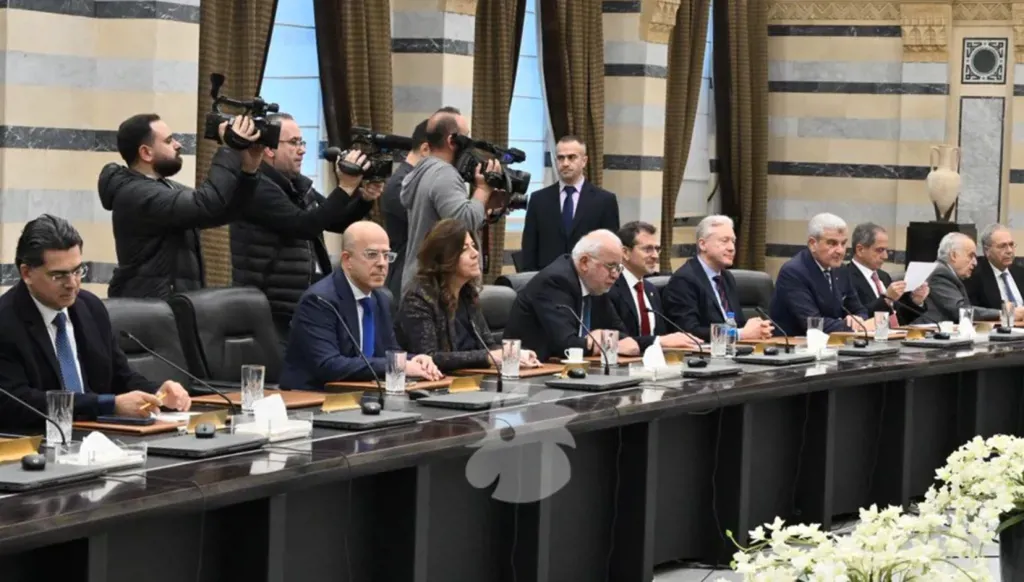
A group of ministers participating in today’s government session at the Grand Serail (photographed by Nabil Ismail).
Contrary to expectations, today’s Cabinet session did not address the issue of expelling the Iranian ambassador, prompting a boycott by the Shia ministers, with the exception of the Minister of State for Administrative Development Affairs, Fadi Makki.
After the session, Information Minister Paul Morcos announced the official decisions, stating: “As you know, the session had a single-item agenda addressing the issue of the displaced persons, the consequences of displacement, Israeli aggressions, and their impacts at various levels: shelter, relief, social, economic, financial, and, naturally, military, at the forefront.”
According to Markos, Prime Minister Nawaf Salam said: “The Israeli Defense Minister has repeatedly threatened that Israel is working to occupy the area south of the Litani, while the Finance Minister has added that he will call for annexing the area south of the Litani to Israel. Israel has blown up most of the bridges over the Litani River in an effort to isolate this area from the rest of Lebanese territory. This has been accompanied by mass displacement of residents from cities and villages south of the Litani, as well as the daily appropriation of land and, at times, the complete demolition of homes, as if to signal that civilians will not be returning anytime soon.”
Salam added: “We consider these actions and statements—under any label, such as a security zone or buffer zone—extremely dangerous, as they threaten Lebanon’s sovereignty, the safety of its territory, and the rights of its people, and they stand in complete contradiction to international law, international humanitarian law, and the UN Charter. Therefore, I have requested the Minister of Foreign Affairs and Emigrants to immediately file a complaint with the Security Council on this matter, and I will communicate directly with the UN Secretary-General immediately after this session for the same purpose.”
He lamented that news had reached them about the discovery of a new terrorist cell in fraternal Kuwait, and that among the accused were two individuals affiliated with Hezbollah, according to the Kuwaiti Ministry of Interior. He reaffirmed that “what harms Kuwait harms Lebanon, and the bilateral relationship between our two countries is firm and historic. The vast majority of the Lebanese community respects the laws in place and actively contributes to Kuwait’s economic life, building an excellent bridge of cooperation between the two countries. I hope this is the last time Lebanon’s name is linked to such matters, and I sincerely hope that all our citizens respect the laws of the countries where they work, especially in the Gulf Cooperation Council countries, with whom Lebanon consistently maintains friendly relations.”
Minister Fadi Makki beside PM Salam (Nabil Ismail).
Salam clarified that he had contacted the Kuwaiti Prime Minister and conveyed Lebanon’s “strong condemnation of these terrorist acts and full solidarity with sister Kuwait.”
He continued: “In this context, it must be noted that the focus of Iranian bombardment has shifted from Israel to the Arab Gulf states. Official statistics released by the targeted countries indicate that 83% of Iranian attacks—whether by missiles or drones—since the start of the war have primarily targeted the Arab Gulf countries, as well as Jordan, Turkey, and Azerbaijan, with only 17% aimed at Israel. Among the targets hit were vital facilities and civilian sites, marking a dangerous escalation.”
Salam added: “While it is true that the Gulf states have effectively defended their territories, Lebanon cannot remain silent while its Arab brothers face daily attacks. Therefore, I have reached out—and will continue to reach out—to the leaders of these sister countries to reaffirm Lebanon’s solidarity with them.”
He further stated: “I reiterate that our displaced people, like us, are victims of this war imposed upon us; they were neither consulted nor involved in any decision to enter it. It is a war waged by others on our land, one in which Lebanon had no interest, neither directly nor indirectly.”
Concluding, Salam said: “Finally, I would like to assure all Lebanese in general, and our people in Beirut in particular, that we have implemented new measures to enhance security in the capital, which will be visible to everyone through the intensified patrols of the army and security forces throughout the city.”
The session was chaired by Salam in the presence of the ministers, with the Ministers of Finance, Public Health, Environment, and Labor absent.



 Messenger
 Whatsapp
 Threads
 Email
Email
 Print
Print
 X
X
 Facebook


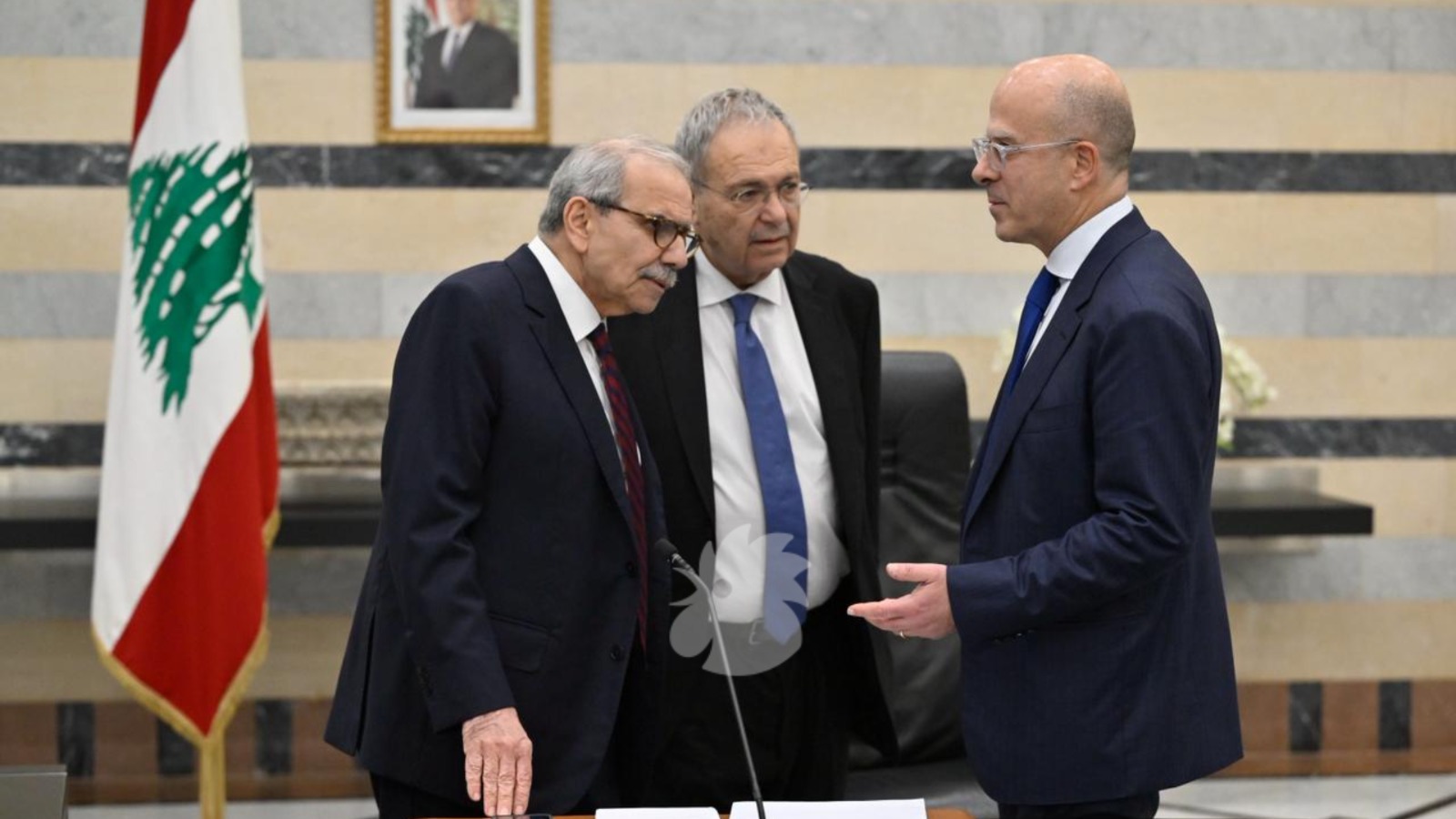 Minister Fadi Makki beside PM Salam (Nabil Ismail).