

French and Saudi envoys in Beirut to advance army support conference
French envoy Jean-Yves Le Drian and Saudi envoy Yazid bin Farhan return as the Quintet meets Prime Minister Nawaf Salam on weapons, elections, and financial rescue.


 Messenger
 Whatsapp
 Threads
 Email
Email
 Print
Print
 X
X
 Facebook
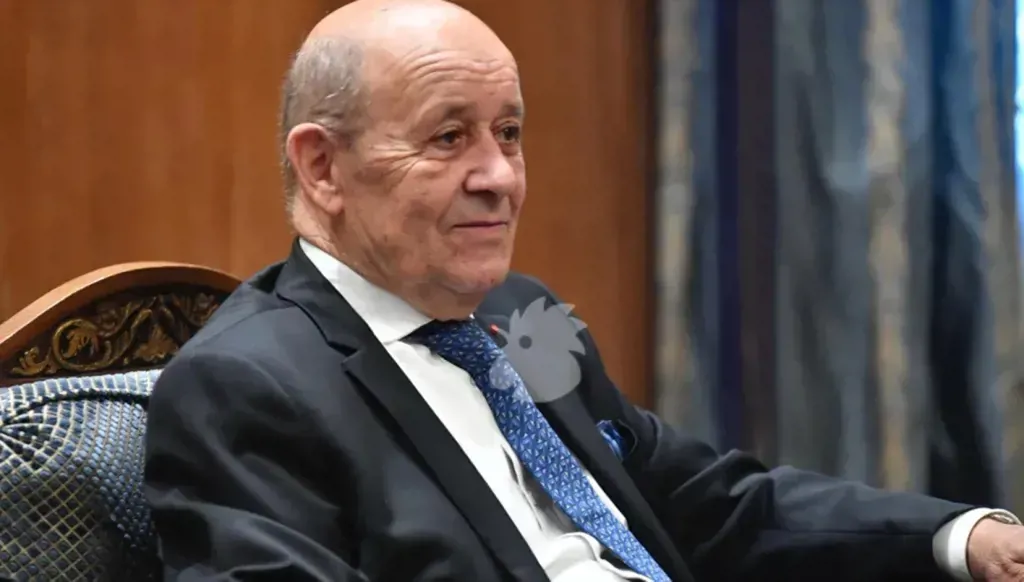


Lebanon is preparing for a week of envoys and diplomats amid notable Israeli military escalation over the past two days that carries serious implications.
Today, a meeting will be held between Prime Minister Nawaf Salam and the ambassadors of the “Quintet” group (the United States, France, Saudi Arabia, Egypt, and Qatar) to discuss priority issues, most notably supporting the government, the “financial gap” proposal, restricting weapons to the state, and parliamentary elections.
As for the most prominent envoys returning to Beirut, they are the French envoy Jean-Yves Le Drian and the Saudi envoy Yazid bin Farhan, whose return coincides with a key objective: preparing for the international conference in support of the Lebanese Army.

According to informed sources, Le Drian will arrive in Beirut mid-week, and his official schedule for next Wednesday includes meetings with President of the Republic Joseph Aoun, Speaker of Parliament Nabih Berri, and Prime Minister Nawaf Salam.
The meetings are expected to focus on the political and security situation, and on supporting the Lebanese state, particularly the international conference to support the Lebanese Army.
In this context, Paris wants to identify the Lebanese Army’s needs in terms of equipment and financial support, and to prepare for the conference with Arab, European, and other international participation, dedicated to supporting the military institution and ensuring that the conference produces concrete results, not just statements, while coordinating with international partners such as the United States and Saudi Arabia to expand participation.
Le Drian’s visit also carries political messages in multiple directions, most notably supporting the Lebanese government and encouraging it to fulfill its commitments through a clear roadmap, especially regarding the issue of restricting weapons to the state, and affirming that the international community stands with Lebanon, but insists on tangible results rather than statements or promises, and calls for speeding up the required reforms at a time when the international community is dealing with other crises that could reduce attention to Lebanon if reforms are delayed.