

Iran’s foreign minister in Beirut: bilateral ties, reconstruction, and the question of state authority


 Messenger
 Whatsapp
 Threads
 Email
Email
 Print
Print
 X
X
 Facebook
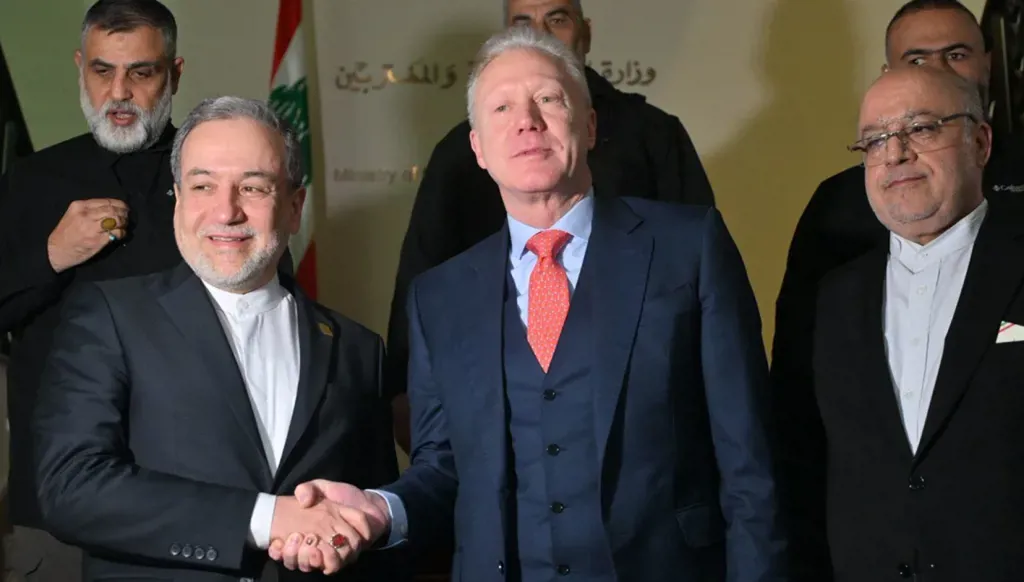


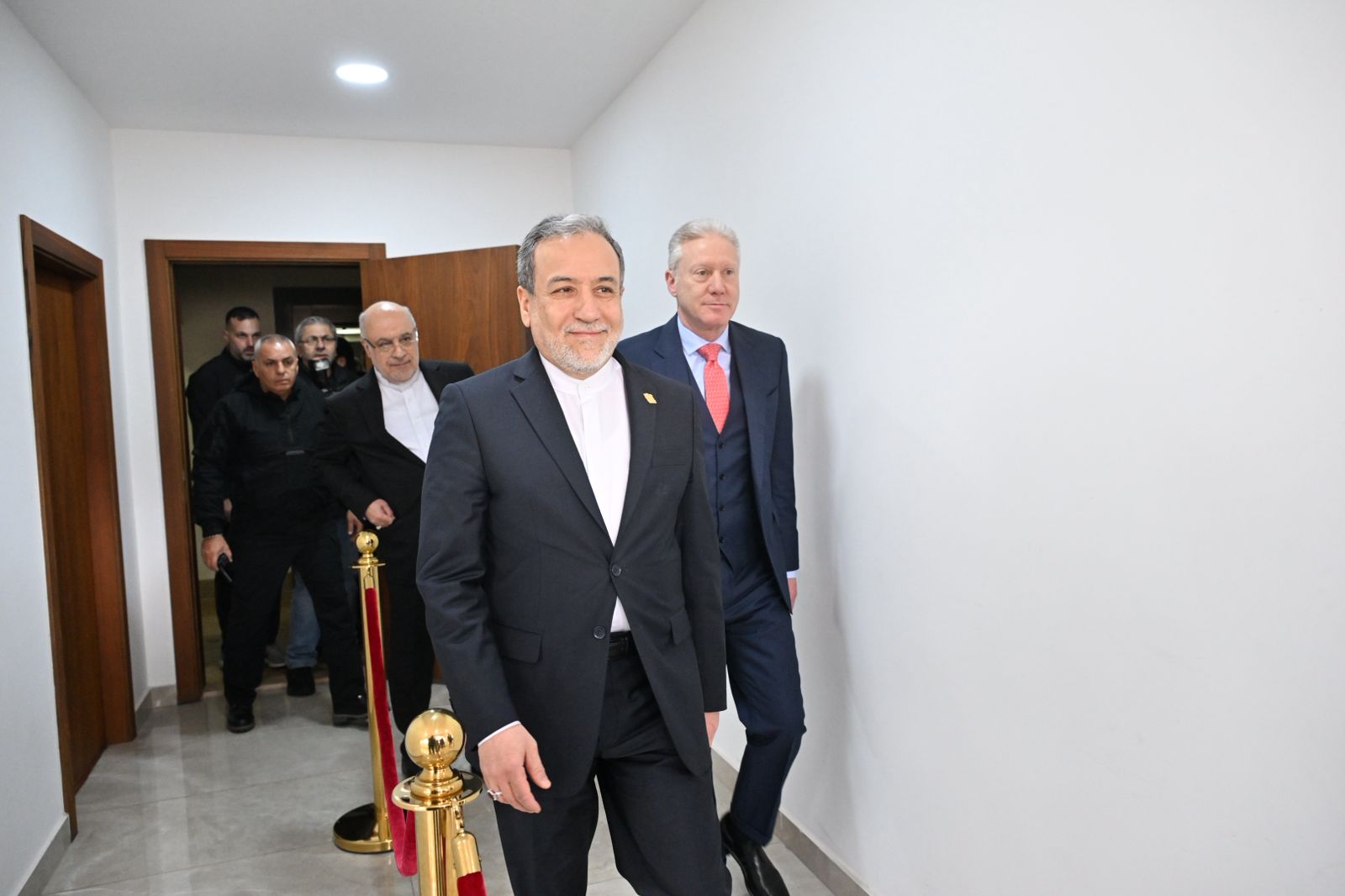
Iranian Foreign Minister Abbas Araghchi began his tour of meetings with Lebanese officials today at the Ministry of Foreign Affairs and Emigrants, where he met for the first time in months his Lebanese counterpart, Foreign Minister Youssef Rajji, after a period of no direct contact between them during several visits by Iranian delegations to Beirut.
He stressed that “defending Lebanon is the responsibility of the Lebanese state, which—when it possesses its strategic decision-making power, holds the decision over war and peace, and monopolizes weapons in its own hands—can then request assistance from other states, including Iran.”
He further stressed that “a state capable of defending its land and its people cannot come into being while there exists an armed organization operating outside its authority,” addressing Araghchi with the question of whether Tehran “accepts the presence of an illegal armed organization on its own territory.”
Rajji called on Iran “to work with Lebanon in finding a new approach regarding Hezbollah’s weapons, based on Iran’s relationship with the party, so that these weapons do not become a pretext for weakening Lebanon or any of its communities.”
He affirmed that “the Shiite community is not being targeted, and that the only sustainable guarantee for it and for the rest of the communities is in unity and in being under the umbrella of the state and the law,” noting that “experience has shown that weapons have not been able to defend the Shiite community, nor Lebanon, nor any of its components.”
Regarding the reconstruction file, Rajji explained that "the delay in starting the process is due, firstly, to a general impression that the war has not ended yet, and secondly, because countries capable of assisting Lebanon in this field require disarmament."
In conclusion, Rajji asked his Iranian counterpart to ensure that “some Iranian officials stop their statements and positions that constitute blatant interference in Lebanese affairs.”
As for Araghchi, he said:
-Iran seeks to build a relationship with Lebanon based on goodwill and mutual respect within the framework of the two governments, with all their institutions and components.
-The unity of Lebanon’s religious communities under the roof of the Lebanese government would protect Lebanon and achieve stability.
-Iran is interested in Lebanon’s independence, unity, and sovereignty, and defending it is a responsibility placed on the Lebanese government.
-Iran supports Hezbollah but does not interfere in its decisions.
Araghchi also met President Joseph Aoun, who stressed that Lebanon is ready to strengthen economic and trade relations and is keen on maintaining the best relations with Iran, within a framework of mutual respect and non-interference in the internal affairs of both countries.
Araghchi, for his part, stated: "Iran supports Lebanon's independence, unity, sovereignty, and territorial integrity, and the visit falls within the framework of strengthening and developing bilateral relations."
Speaker of Parliament Nabih Berri met the minister and his accompanying delegation at the Second Presidency headquarters in Ain el-Tineh (the Speaker’s official residence/office).
The Iranian minister also met with the Grand Mufti of the Lebanese Republic, Sheikh Abdellatif Derian, at Dar al-Fatwa (the Sunni religious authority’s headquarters).
Araghchi had arrived in Beirut yesterday, Thursday, at the head of an economic delegation, and announced that “the main objective of my visit to Lebanon is to discuss various regional and global issues.”
At Rafik Hariri International Airport, he said that “the Zionist entity is violating the obligations stipulated in the cease-fire agreement in Lebanon,” adding: “I will hold talks with the President of the Republic, the Speakers of Parliament and the Council of Ministers, and the Foreign Minister.”
He added: “We are constantly consulting with all countries in the region and their governments, and this visit comes at a most important time for Lebanon,” stressing that “we aim through this visit to strengthen the existing relations between Iran and Lebanon.”
In December 2025, Rajji declined the invitation to visit Tehran “for the time being under the current circumstances,” explaining in a message to Araghchi that “my apology for not responding to the invitation does not mean a refusal to discuss, but rather that the appropriate conditions are not available.”
In response, Araghchi affirmed that countries that share “brotherly and full diplomatic relations” do not need neutral venues to meet.
He added at the time: “The circumstances Lebanon is going through under Israeli occupation and cease-fire violations may justify Rajji’s reluctance to visit Tehran,” while announcing his acceptance of his counterpart’s invitation to visit Beirut, and affirming that “his country seeks to open a new chapter” in bilateral relations in line with the principles set forth by the Lebanese minister.”