

Hezbollah’s calculated moves and Israel’s border strategy


 Messenger
 Whatsapp
 Threads
 Email
Email
 Print
Print
 X
X
 Facebook
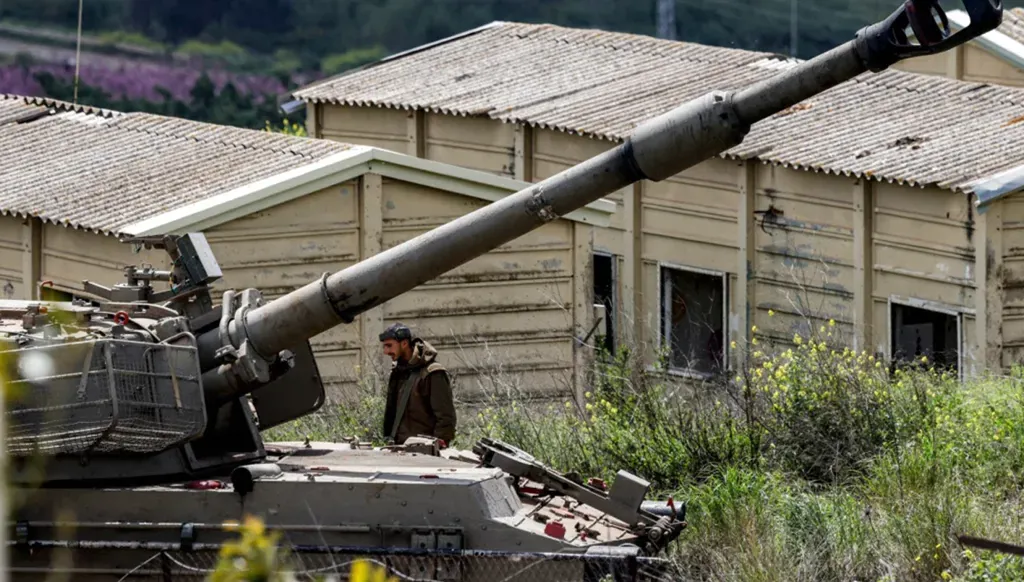


Hezbollah is achieving tactical gains against Israel in the confrontation it initiated, coinciding with the start of the American-Israeli war on Iran. Its fighters are inflicting losses on the home front and on forces advancing toward strategic positions in southern Lebanon, located ten kilometers deep from the Blue Line that currently separates Lebanon and Israel.
Strategic Gains
However, these gains, which Hezbollah uses in its dealings with the Lebanese domestic scene in general and the constitutional authorities in particular to assert that it remains a major military force in Lebanon with significant regional influence and therefore must be feared, come at the expense of Israel’s strategic interests. Israel is working, sometimes slowly out of necessity and other times by choice, to establish a deep security belt along the south of the Litani River that could reach the outskirts of the city of Tyre, according to plans approved at the political level to date.
It is no secret that Israel’s goal at this stage, before the end of the UNIFIL mandate in southern Lebanon at the end of this year, is to impose a new military and security reality that would give it the final say in all matters concerning the border region and all points that could be exploited to harm northern Israeli settlements. These settlements have not yet been fully re-inhabited by residents who were evacuated on October 8, 2023, out of fear of potential infiltration by Hezbollah forces, which entered the Al-Aqsa Flood war to support Gaza at that time.
Key Objectives
If Israel succeeds in this endeavor, it will have achieved a strategic goal by reclaiming what it lost in 2000 when it fully withdrew from Lebanon. To strengthen and sustain its new presence, it is taking advantage of a changing geopolitical reality, particularly if the ongoing war against the Iranian regime achieves one of its most prominent stated objectives: severing the “umbilical cord” between Hezbollah and the Iranian leadership. This comes after Syria moved into a new strategic position due to the rise of a regime deeply hostile to the Islamic Republic.
Although Hezbollah has deployed more than 750 fighters to the front lines so far, the Israeli army, which has begun to lose advancing soldiers, assault vehicles, and civilians who have not evacuated their northern settlements, is steadily advancing toward its designated objectives. Using a scorched-earth tactic, it systematically destroys every point it enters or that falls militarily, ensuring these locations are no longer habitable, regardless of the outcome of the current war.
If the green light granted by the U.S. administration to the Israeli government remains in effect, the destruction of living capacity along the south of the Litani River will be completed in a way that pushes Israel’s military border far from the northern settlements.
This is considered a strategic achievement for Israel and a disaster that Lebanon will not easily overcome. The impact is not only the permanent displacement burden on the Lebanese interior but also the pressure it will place on the Lebanese authorities, already struggling with significant internal political problems imposed by Hezbollah, to move toward a “Liberation Agreement” in which Israel, according to the balance of power, the realities on the ground, and the expectations of Lebanon’s allies, will hold the decisive voice.
Hezbollah is fully aware of these realities, as can be inferred from the statements of those whose heads remain cool and who believe they are fighting a “battle of necessity.”
This necessity, in this context, is quintessentially Iranian.
Ultimately, the question may not be who wins the battle today—which seems already decided—but who will succeed in shaping the future of southern Lebanon tomorrow.
Disclaimer: The opinions expressed by the writers are their own and do not necessarily represent the views of Annahar