

Strait of tensions: How the U.S. and Iran navigate a high-stakes geopolitical showdown
From missile threats to oil chokepoints, both powers are navigating a dangerous mix of diplomacy and military pressure that could redefine regional security.


 Messenger
 Whatsapp
 Threads
 Email
Email
 Print
Print
 X
X
 Facebook
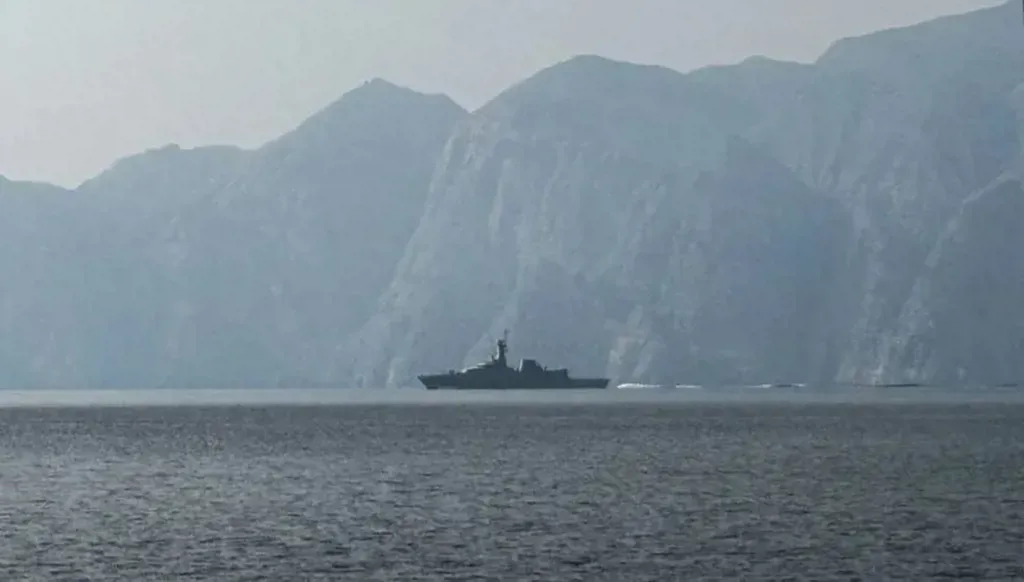


The course of the war on Iran unfolds on two intertwined levels: political efforts aimed at reshaping the terms of engagement, and military actions that impose immediate realities on the ground. In this context, Tehran seems to be investing in the war to achieve what negotiations could not, seeking to secure a package of demands that includes lifting sanctions and establishing a new regional security framework.
Washington’s handling of the Strait of Hormuz crisis reflects a complex approach, combining military pressure with containment, while permitting a partial lifting of sanctions on Iranian oil exports to Asian allies such as India and Japan amid the worsening global energy crisis.
Despite this apparent flexibility, the Trump administration’s actions are marked by notable contradictions, oscillating between threats of broad military escalation and suggestions of nearing objectives or prolonging the conflict. This contradiction, however, is not accidental but part of a strategy to exert dual pressures on Iran, both diplomatic and military. Still, the erosion of trust among Iranians leads them to interpret these statements through the lens of psychological warfare.
On the military front, the pace of U.S. and Israeli strikes is intensifying, with a clear focus on critical infrastructure inside Iran—from energy storage facilities to enrichment sites such as Natanz—alongside attacks on missile tunnel entrances and weapons depots. These operations form part of a strategy to weaken Iranian capabilities in preparation for a potential escalation, which could include imposing a naval blockade or even seizing strategic islands like Kharg Island to control Iranian oil exports.
In return, Iran is signaling responses that could exceed “safe” limits, whether by threatening coastal Gulf cities, targeting distant bases like Diego Garcia, or striking interests linked to Israel outside the Middle East, indicating an expansion of the conflict’s scope and a rise in its costs.
The significance of the Strait of Hormuz stands out as a central axis in this confrontation. The United States seeks to extend the battle to its waters and internationalize the crisis, framing it as a global issue that justifies forming a coalition to safeguard navigation, while Iran aims to leverage it as an economic and strategic pressure point by threatening to restrict passage or impose tariffs. This reflects a deeper struggle over control of vital routes, with Iran acutely aware of a U.S. strategy designed to prevent any rival power from dominating these passages.
In conclusion, the war remains open to multiple scenarios, shaped by a complex balance between military pressure and political calculations. Nevertheless, the U.S. appears to favor a strategy of smart containment rather than a full-scale resolution, given the high costs involved. Involving allies to secure the Strait of Hormuz is part of a plan for the gradual winding down of the conflict, while maintaining an international presence to ensure navigation security in the strait without allowing powers such as Iran or China to dominate it.
Disclaimer: The opinions expressed by the writers are their own and do not necessarily represent the views of Annahar.