

Inside Trump’s mind: The unpredictable game of power, media, and Iran
From media spectacle to foreign policy brinkmanship, Trump’s unique personality and bold strategies continue to baffle allies, unsettle adversaries, and redefine global politics.


 Messenger
 Whatsapp
 Threads
 Email
Email
 Print
Print
 X
X
 Facebook
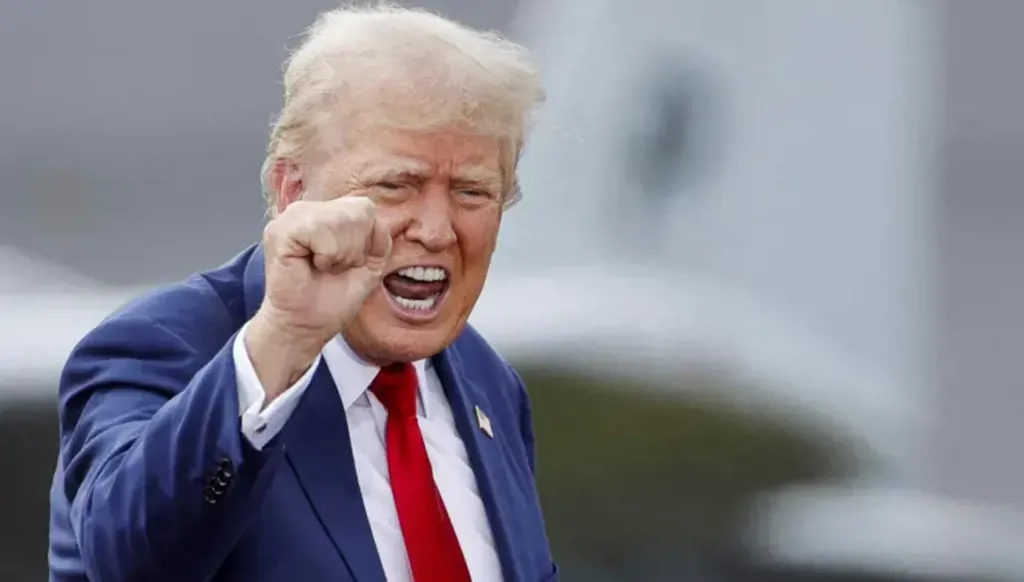


It is not easy to get into the mind of American President Donald Trump, nor is it possible to predict his reactions, stances, and decisions. He is not a typical man and does not fit the mold of any recent American presidents, even though the world has known "strange" rulers throughout history. Trump differs from the hesitant Joe Biden, the ignorant liar George Bush, and the cultured and elegant Barack Obama, and he only aligns with Bill Clinton in their female adventures and bad reputations. However, he agrees with all of them in adopting the policy of the American deep state that considers Israel a cherished American state.
Trump's first term revealed a side of his unique personality and ideas that seemed strange to the American political community and to international politics in general. The second term liberated him from the obsession with appeasement and the need to suppress ideas and emotions, unleashing his sharp tongue and decisions that angered friends before foes.
The war on Iran reveals other aspects, and it is likely that the world will continue to witness the transformations of this character as long as he remains in power, for it will be hard to predict his trajectory after leaving office. Will he fade into oblivion like Joe Biden and George Bush (Senior and Junior), or will he continue to stir controversy, or face a trial that many adversaries are eagerly anticipating?
Many describe Trump as a chatterer who talks a lot, repeats the same idea multiple times, contradicts himself more than once in the same speech, and says incomprehensible things open to numerous interpretations. This was evident in his preparatory speeches for the war on Iran, which included perplexing and fleeting stances ranging from his desire for negotiation and peace to total and overwhelming warfare. All these traits are part of a complex personality with a vision and project rooted in a religious group heritage—without necessarily being religiously committed—and an ambition that mimics the dream of control and greatness that history will immortalize, as the eighty-year-old president believes.
Trump loves cameras and microphones, and they love him. He interacts with them and their owners, woos, indulges, attacks, and criticizes— all part of the game he has mastered since his amateur days in entertainment wrestling rings and his infatuation with its insignificant heroes.
Trump likes to stir controversy and grab attention, topping news bulletins. He does not leave much space for his aides, as he personally addresses positions and explains situations. His great confidence in himself weakens his trust in his aides. He elaborates and expounds to stay longer on screen, even if it becomes boring. He relies on the hammer theory of persuasion: hit, hit, hit until the recipient's head softens—or breaks—and accepts the idea.
Trump himself leads the media and psychological war on Iran. He is no stranger to this field, having long been a skillful player in media arenas, from television to modern media, which he uses proficiently. His speech is direct and repetitive but packed with meaning, albeit in a straightforward style. It’s not folly or ignorance that Trump uses what we call in our countries "swaggering bravado." He uses populist language, but strong. He utters phrases like "we will destroy, we will annihilate, we will triumph, we killed, we eliminated"—words that implant in minds and are easy to use and spread. Trump cements a mental image of America's power, but first about his personal strength, as he possesses the power and decision-making authority, and America's strength seems derived from his power, as it was weak before he was sent by God to save it. He said it himself: God sent him to save America.
Iran has not waged war on America and never will, yet Trump insists that Iran was manufacturing missiles capable of reaching the US and that it would attack someday. He tries to convince Americans that he is not waging war for Israel's sake. The ordinary American does not care about grand strategic speeches on international trade routes, the Silk Roads, or China, so Trump invented this libel, accompanied by shattering Iran's image and weakening its morale after he had exaggerated its danger and sowed discord among its populace—against a defensive Iran using rhetoric restricted by strict ideology and limited tools, amid an unchanged stereotype of the country and leaders and journalists seemingly from a bygone era.
The course of the war and Iran's non-collapse, as Trump and his friend Netanyahu anticipated, rocks the "strong" image of the American president and undermines his self-confidence and belief in America's invincible power, which are the constant pillars of his speeches. This might propel him to further escalate his rhetoric and war, for it is not easy for someone like him to accept the absence of the decisive victory he promised, despite all his pragmatism.
Disclaimer: The opinions expressed by the writers are their own and do not necessarily represent the views of Annahar.