

The fall of Iran’s old order: A nation losing air, sea, and influence
From lost airspace to threatened strategic islands, Iran faces unprecedented military, economic, and political crises as its decades-old regime teeters on collapse.


 Messenger
 Whatsapp
 Threads
 Email
Email
 Print
Print
 X
X
 Facebook


The war between the United States and Israel on one side, and Iran on the other, is entering its third week. The most important conclusion from recent events is that the Iran we knew since 1979 is gone forever.
What we mean does not necessarily imply that the regime will endure, especially since we believe the regime effectively died even before its formal collapse. We expressed this in the early days of the latest popular uprising that erupted at the end of last year, and we still adhere to our initial assessment that the regime’s crisis—before becoming regional or international—was primarily internal. This crisis deepened year after year until it exploded widely with the outbreak of the "Woman and Freedom Revolution" following the killing of young Mahsa Amini, creating a vast rift between the regime, formed by the alliance of the religious establishment and the military-security apparatus, and its main instrument, the "Revolutionary Guard." This alliance brought former Iranian president Ebrahim Raisi to power after excluding the “reformist” wing, represented in the executive branch by former president Hassan Rouhani.
This alliance was preparing for the leadership succession following the previous Supreme Leader, Ali Khamenei, and was the main force in permanently burying the 2015 nuclear agreement. They acted with full awareness that former U.S. President Joe Biden had done everything possible to revive the deal and engage with Iran, yet he failed throughout his term to reach Tehran, which had already moved on and shifted toward hardline governance.
In the current war, some observers note that when the Iranian leadership faced the first joint U.S.-Israeli strike, which included the successful assassination of Supreme Leader Ali Khamenei, they perceived it as an open attempt to topple the regime. They did not see it merely as a conflict aimed at adjusting the balance of power or disrupting the regime’s regional and international conduct. Consequently, a strategy of comprehensive confrontation until the end was adopted. This explains the renewed involvement of "Hezbollah" in Lebanon in a new support war and prompted Tehran to activate plans targeting Arab Gulf countries, as well as several regional states such as Turkey, Cyprus, and Greece. This approach may also explain the expansion of the war as a means to raise the cost of attempts to overthrow the regime by drawing in Gulf Cooperation Council countries—which have long prioritized development and economic policies—to pressure the United States to reconsider its decision to go to war.
Additionally, by triggering a crisis in oil and gas prices, Iran gambled on increasing the international cost of the war. European countries’ stances—refusing to participate in the conflict or help secure navigation through the Strait of Hormuz—revealed that U.S. allies within NATO kept their distance, despite being among the states most affected by Iran’s actions and policies. In practice, the United States and Israel were left largely alone on the battlefield, while Gulf states bore the costs of a war they sought to avoid, sparing Iran from the severe devastation it faces today.
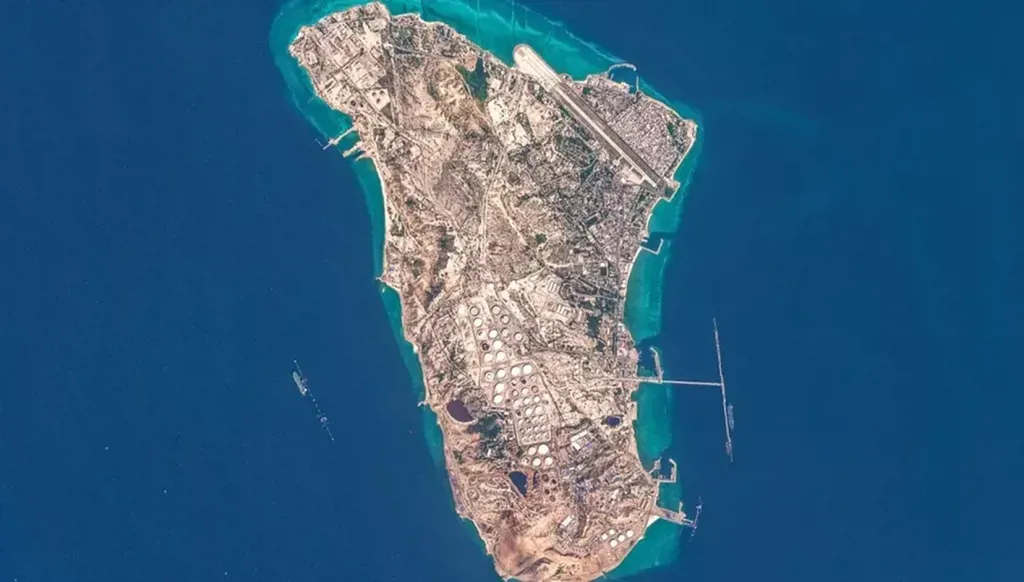
But how will Iran change? We are certain that Iran is transforming hour by hour under the massive and destructive raids targeting its military, security, and industrial facilities. It has lost air sovereignty over its skies, with the airspace above Tehran and major cities in the west and center dominated by American and Israeli fighters. Beyond that, in the coming days, Iran is approaching a stage where it could lose sovereignty and control over a significant portion of its maritime front in the Arab Gulf. Strategic islands crucial to its oil and gas exports—primarily Qeshm, Kharg, and Kish—are on the brink of being occupied. If these islands fall after neutralizing the coastal defenses along the Iranian shore, a new equation will be imposed on the faltering regime, which will face severe economic attrition.
In this context, besides the potential loss of control over its Gulf shores, Iran’s military assets on the Caspian Sea shores may very likely be attacked to cut its connection with Russia.
A country that, for the second time in less than a year, has lost sovereignty over a vast portion of its airspace is, in practical terms, a militarily defeated nation, likely to suffer a major loss. Therefore, we say the regime is dead even before it falls. Yet it has begun a downward trajectory that will accelerate toward complete collapse, deepening its crisis with neighboring countries—especially the Arab Gulf states—following the deliberate and continuous Iranian attacks.
Disclaimer: The opinions expressed by the writers are their own and do not necessarily represent the views of Annahar.