

France moves into the Lebanon frontline: Macron’s strategic play against Israel and Hezbollah
As war escalates in Lebanon, France pushes a bold initiative to reshape the region, challenge U.S. influence, and assert its diplomatic and economic presence amid a volatile battlefield.


 Messenger
 Whatsapp
 Threads
 Email
Email
 Print
Print
 X
X
 Facebook
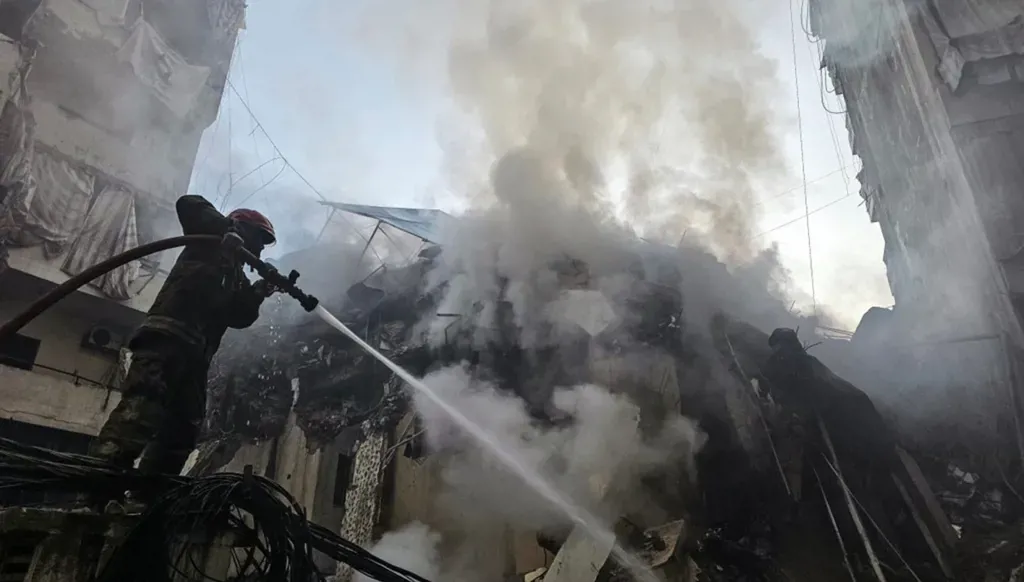


The "Axios" website, citing sources it described as informed, reported that France has prepared a new proposal to end the war it is waging on Lebanon, which includes several points, most notably normalizing relations and disarming Hezbollah.
Macron has entered the ongoing front line between Hezbollah and Israel, believing that the time is ripe not to impose peace but to fish in troubled waters. The war has objectives that extend beyond Lebanese borders, and he knows it is premature to discuss negotiations as long as the conflict follows increasingly complex paths, where the language of missiles still dominates diplomacy, with U.S. President Donald Trump insisting on rejecting any negotiations, as Iran expresses through its Revolutionary Guard.
Despite Hezbollah’s claims that its fight is in defense of Lebanon, arising from more than a year of Israeli actions in the country and framed as an existential battle, the gratitude expressed by the new guide, Mojtaba Khamenei, to the party for supporting Tehran in the war waged on his country by both the United States and Israel, clarified the picture. Consequently, the party will not make any independent decisions without first addressing the ongoing conflict in Iran, viewing it as existential for this axis that has existed since the export of the revolution from Iran in 1979.
Hezbollah is not the only one rejecting a settlement, as Israel also considers discussing it a waste of time. For Israel, the moment is to eliminate the border threat on the northern front. Any ceasefire without dismantling the party, or at least disarming it and moving the Lebanese government toward normalization, would be considered a victory for the other side. Consequently, Israel is preparing to expand operations and launch a major ground invasion. According to the Israeli Broadcasting Corporation, Kan, there is readiness to mobilize 450,000 reserve soldiers for a ground entry into Lebanon. The operation may not stop at the southern Litani border but could replicate the 1982 scenario and reach Beirut, strengthening Israel’s negotiating position by exerting pressure on the Lebanese government.
There is little chance of success for the French call to initiate negotiations, despite Israeli Prime Minister Benjamin Netanyahu authorizing Minister of Strategic Affairs and close associate Ron Dermer to handle the Lebanon negotiation file. This is unlikely to produce any new settlements, as it depends on the developments on the ground in Lebanon.
President Macron understands that this is his chance to gain leverage over the Americans and to play this card from his hand. It is the opportune moment for his country’s influence to return to the region, and halting the war now would not favor Washington, but instead register a victory for Tehran and its regional proxies. Therefore, Macron is accelerating efforts to develop a strategy that does not merely present proposals for permanent peace, but rather aims to challenge the Americans and strengthen his forthcoming Middle East initiative.
The struggle between Macron and Trump is not new, as its roots lie in France’s long-standing efforts to assert European independence from American influence. This led Macron to propose a plan centered on French nuclear deterrence for European countries in response to Russian threats amid the ongoing war in Ukraine. Behind the scenes of the Paris-Washington conflict is also Trump’s ability to personally “bully” Macron, particularly since the U.S. President resists the idea of negotiating with a leader who has only a few months left in office.
Balancing the personal and the strategic, the French initiative underscores France’s insistence on reshaping the Middle East and mitigating its impact on Europe. This is particularly significant as the war in the region has taken on an economic dimension, disrupting international energy routes, while the U.S. decision to allow continued access to Russian oil has fueled European discontent, as it effectively restores confidence in Russia’s war budget.
The French believe they have a window of maneuver at this moment, as the conflicting parties are still focused on assessing their military capabilities for a prolonged war. This has led France to view the success of its mission as a reflection on its regional policy, potentially enhancing its diplomatic presence, particularly in Lebanon. French companies, which secured contracts after the 2020 port explosion, stand to benefit—most notably the shipping and port rehabilitation firm CMA CGM, as well as companies involved in oil exploration and extraction in Block No. 8 in Lebanon.
It is too early to assess France’s role in the success of the Paris initiative, as the situation on the ground remains volatile and the language of war continues to dominate. This shows that the Americans are still intent on keeping the issue tied to their administration, preventing any other party from gaining leverage. Between French ambitions and American plans for the region, the final word still belongs to events on the ground—so, is a resolution near?
Disclaimer: The opinions expressed by the writers are their own and do not necessarily represent the views of Annahar.