

Silent algorithms: How AI is redrawing global power and sovereignty
Algorithms have become a key partner in military operations rooms. Intelligence reports indicated that the successful elimination of Iranian Supreme Leader Ali Khamenei would not have been possible without relying on large language models and advanced software...


 Messenger
 Whatsapp
 Threads
 Email
Email
 Print
Print
 X
X
 Facebook
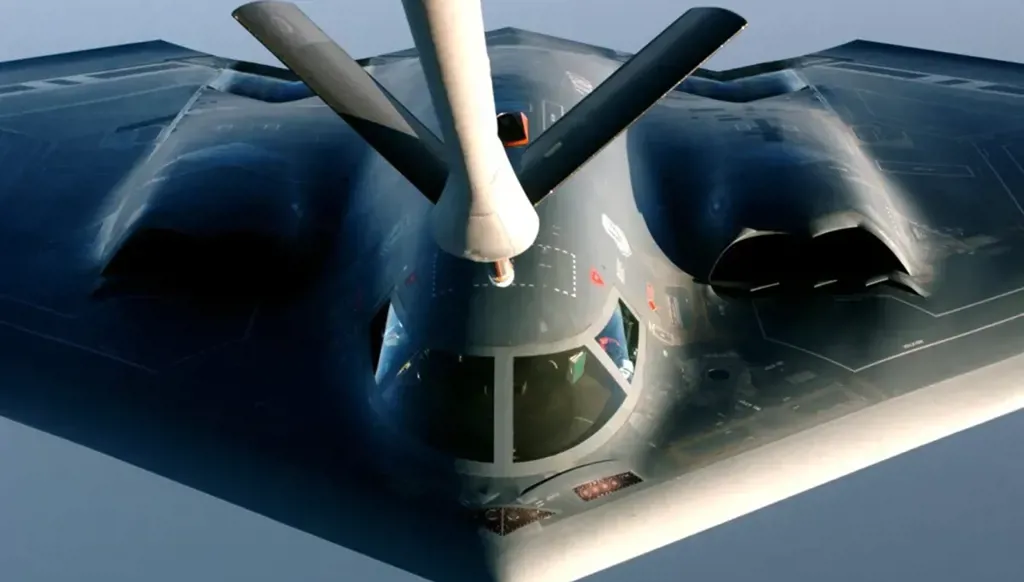


The world is now consumed by a race fiercer than the nuclear arms race: the race of language models that underpin artificial intelligence and are reshaping the balance of power.
Geography is now reduced to slices of silicon and algorithmic flows. The question is no longer just who owns the land, but who owns the code. Data processing is the new oil and the engine of political and military decisions. This is a massive transformation whose reverberations affect every aspect of nations’ lives.
Algorithms have become a key partner in military operations rooms. Intelligence reports indicated that the successful elimination of Iranian Supreme Leader Ali Khamenei would not have been possible without relying on large language models and advanced software, such as Maven and Claude, within the U.S. Central Command operations rooms to analyze the flood of data. This revealed the extraordinary capabilities of artificial intelligence: by combining predictive analysis with silent "ninja missiles," it could detect hidden patterns in the movements of the Supreme Leader and his inner circle, allowing the identification of a precise window during broad daylight in the heart of Tehran to strike a meeting of Iranian leadership, based on an algorithmic recommendation.
Hiding behind concrete walls or tunnels has become an illusion in the face of digital eyes that are almost a silent killer that never misses. The era of dumb bombs has ended in favor of algorithmic surgeries that remove heads deep within the underground corridors.
The ongoing conflict in Iran shows that artificial intelligence is becoming a central layer in the global power structure and a driver of events that can alter the course of history. Today, the geopolitical map of the world is being drawn around technology chokepoints that are as critical as the Strait of Hormuz or Bab el-Mandeb, namely centers of advanced semiconductor manufacturing. Power is no longer measured by landmass but by the nanometers separating transistors in ultra-precise processors. The ability to block computational power and microchips from adversaries has become a deadly strategic weapon. Whoever controls these supply chains can paralyze the mind of a rival state and freeze its military and civilian development at the push of a button. Algorithms have become an instrument of dominance for the powerful, allowing them to exert influence through control of intelligent systems and shape the collective consciousness of populations from behind screens.
Countries that do not possess sovereign artificial intelligence, which expresses their identity and protects their national security, fall into digital dependency that affects sovereign decision-making during crises and undermines the core of national security. A software update, a computer virus, or a cyberattack can paralyze a state’s vital functions; in this sense, algorithmic dependency is no less dangerous than traditional colonialism.
This technological struggle is redefining the meaning of the state itself. The Westphalia Treaty established the rules of national sovereignty centuries ago, but they are now eroding with the rise of digital sovereignty. National borders are breached not by armies, but by transcontinental AI models. Defense and attack systems are sold as scalable software, almost like entertainment subscriptions, but with deadly consequences.
We are not just talking about drones or smart weapons, but the emergence of war as a service for inhumane objectives: economic, political, military, or geopolitical gains, regardless of spilled blood. Even more dangerous is the shift of the war-decision compass from the trembling human hand to cold algorithmic logic, which knows no conscience or hesitation.
This reality forces middle and emerging powers to face difficult choices: joining technological alliances at the cost of political concessions, or building an expensive national industry. National sovereignty is now tied to the ability to control technological forces. For example, the “data cloud” hovering over a country captures traffic patterns and daily life through sensors and cameras in cities, even mapping the ways people think, turning it into raw data that feeds algorithms controlled by giant global companies imposing their own rules in our territories. Our living spaces transform into laboratories for external control.
Owning sovereign artificial intelligence is no longer a luxury; it is an existential necessity. It acts as a barrier against digital colonialism in an era of digital globalization that threatens cultural and political privacy. International calls are growing for a global AI charter to ensure that algorithms do not become tools solely in the hands of great powers.
This situation brings Arab countries to a crossroads. Should they remain sophisticated consumers, buying the latest technologies without owning the keys to their programming, or should they build an Arab technology bloc that controls its own sovereign data and language models? Perhaps the United Arab Emirates and Saudi Arabia are among the few that have insightfully recognized the gravity of this challenge, taking significant steps to acquire sovereign AI. In this century, sovereignty is guarded not only by borders, but by the minds that write the code. Those who do not own their algorithm today may lose control of their decisions tomorrow, making the localization and development of technology a necessity for survival, growth, and sovereignty in a merciless world.
Disclaimer: The opinions expressed by the writers are their own and do not necessarily represent the views of Annahar