

Global tensions soar as the Strait of Hormuz becomes a geopolitical flashpoint
As tensions escalate in the Middle East, Iran holds a strategic card, the U.S. seeks victory, and the world watches a conflict that could ripple from the Gulf to the Far East.


 Messenger
 Whatsapp
 Threads
 Email
Email
 Print
Print
 X
X
 Facebook


Who will fire the last bullet in this fierce war? That is the issue. All parties involved fear declaring defeat, which frustrates mediation efforts extending from the East and the West, prolonging the war into an uncertain timeline and fate, especially given the doubts about U.S. President Donald Trump's intentions in this war, which could be a broader mission beyond the geography of the Middle East, reaching to the Far East, where the war with Chinese competitors lies.
Trump has failed to liberate the Strait of Hormuz from Iranian hands after pledging U.S. forces to escort naval ships, ultimately calling on affected countries to intervene to secure shipping movements—essentially seeking to send soldiers to fix what the generals spoiled!
It seems Trump wants to declare victory from this region that captures the world’s attention in order to maintain the image of a fighter for the world and its interests; while he has announced the 100 % destruction or decimation of Iran’s military capabilities, he still acknowledges that the Iranians can send a drone, a mine, or a short‑range missile!
Iranians are aware of Trump's desire to portray himself as victorious, so they aimed to insult him, as revealed by the American network CNN, mentioning Iran's consideration to allow a limited number of oil tankers to pass through the Strait of Hormuz provided oil shipments are traded in Chinese yuan—a step that, even if not implemented practically, carries the implication of insulting the Americans and his dollar.
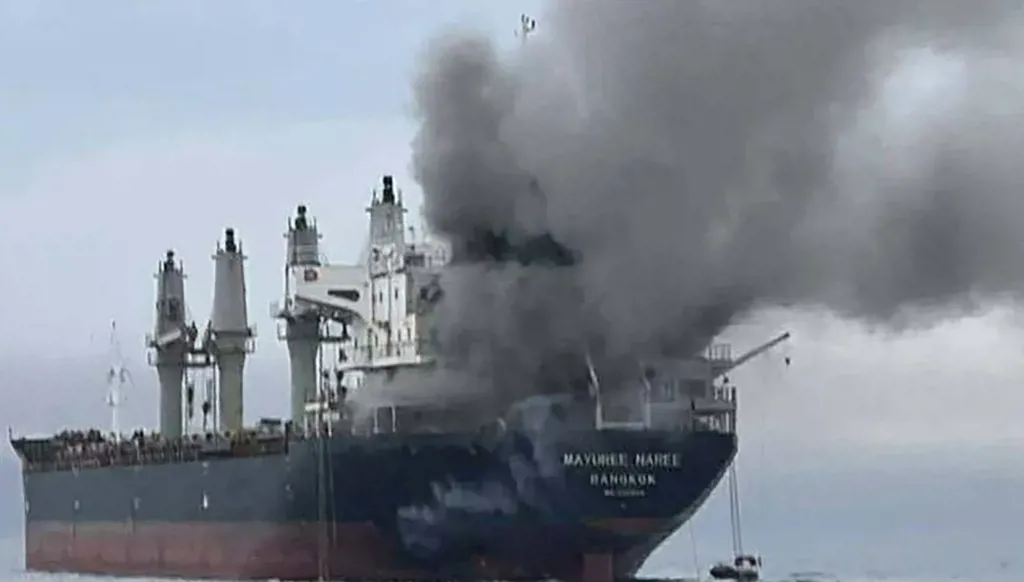
The Strait of Hormuz represents Iran's trump card and a pressure lever to end this war; despite all these losses in the global economy, Iranians have not yet militarily closed the Strait of Hormuz, but have only practiced intimidation, warning, and control policies. Meanwhile, Trump aims for the last shot at this strait after despairing from stirring unrest within Iran, thus continuing his military threat pressure policy by moving the amphibious assault ship USS Tripoli to the Gulf area, and upon its arrival, U.S. control over Iranian coasts or islands will become more probable.
Even before its arrival, current American attacks focus on striking Iranian military capabilities, especially missile and naval mine depots, as preparation for any phase in which the military pressure policy might extend, as demonstrated by the bombardment of military facilities and airstrips on Kharg Island, a vital node for Iranian oil exports in the Strait of Hormuz, two days ago. The world thus enters a new phase of madness unless this war stops; Iran maintains a revenge and retaliation policy, striking back in kind—for example, retaliating for the bombing of Bank Sepah and fuel tanks by targeting similar sites in neighboring countries.
Therefore, it is not easy for Tehran to concede the Hormuz Strait card where Trump entrenches to declare victory; concentrating the battle at this point will prompt Iranians to deploy the Yemeni Houthi group's card to threaten navigation at Bab al-Mandab and the Red Sea, possibly leading Americans to mobilize armed groups for support and distraction at Iran's borders. The target circle expanded by Iran will hit not only military, intelligence, and logistical sites but also economic installations related to the American economy or any party involved in this war, which is exactly what Trump seeks. He now focuses his efforts on internationalizing the Strait of Hormuz crisis so that victory, if it happens, will be American, framed as safeguarding the world’s security—or the world’s defeat in front of Iran, depicted as a leader of evil!
Disclaimer: The opinions expressed by the writers are their own and do not necessarily represent the views of Annahar.