

Middle East in flux: The Iran war’s global consequences
Trump and Israel’s military strikes against Iran set off a chain reaction affecting energy markets, regional security, and international diplomacy.


 Messenger
 Whatsapp
 Threads
 Email
Email
 Print
Print
 X
X
 Facebook
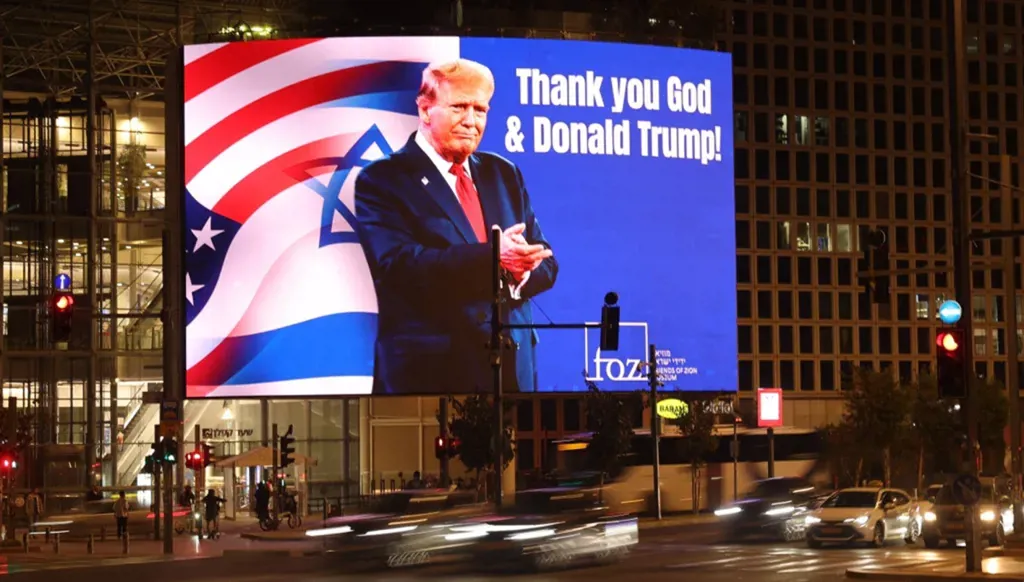


After the U.S.–Israeli war on Iran and Iran’s response, which triggered a global oil and gas shock, the Middle East will not return to how it was on February 27, the eve of the war’s launch.
It is quite easy to look back at previous U.S.-led wars and see how they have profoundly shaped geopolitical developments that still reverberate today. In 1991, George H. W. Bush led a massive international coalition of roughly 500,000 soldiers to expel Iraqi forces occupying Kuwait under Saddam Hussein. Following the war, in which the Iraqi regime was defeated and its foundations shaken, Bush announced the creation of a new international order led by the United States, at a time when the Soviet Union was on the brink of collapse and ultimately disintegrated later that year.
In 2003, George W. Bush led the "coalition of the willing" to occupy Iraq and overthrow Saddam Hussein’s regime, despite lacking a UN mandate. The swift victory of American forces over a weakened Iraqi army soon gave way to a prolonged quagmire that lasted for years, costing the U.S. more than 5,000 soldiers and $3 trillion. The war also sparked intense debate within the United States over its legitimacy.
On February 28, Trump, in partnership with Israel, launched a war on Iran with the declared goal of regime change. However, the American president kept shifting the war’s objectives daily, favoring the Venezuelan model—that is, remaining open to the regime after neutralizing its leader. In the initial strikes, the U.S. and Israel succeeded in eliminating Iranian Supreme Leader Ali Khamenei along with dozens of political and military figures. Yet the regime immediately escalated the conflict, launching attacks on Israel, American bases, and critical infrastructure in the Gulf Arab states, even though these states had declared before the war that they would not permit their territory or airspace to be used against Iran.
Iran’s escalation of the war, including ordering Hezbollah in Lebanon to strike Israel and directing the Popular Mobilization Forces to open a front in Iraq, triggered a broad regional conflict that spread beyond the Middle East, impacting Turkey, Azerbaijan, and Cyprus, an EU member. This escalation compelled previously neutral European countries, such as Britain, France, Germany, and Italy, to send air and naval reinforcements to the region.
In any case, the war that toppled the last existing political equations in the Middle East signals major geopolitical shifts. Iran made a grave miscalculation by attacking the Gulf countries, with which it had rebuilt relations in recent years.
If the regime survives, it will face extreme isolation and sanctions. This could create opportunities for protesters to return to the streets, demanding the regime’s overthrow. There is near consensus among analysts and strategic experts that only the Iranian people can bring down the regime. American and Israeli airstrikes have already significantly damaged the regime’s military infrastructure and weakened internal security forces, such as the Basij militia, which is responsible for repression, thereby making the protesters’ task more feasible.
The war also has repercussions for the global economy due to the massive surge in energy prices. It is reshaping the European landscape as well, after Trump lifted oil sanctions on certain countries, including Russia, to secure global energy supplies following Iran’s closure of the Strait of Hormuz. Furthermore, America’s hiring of Ukrainian experts to counter Iranian drones in the Middle East is likely to strengthen ties between Trump and Ukrainian President Volodymyr Zelensky.
Disclaimer: The opinions expressed by the writers are their own and do not necessarily represent the views of Annahar.