

Lebanon’s silent uprising: economic pain and digital protest
While the streets stay quiet, social media becomes a battleground against soaring prices, government failures, and systemic corruption.


 Messenger
 Whatsapp
 Threads
 Email
Email
 Print
Print
 X
X
 Facebook


On October 17, 2019, hundreds of thousands of Lebanese took to the streets to protest a 6-cent increase on WhatsApp call subscriptions. Today, the state commits a "massacre" compared to what Saad Hariri's government did at that time, and the victim barely screams, even though it is like a bird dancing while being slaughtered from the pain.
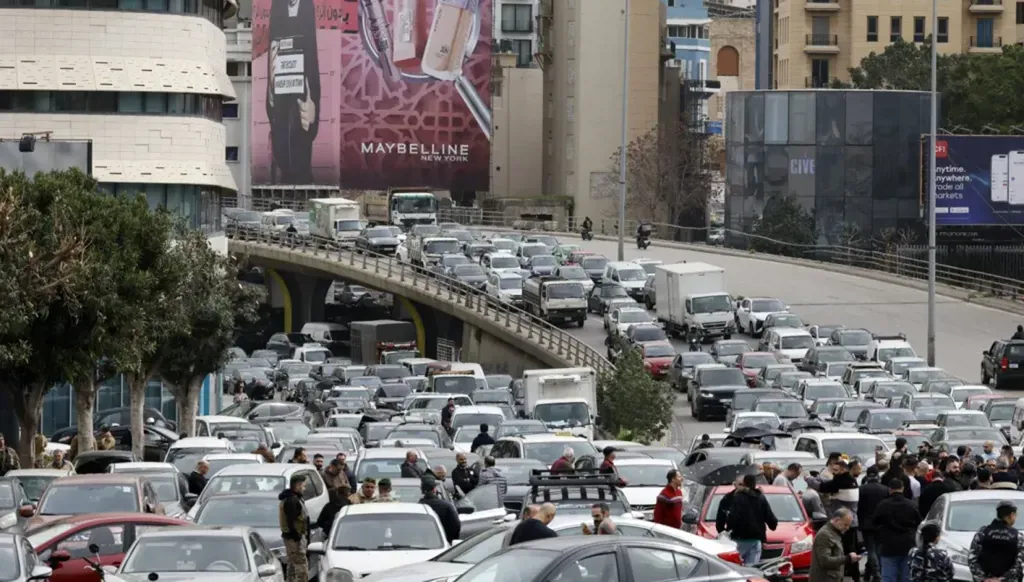
In 2019, the political class collectively aborted the revolution for contradictory reasons, using methods ranging from physical violence against demonstrators to the blatant political exploitation of civil society groups, as well as various visible and invisible interventions by local and international actors. The dangerous aspect is that aborting that revolution did not merely halt a temporary movement—it eradicated the seed itself. The political class crushed the people in an unprecedented manner. This is clearly visible today, as despite the egregious government decision to impose an increase of 300,000 Lebanese pounds on the price of a gasoline tank—also accompanied by a spontaneous increase of 60,000 pounds, raising the total to over four dollars—and a 1% hike in value-added tax, field protests so far have been limited to small movements in Beirut and a few roadblocks that were quickly suppressed.
Despite the flimsy justifications offered by the government, including its head and finance minister, for the increases—claiming they are normal, limited in impact, and unavoidable, and asserting, imaginatively, that they will not affect the poor—the hikes were in many respects a ‘malicious’ decision. The government somewhat appeased the main protesters in the country, namely public sector employees and military personnel, both active and retired, securing their support and keeping them home. They are the only group with skilled union leadership capable of organizing, voicing protest, and engaging with the media. The government completely ignored the fact that the country is not composed solely of public sector employees. Contrary to the prime minister’s reassurances, prices of all goods across the country surged almost instantly, as if someone had been waiting for that exact moment—particularly at fuel stations. The concerned ministers appear to mock the public when, for instance, the Minister of Economy claims that his ministry can control prices, while everyone in Lebanon—as well as the World Bank and its informants—knows that trade mafias in the country are stronger than the state.
So far, the protesting crowds have not taken to the streets—and they may not. However, the protest is widespread and intense on social media. Lebanese have become ‘peaceful’ protesters, preferring to express themselves through screens, which is easier, more attractive, less costly, and allows for broad dissemination and freedom of expression, even to the point of insult and defamation. This type of protest prevents clashes with their political representatives in the government, which expresses verbal solidarity with them as long as they stay home and only act when authorities see it necessary for goals unrelated to their livelihoods. This reflects a policy of domestication practiced for decades and worsened in recent years, fueled by sectarian, partisan, and psychological framing, a paralysis of the will to change due to life pressures, and resignation to political fatalism as an invincible force.
Social media activists mocked the rapid declaration of innocence by political forces regarding the ‘crime,’ claiming they opposed it both inside and outside the cabinet—a claim that no one took seriously. Perhaps Prime Minister Nawaf Salam and Finance Minister Yassine Jaber did not evade responsibility, even if they were unsuccessful in defending their decisions. They bore the brunt of criticism on social media, which reached a significant level of mockery and slander, involving activists, intellectuals, and ordinary citizens alike.
Amid the verbally violent protests on social media, which lack framing or organization, major political events have passed by without generating much interest. Even scandal-ridden cases, such as the hiring of about two thousand professors at the Lebanese University in stages, went largely unnoticed. This case is mired in legal and sectarian scandals, yet no minister or party objected—revealing a comprehensive political collusion against the law, the university, and education. What a mess!
Disclaimer: The opinions expressed by the writers are their own and do not necessarily represent the views of Annahar.