

All is not well in Iraq's Coordination Framework
Ironically, Trump's stance on Nouri al-Maliki makes it harder for many opposition forces to oppose his nomination to the premiership. Doing so could prove politically costly and threaten their relationship with Iran.


 Messenger
 Whatsapp
 Threads
 Email
Email
 Print
Print
 X
X
 Facebook
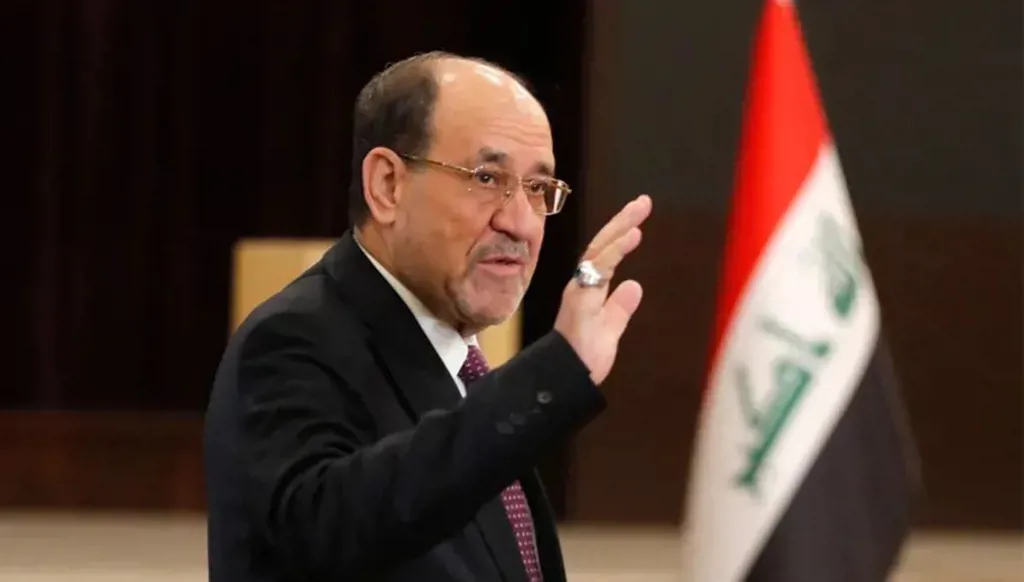


The leaders of the Shiite Coordination Framework, who emerged from the parliamentary elections in November 2025 with an overwhelming majority of 180 out of 329 seats—enabling them to dictate the three top positions and shape the political process—did not expect their party to become the weakest link in Iraqi politics.
Three months after the results were announced, the framework struggled to contain a number of crises. Its main rival, the Sadrist movement, has organized a self-imposed withdrawal, but still meddles to oppose grassroots civil organizations that could challenge the movement's soft-power.
The Coordination Framework has also seen a conflict between traditional leaders and second-generation leaders, resulting in discord in vision and strategy. Policies on entitlements and alliances with other parties remain points of contention, leading to internal fragmentation within the framework. Conservative members face off against those who consider themselves internal reformers, though the extent of any liberalism in the framework requires serious analysis.
The framework, designed as a "political" incubator for Shiite forces, parties, and currents, was not anticipated by its founders to become a nurturing environment for armed factions, which have been combining military and political work since 2018. The political wings of militias, securing close to 100 parliamentary seats, made them the most capable of controlling decisions according to an ideological agenda that can be described as politically extreme. They have begun proposing scenarios for the next government's structure and domestic policies based on positions that may not align with the majority of society, alongside an external orientation close to Iran, opposing the country's interests.
The Prime Minister's office is generally a strength for Shiite Iraqis, operating in a political process built on sectarian division. Recently it has become a curse on the Coordination Framework's unity. Mohamed Al-Sudani's ambition to secure a second term has run up against Nouri Al-Maliki's desire for a third term. This point of contention persists, even after the decision was made to nominate Al-Maliki. The presence of a "veto" by Islamic scholar Ali al-Sistani, coupled with the mistakes of Al-Maliki's second term, have kept conversation open and deepened the crisis, which might eventually conclude with a compromise candidate. The framework leaders still have not moved beyond the struggle for the highest executive office.
President Donald Trump's tweet, in which he announced his rejection of the framework's nomination of Al-Maliki as Prime Minister, was their greatest dilemma. The issue is no longer just about the nomination, but also about the slogans of Shiite leaders and armed factions, who are near united in their opposition to American hegemony. Ironically, Trump's stance makes it harder for internal forces to oppose al-Maliki's nomination, as doing so could undermine their "resistance image." If they comply with all of Trump’s conditions, it could also cost them their audience and main ally, Iran.
Disclaimer: The opinions expressed by the writers are their own and do not necessarily represent the views of Annahar.