

Iraq is the key to Trump's Middle East strategy


 Messenger
 Whatsapp
 Threads
 Email
Email
 Print
Print
 X
X
 Facebook
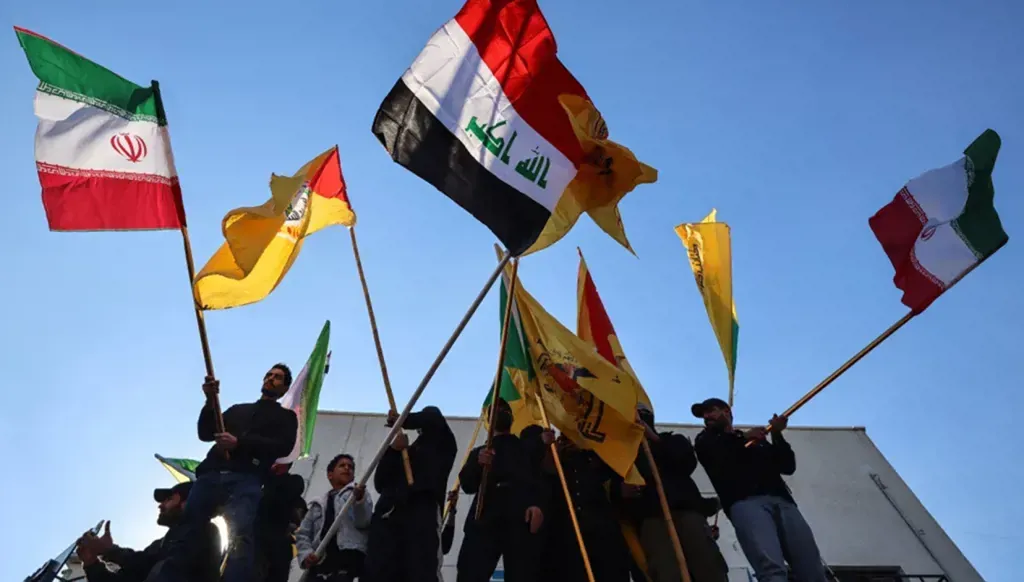


President Donald Trump, by repeatedly rejecting the idea of Nouri al-Maliki returning as Iraq’s prime minister, reinforces the U.S. administration’s determination to remove Iran from the country. The fact that the American president is revisiting this issue now is no coincidence, as regional tensions continues to escalate between regional heavyweights Iran and Israel.
At the core of Trump’s thinking is a set of precise calculations. Iraq has cost the United States tens of billions of dollars and is on the verge of falling into Iran’s embrace. The Americans, particularly George W. Bush’s administration, handed Iraq to Iran on a silver platter. This memory appears to linger in Trump’s mind, and he has taken it upon himself to put an end to Iran’s regional dominance, starting from Iraq.
The U.S. president understands that Iran was the sole beneficiary of the American war in Iraq, which toppled Saddam Hussein’s family-run Baathist regime. In the end, America handed power in Baghdad to Iraqi Shiite militias affiliated with Iran’s Revolutionary Guard.
Trump also recognizes that the new phase of Iran’s expansionist project in the region began in Iraq. With the fall of Baghdad in April 2003, the balance of power in the Middle East shifted. Following Iraq’s collapse, Syria effectively fell under Iranian influence. Lebanon, long flirting with Iranian influence, swung decisively to its side after the assassination of Rafic Hariri 21 years ago removed a major obstacle its sectarian strategy.
King Abdullah II had warned of the dangers of handing Iraq over to Iran even before Rafic Hariri’s assassination in February 2005. In October 2004, he referred to the “Shiite Crescent” in political terms—a Persian crescent stretching from Tehran to Beirut through Baghdad and Damascus.
Since entering the White House in January 2016, Donald Trump focused on the Iranian threat. He tore up the 2015 nuclear agreement that the Barack Obama administration had worked to achieve, doing so in May 2018. In the early days of 2020, the United States eliminated Qassem Soleimani, commander of the Quds Force and the spearhead of Iran’s expansionist project. This happened shortly after Soleimani left Baghdad Airport, where he had arrived from Beirut via Damascus Airport, which was considered safe by the Islamic Republic.
Trump returned to the White House about a year ago under new circumstances. Iran had weakened, and its expansionist ambitions had largely collapsed with its failed wars on the margins of the Gaza conflict. Iran was forced to effectively withdraw from Syria. As for Hezbollah in Lebanon, it still refuses to accept that its influence has practically ended. The party has yet to come to terms with the fact that Syria is no longer an Iranian “playground,” and that the so-called “Shiite Crescent” no longer exists.
Trump also turned his attention to Venezuela, seeking to sever its ties with Iran and Hezbollah. He took aim at President Nicolás Maduro in Caracas, aiming to bring Venezuela and its oil wealth back into the U.S. orbit.
From this perspective, it seems natural that the campaign against Iran would continue from Iraq, a country that can no longer be allowed to serve as a playground for the Revolutionary Guard, as Lebanon and Syria once did—before Israel’s attempted assassination of Hassan Nasrallah in southern Beirut and before Bashar al-Assad fled to Moscow.
It is not important to get lost in debates about Nouri al-Maliki’s personality or to assess the extent of Iran’s influence over him. For Trump, the priority is removing Iran from Iraq. America cannot remain trapped in Iran’s game. Since 2003, Iraq has been ruled by individuals who returned to Baghdad on the back of an American tank. Once in power, they began calling it a “U.S. occupation,” conveniently forgetting that the U.S. had enabled their rise.
Now, after the Trump administration placed Iran in a position where it must choose between surrender or facing a major attack from sea and air, it seems logical that Trump would set his sights on Iraq.
Disclaimer: The opinions expressed by the writers are their own and do not necessarily represent the views of Annahar.