

Trump doubles down on foreign policy


 Messenger
 Whatsapp
 Threads
 Email
Email
 Print
Print
 X
X
 Facebook


All at once, U.S. President Donald Trump is pushing for settlements in Iran, Ukraine, and Gaza—racing against time to achieve breakthroughs and cement his place in history.
The responsibility falls on special envoys Steve Witkoff and Jared Kushner. They have been tasked with negotiating a nuclear agreement with Iran and persuading Ukraine and Russia to halt their brutal war which is on track to enter its fifth year in a few days.
Trump is preparing for a grand celebration on Thursday, where he will announce the establishment of the "Peace Council," created as part of the U.S. plan to stop the war in Gaza—a group which many suspect may transform into an international forum to rival the United Nations.
Trump negotiates with Iran while simultaneously threatening it, amassing military forces around the country as if war were inevitable. He has put the Tehran regime in a position where it must either agree to a deal within a month or face a military campaign—one that this time could lay the groundwork for renewed protests. The U.S. president stated last week that "change" would be "the best thing that could happen in Iran."
This does not mean that Trump has illusions about entering a prolonged war or becoming directly involved in regime change. Memories of Afghanistan, Iraq, and Libya remain vivid, along with the strong opposition he faces from the isolationist movement in his own party. If he plays his cards wrong, foreign policy could be the topic which most hits his popularity before the upcoming midterm elections in November.
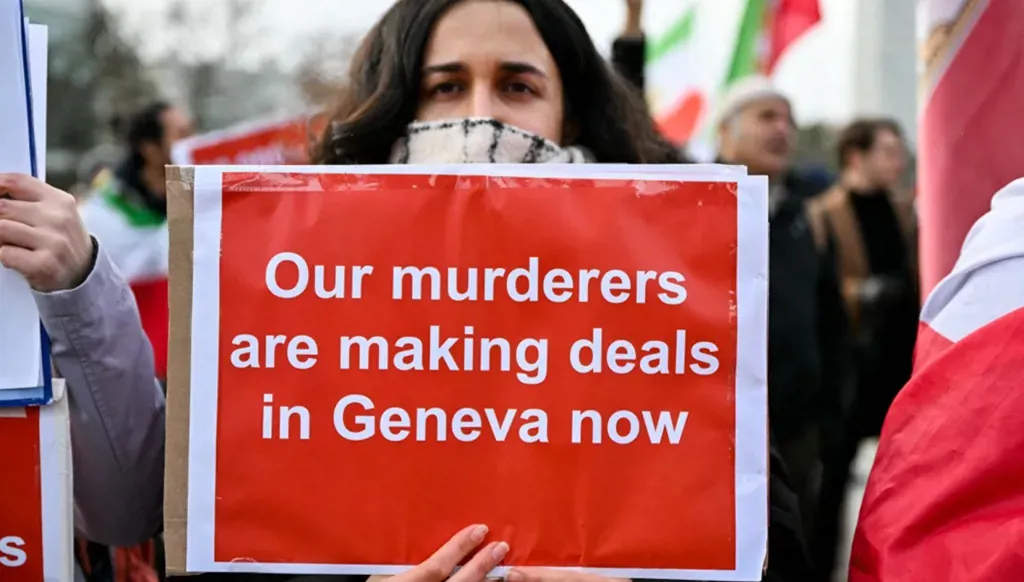
Witkoff and Kushner moved from negotiating with Iranian Foreign Minister Abbas Araghchi in Geneva to engaging with Russian and Ukrainian delegations in the same city, hoping to encourage both sides to agree on a ceasefire in a war which Trump insists would "not have happened" had he been in the White House in 2022.
Trump does not hide his disappointment that Russian President Vladimir Putin and Ukrainian President Volodymyr Zelensky have ignored his advice to end the "foolish" war and engage in dialogue based on principles initially formulated by the White House.
On Thursday, Trump is scheduled to announce the "Peace Council," whose authority extends beyond Gaza to address international issues that the Trump believes the United Nations has failed to resolve for decades, including the Israeli-Palestinian conflict.
Has the "Peace Council" succeeded in establishing calm in Gaza and moving to the second phase of the U.S. plan? The reality is that the ceasefire is shaken daily by Israeli bombardment, with progress stalled on two fundamental points: the Israeli withdrawal to a narrow strip of the territory and Hamas relinquishing its weapons. Meanwhile, the Rafah crossing faces daily Israeli obstructions, with commentators decrying its reopening as a largely symbolic gesture. Israel has not yet allowed the Palestinian technocratic committee, intended to manage the territory, to enter Gaza, and the international stabilization force remains unestablished due to Israel’s veto of Turkey's participation.
As the Gaza plan falters, Israeli Prime Minister Benjamin Netanyahu is quietly pursuing the annexation of the West Bank through administrative measures that subject the occupied Palestinian territories to Israeli land registration, despite Trump’s repeated opposition to the move.
The complexities of advancing the three pathways remain immense, often requiring personal intervention from Trump himself. Acknowledging this reality, the U.S. president stated on Monday that the Iran file requires his immediate, albeit "indirect," participation.
Disclaimer: The opinions expressed by the writers are their own and do not necessarily represent the views of Annahar.