

Lebanon after one year of PM Salam: Between achievements and unfinished battles


 Messenger
 Whatsapp
 Threads
 Email
Email
 Print
Print
 X
X
 Facebook
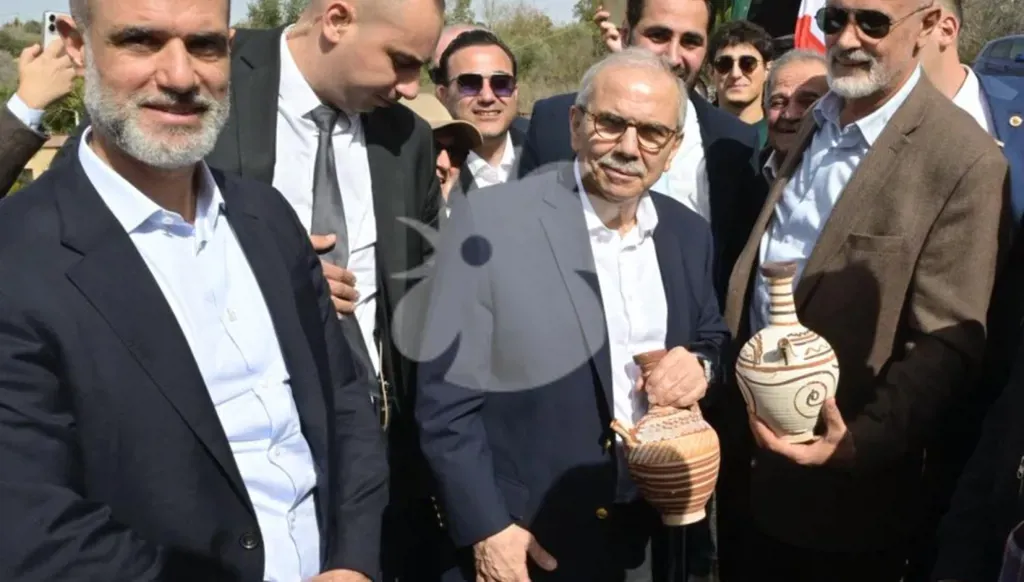


One year after the formation of President Nawaf Salam's government, it calls for celebratory rituals honoring achievements worthy of recognition on a revered platform. Yet, there remains a sting in issues still fraught with challenges, requiring urgent rescue efforts rather than any delay for showy celebration.
⭕What successes has Salam's government achieved? And what about the failures?
The government was formed on February 8, 2025, and achieved notable successes within a year. It persistently pursued development, advancing public works, implementing vital reforms in key Lebanese institutions, achieving security improvements, facilitating the return of displaced people, and taking a political stand against Iranian interference.
⭕Reformative Executive Decisions at Beirut Airport and Port:
The Minister of Public Works and Transport, Fayez Rasamny, achieved multiple successes. In March 2025, Rasamny launched the digital gates project at Rafic Hariri International Airport, with support from Germany and Denmark, aiming to enhance aviation security and streamline procedures. Another milestone was reached in December 2025 with the expansion of the inspection section at Beirut Airport. Rasamny affirmed that the airport's security is now on par with—or even surpasses—that of many airports around the world.
Security-wise, unprecedented measures were repeatedly implemented after Salam assumed office, including inspecting Iranian planes and preventing Iranian baggage from entering without proper checks. At the same time, security arrangements on the Beirut Airport road were improved to prevent blockages by Hezbollah supporters.
Significant developments also took place in the reopening of Qoleiat Airport. In September 2025, Minister Rasamny handed over the Qoleiat Airport file to the Civil Aviation Regulatory Authority, appointed by the Civil Service Council. Last Friday, the government approved a request from the Ministry of Public Works for a phased reopening of the airport.
At Beirut Port, the government implemented reforms recognized by the United States as significant. Scanners were introduced in their experimental phase, and during his January 2026 visit, Ambassador Michel Issa noted that the organization and management practices he observed met American standards.
⭕Development in Border Control with Syria and Repatriation of Displaced Persons:
Among the successes in joint Lebanese-Syrian initiatives, Defense Minister Michel Menassa signed a security agreement in Jeddah with his Syrian counterpart, Murhaf Abu Qasra, in March 2025. The agreement, mediated by Saudi Arabia, was attended by Defense Minister Khalid bin Salman. Later, in October 2025, a Lebanese-Syrian security consensus was reached on border control and crime reduction. As a result, border management improved, and smuggling along the Lebanese-Syrian border declined.
The Lebanese government also succeeded in sustainably repatriating half a million Syrian displaced persons to Syria, under the supervision of Minister Hanin Sayed and in coordination with the Syrian government. Convincing this many displaced persons to return was a feat that had not been possible in previous years.
⭕The Foreign Ministry's Confrontation of Iranian Interference with a Sovereign Discourse:
Throughout its first year, the Lebanese Foreign Ministry, under Minister Youssef Rajji, consistently rejected direct Iranian interference in Lebanese affairs whenever Iranian officials attempted to maintain intervention to prevent the handover of Hezbollah's weapons. Iranian Ambassador Mojtaba Amani was summoned, with the summoning renewed in April 2025 following his absence. In August 2025, the ministry strongly condemned statements by the Iranian Supreme Leader’s advisor regarding his refusal to relinquish Hezbollah's weapons.
⭕Local Elections After Prolonged Postponement:
Interior and Municipalities Minister Ahmad Al-Hajjar successfully convened the electoral bodies to elect members of councils, mukhtars, and optional councils. In May 2025, shortly after the government’s formation, municipal elections were held in full compliance with constitutional deadlines, following successive extensions of council and optional council terms by the previous government.
⭕The Financial Regularization Law:
The decision received support from the international community, including France and the United States, marking the beginning of restoring confidence in the Lebanese economy among global financial institutions. Though not popular, it faced domestic criticism when passed in December 2025. Nevertheless, it was the first time a law of such seriousness was enacted since the economic collapse.
Despite daily successes and strong performance by several ministries across various sectors, some ministries fell short in their duties, notably in agriculture, forestry, and official education, while the high cost of living remained a pressing concern.
⭕The Agricultural Sector's Tragedy
Agriculture Minister Nizar Hani did not achieve any meaningful executive development in the agricultural sector in 2025, a year considered disastrous for Lebanon’s agricultural regions due to the absence of effective rescue measures from the Ministry of Agriculture. Climate change and water scarcity, economic difficulties, crises in agricultural production across Lebanon, the dire living conditions of farmers, and Israeli strikes in southern Lebanon were all challenges whose repercussions the ministry failed to mitigate.
⭕Forest Fires
In March 2025, Minister Hani declared an agricultural environmental emergency to protect Lebanon's forests. In July 2025, Environment Minister Tamara Zain launched a project to manage forest fire risks in Lebanon’s high-risk natural areas. However, both initiatives remained largely theoretical, and neither ministry succeeded in preventing the fires that ravaged vast areas of Lebanon’s woodlands, due to lack of execution, climate change, and Israeli strikes.
⭕The Stumbling Official School
Challenges intensified for Minister Rima Karami in the educational sector, with the official school system faltering, strikes by public administration staff, an inability to strengthen the sector, and a lack of sustainable educational proposals.
⭕No Reconstruction
Government promises to rebuild what was destroyed in the Israeli war, including southern villages, remained unfulfilled during the year, due to the government’s limited capabilities and the failure to fully meet necessary conditions.
Government files in which no clear accomplishments were achieved, yet no outright failures occurred, remained caught between attempts at progress and setbacks.
The electricity sector remained caught between attempts at success and partial failure. The regulatory authority, considered a key reform condition, was established but failed to change the sector’s reality. Executively, there was some improvement in electricity supply; however, no complete or effective solutions have been implemented to date.
In consultations aimed at resolving the critical situation in southern Lebanon, the government maintained a level of calm that helped prevent another major Israeli war, although the Israeli army did not withdraw from Lebanese positions, and occasional partial strikes targeting civilians continued.
The most fluctuating file between attempts at success and partial failure was the weapon containment issue. While Hezbollah’s disarmament was carried out in the South of the Litani, challenges remain that prevent effective containment of weapons across all Lebanese regions.
Disclaimer: The opinions expressed by the writers are their own and do not necessarily represent the views of Annahar.