

Postponing Lebanon's elections may save the democracy


 Messenger
 Whatsapp
 Threads
 Email
Email
 Print
Print
 X
X
 Facebook


Professor Tony Attallah
Former Dean of the Higher Institute for Doctoral Studies in Law, Political, Administrative, and Economic Sciences at the Lebanese University.
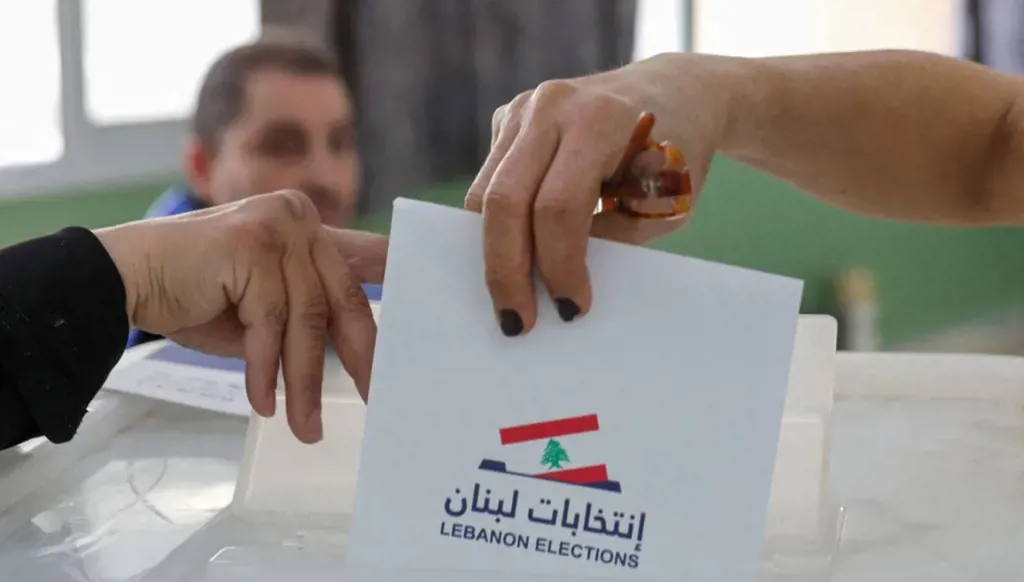
Parliamentary elections are not merely procedural—they represent a constitutional entitlement aimed at balancing the wishes of political elites and the people. Many MPs, during discussions on the 2026 budget, have expressed doubts that conditions are suitable for holding elections, with some openly stating they would propose a law to postpone them for one or two years. The question in Lebanon is not: should elections be held? But rather: can they be held in a legitimate manner in the short term? Policy makers face a choice: either conduct the elections in deference to the constitution, or temporarily postpone for more equitable domestic conditions, preserving the image of state effectiveness.
The first argument is simple: elections are a constitutional duty and postponing them undermines legitimacy and opens the door to a vacuum and unlawful extension. This logic seems sound in a vacuum, but remove the conditions of freedom, equality, and integrity, and it becomes untenable. Here lies the major dilemma. In the presence of parallel state institutions, elections become breeding grounds for personal attacks against opponents, fabricated accusations, selective lawsuits, and subtle judicial, economic, and administrative pressures. These methods are not registered as traditional violations, yet they deprive elections of their free essence.
If elections are to move forward, and in the presence of an armed non-state organization that controls war and peace, how can the election oversight body monitor this intimidation? How can pressures exerted outside polling centers be regulated? If the state fails to answer these questions, oversight, and by extension the elections themselves, will remain statutory.
The second option, postponing elections under current circumstances, stems from a deeper principle: legitimacy lies not only in respecting form but also in respecting substance. Constitutional thought has recognized this logic, as in the French Constitution under the Third Republic (1875–1940) and Fourth (1946–1958), where no constitutional amendments were allowed under occupation. The principle was clear: no reform or change in the structure of power should occur under loss of sovereignty, in order to protect legitimacy and national sovereignty. This logic is not limited to constitutional amendments but extends to any fundamental change in political balances, including redrawing the map of parliamentary blocs, considering that elections are a constitutional procedure or rise to a constitutional level.
In the Lebanese case, it is difficult to ignore the reality of occupation in its various forms: direct occupation in parts of the south by the Israeli aggressor, which prevents residents from returning and participating organically in voting, and indirect occupation through the dominance of Iranian proxies such as Hezbollah. In this context, can one speak of free voting? And can elections be considered a full expression of popular sovereignty when part of the population is displaced and another part is under armed pressure?
In addition, there is the issue of the legal conditions themselves. The current election law is controversial and not accepted by the majority of MPs. It is the result of compromises between major blocs aimed at gerrymandering districts to reproduce the same political class. The electoral district for the diaspora remains a subject of sharp and ongoing political dispute. Domestically, the voting value of a citizen’s vote is unequal. For example, a candidate in Chouf–Aley can win a seat with less than 8% of the vote, while a candidate in Sidon–Jezzine needs around 20%. This imbalance violates the principle of equality among citizens and makes the electoral process itself contested in terms of legitimacy.
Furthermore, the authority responsible for protecting electoral legitimacy suffers from a crisis of confidence. The Constitutional Council’s term has expired, and although the law allows it to continue, its past rulings have not demonstrated sufficient independence, leading to widespread criticism. More critically, its jurisdiction is limited to disputes between a losing candidate and a winning one and does not extend to evaluations of the electoral process as a whole. It does not review preparatory actions or the constitutionality of the election law when results are contested, leaving flaws in the electoral system beyond oversight.
Experience has shown that the existence of oversight does not eliminate violations but merely shifts them into the shade. In the 2018 elections, Lebanon witnessed media disinformation campaigns during the electoral silence period, spreading false news about the withdrawal of certain candidate lists, which quickly circulated on social media. While the oversight body intervened later, the damage had already occurred. Who can measure the impact of such news on voters’ intentions? And who can guarantee it will not recur using more sophisticated methods?
In addition, the oversight body has been lax in monitoring electoral spending, even though the law already sets high ceilings that undermine the principle of equality and compromise equal opportunity. Political money remains the decisive factor, not programs or political projects. Who can guarantee that the government supervising the elections is neutral, or that none of its members will be tempted to run for office? The ministerial statement did not address this, leaving a blatant mix between public office and election campaigning.
Even the secrecy of the ballot, which is central to electoral freedom, has not been properly protected. The voting booths used in every election since 2018 were not private, positioned facing election monitors. Moreover, the size of the ballot and the method of casting preferential votes allowed observers to track voters’ hand movements. This constitutes a direct violation of the principle of secrecy.
We face two options: either elections that follow procedures but are emptied of sovereignty and freedom, or a conditional postponement with the rebuilding of legitimacy: restoring the state, achieving actual sovereignty, enacting an election law, establishing reliable oversight institutions, and ensuring real electoral security.
The first option may seem easier and faster, but it carries the risk of consolidating domination under a democratic façade, reminiscent of how the Nazi Party came to power in Germany through elections before overturning democracy entirely (1932–1933). The second option, despite its political cost, preserves the true meaning of elections as an act of sovereignty, not merely an administrative procedure. Between form and substance, the question remains: do we want elections at any cost, or do we want sovereignty even if it delays voting?
Disclaimer: The opinions expressed by the writers are their own and do not necessarily represent the views of Annahar.