

Is Hezbollah’s era coming to an end?
The President of the Republic Joseph Aoun, along with the Prime Minister Nawaf Salam and the government, must show sufficient courage to accelerate steps and put an end to the anomalous phenomenon represented by Hezbollah over the past two decades.


 Messenger
 Whatsapp
 Threads
 Email
Email
 Print
Print
 X
X
 Facebook
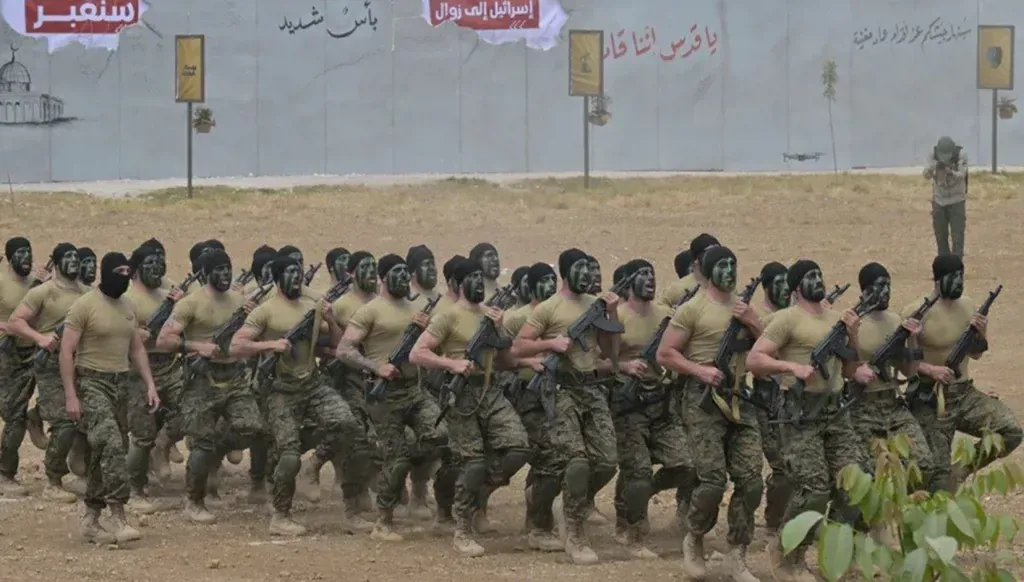


The region has changed, and Lebanon along with it. With time, it will change even more. Iran, which shaped the region’s course for many decades, is in a phase of decline. Even if it does not suffer a major blow in the near term, the regime will continue to unravel as the large wave of protests sweeping the country since December 28 intensifies. The wave we are referring to is not new: what it shares with previous ones is a pattern that does not change. Protests begin under economic, financial, social, livelihood, and cultural slogans, as happened in 2018 and 2022, then quickly evolve into political protests denouncing the “dictator,” meaning the Supreme Leader, and the system of the Islamic Republic of Iran.
Most important for us in the region is that slogans opposing regional policy are being raised, such as: “Neither Gaza nor Lebanon - we die for Iran.”
Then the facilities of the nuclear program, on which tens of billions of dollars had been spent were struck, while the people endured economic and living hardship for four decades.
If we also take into account spending on the so-called arms, such as Hezbollah the Iran-backed Lebanese armed group in Lebanon, we understand the reason for the resentment within Iranian society toward the party and everything symbolizing the militias spread across the region.
In practical terms, a U.S.–Israeli strike may be approaching, but this time it would occur at a stage of structural disintegration of the regime, amid the exit of wide segments of citizens and the government’s admission, voiced by Iran's President Masoud Pezeshkian, that it no longer possesses any means to rescue the country’s economic and financial situation.
It is clear that Pezeshkian is speaking with an unprecedented frankness in the history of Iranian governments. From his tone, it can be understood that, despite originally belonging to the hardline camp, Iran’s conservative Islamist faction. He is, in some way, rebelling against the very core of the system that actually rules the country. All this comes amid the collapse of the stature of Supreme Leader Ali Khamenei in the “motherland” - let alone in the region.
In Lebanon, we are facing a simple and clear equation known to Hezbollah and to the official authorities, foremost among them President Joseph Aoun. If the government does not immediately move to implement the second phase of disarmament north of the Litani River (a UN-defined line in southern Lebanon), a broad military operation will begin to turn the tables on Hezbollah, which, like Iran, has lost most of its regional and international pillars of support. Soon, as security cells and those linked to drug trafficking begin to unravel, we will hear of the return of thousands of party members, along with their families, from Venezuela, fearing pursuit in light of the deal struck between the United States and the deep state in Venezuela, of which Nicolás Maduro was the first victim.
Quite frankly, we say that the President of the Republic, along with the Prime Minister and the government behind him, must show sufficient courage to accelerate steps and put an end to the anomalous phenomenon represented by Hezbollah over the past two decades. In short, if the matter is not addressed internally and immediately, external actors will deal with it in their own way.
Disclaimer: The opinions expressed by the writers are their own and do not necessarily represent the views of Annahar