


 Messenger
 Whatsapp
 Threads
 Email
Email
 Print
Print
 X
X
 Facebook
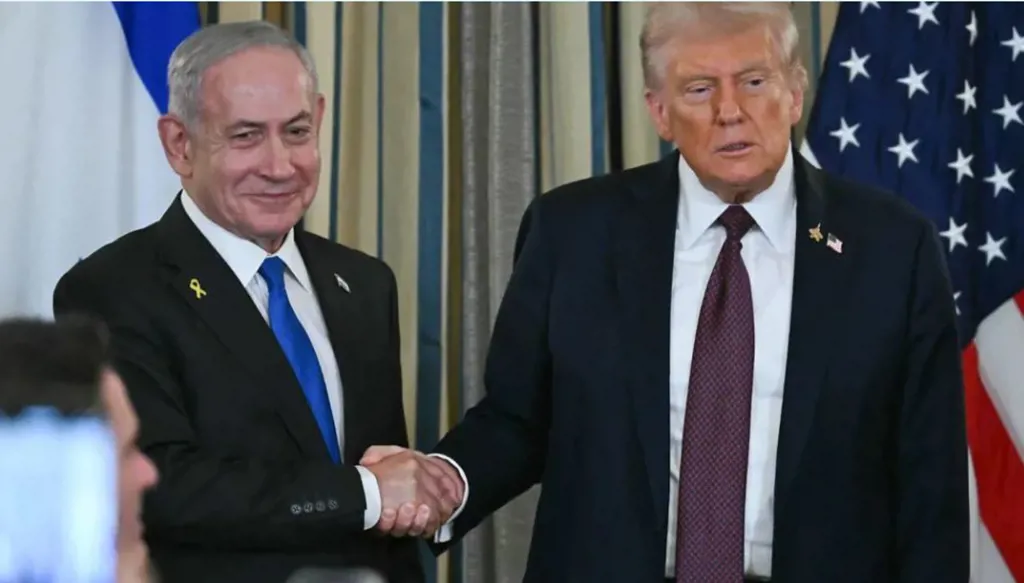


Amid the absence of a clear indication of whether U.S. President Donald Trump will permit a military action against Iran in the near future, tension looms over the Middle East and the Arabian Gulf. The uncertainty surrounding Trump's intentions and potential actions prompts Iranian authorities to prepare for a possible strike targeting the country's nuclear infrastructure.
Satellite images have shown that Tehran has closed all entrances to tunnels at nuclear sites in Isfahan, Natanz, Fordow, and Arak, simulating the preparations that preceded the Israeli operation 'Rising Lion' and reflecting the measures that preceded the American operation 'Midnight Hammer' executed last June. Simultaneously, American diplomatic and military activities continue in the region.
Amid this ambiguity, Israeli experts and analysts race to propose unconventional scenarios that reflect the sensitivity of the stage. In this context, comes the urgent visit of Israeli Prime Minister Benjamin Netanyahu. The Hebrew site 'Walla News' predicted that Netanyahu would request the focus of the discussion to be on Iran, at a time when the American administration is concerned about a series of 'dramatic' decisions made by the mini-cabinet (the cabinet), announced by Finance Minister Bezalel Smotrich. These decisions include declassifying land registry records, lifting legal restrictions on land purchases by Jews, expanding planning and building powers in areas like Hebron, and establishing special municipal administrations for sensitive sites like Rachel's Tomb. Washington views these steps as a 'creeping annexation' path.
The Israeli Scenarios
According to estimates, Netanyahu will present the latest intelligence information regarding the Iranian nuclear program, especially the enrichment file, the progress of ballistic missiles, and Iran's activities through its regional proxies. His primary goal is to persuade Trump not to pursue a deal that does not accommodate Israel's vital interests, possibly using the missile file as a persuasion tool.
Three possible scenarios for the visit are proposed: the first is to obstruct any possible deal by clarifying Israel's 'red lines'; the second is to coordinate a potential American strike; the third is that all these are part of a broader deception maneuver.
'Walla News' pointed out that the Trump-Netanyahu meeting is likely to be closed to the media, without photos or a joint press conference, amid the uncertainty prevailing over the decision-making mechanism within the Trump administration, where positions can change within minutes or even seconds.
Simultaneously, the Iranian scene witnesses significant diplomatic movements, with Tehran sending a high-level delegation to the Sultanate of Oman, surpassing the presence of Foreign Minister Abbas Araghchi. Ali Larijani, a senior advisor to Supreme Leader Ali Khamenei, arrived to discuss bilateral relations and the context of talks with the United States.
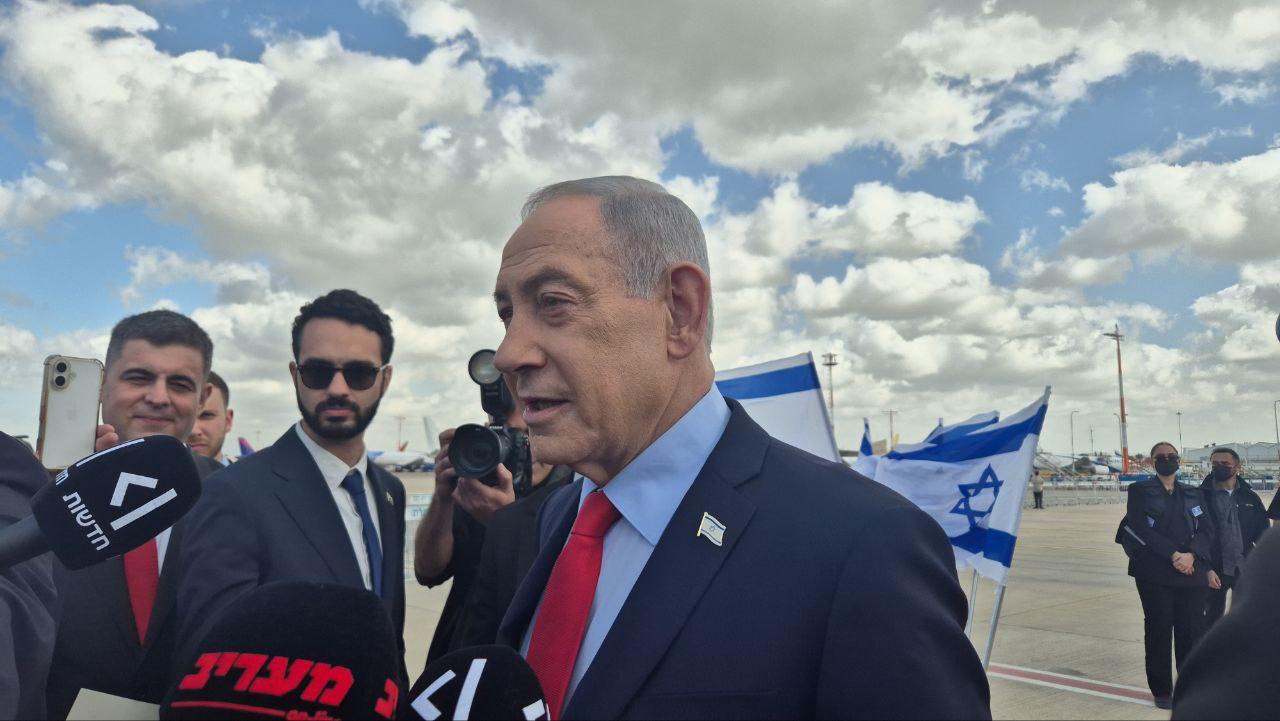
Israeli Readings and Warnings
Journalist Zvika Yehezkeli, an Arab affairs analyst at 'i24NEWS', pointed out that Iran's predicament lies in its belief that the United States does not dare to attack it, relying on Washington's announcement of its intention to reach an agreement. He warned that the Iranians are demanding the lifting of sanctions without making real concessions, especially regarding halting uranium enrichment, considering that any agreement reached would be bad for Israel.
For her part, political analyst in 'Maariv' newspaper, Anna Bresky, stated that the advancement of Netanyahu's visit at this critical timing aims to 'directly influence' the ongoing negotiations between Washington and Tehran. She confirmed that Netanyahu carries a clear message of rejecting any agreement that focuses on limited aspects of the Iranian nuclear program, emphasizing that any agreement must be comprehensive, addressing the ballistic missile program as well. The newspaper quoted political sources as saying that 'separating issues only leads to a temporary illusion of stability.'
Regional Power Struggle
In a parallel reading, Tsvi Barel in 'Haaretz' considered that the tensions associated with Iran have come to reflect a regional power struggle, where the interests of Turkey and Arab countries intersect in preventing the outbreak of war, fearing its economic and humanitarian repercussions, versus Israeli encouragement for escalation through its close relationship with Trump. Tehran realizes, according to Barel, that relying on major powers like China and Russia does not guarantee its security, making the regional balance of power a crucial element in its calculations.