

Global markets under pressure: The economic fallout of war
In less than three weeks, rising energy prices, disrupted supply chains, and market volatility are showing how swiftly conflict can translate into real economic costs worldwide.


 Messenger
 Whatsapp
 Threads
 Email
Email
 Print
Print
 X
X
 Facebook
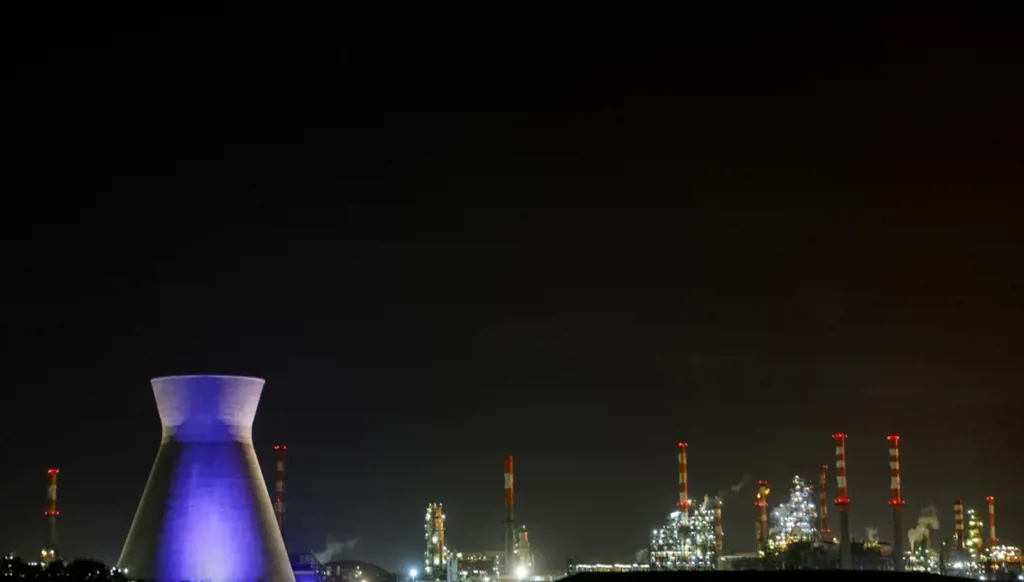


In less than three weeks, the war has produced a dense set of figures that capture the scale of the transformation. In one of the fastest waves of escalation in the region in years, these numbers have accumulated in under three weeks, a pace rarely seen in similar crises.
At the time of writing, more than 1,300 people have been killed in Iran, an average of about 60 to 65 deaths per day, and around 968 in Lebanon, or more than 900 according to overlapping estimates, along with 14 in Israel. In addition, 13 American soldiers have been killed and hundreds of people have been injured.
In Lebanon alone, the number of displaced people has exceeded one million, including about 350,000 children. In just about two weeks, 111 children have been killed and 334 injured, which is roughly equivalent to an entire classroom of children killed or wounded every day, highlighting the rapidly growing human cost.
But the cost has not remained only human. In the energy market, the price of Brent crude has exceeded 108 dollars per barrel, or about 108.5 dollars in some trades, compared to around 70 dollars before the war, an increase of nearly 50 percent within weeks. Market estimates to disruptions equivalent to between seven and ten million barrels per day of Middle Eastern supply. The impact is not limited to oil but extends to natural gas markets, which remain highly sensitive to any disruption in the region.
Between 17 and 20 million barrels per day pass through the Strait of Hormuz, representing about 20 percent of global trade in oil and liquefied natural gas. International trade relies mainly on maritime transport, which accounts for about 80 to 90 percent of global trade volume. Between March 1 and 15, around 90 vessels passed through the Strait of Hormuz, including 16 oil tankers, indicating that navigation has not stopped but is taking place under a heightened level of risk.
This has been reflected in shipping and maritime insurance costs, which have risen noticeably as risks linked to the region have increased, without leading to a complete halt in trade movement. However, it threatens disruptions to global supply chains, from heavy industries to consumer goods.
In financial markets, the picture appeared more complex, but the most important factor was the speed of reaction. Within just a few days, markets picked up signals of escalation. The US dollar strengthened, while stock indices declined under pressure from rising energy prices and increasing risks.
In Europe, the Stoxx 600 index fell by 0.70 percent to around 598 points, while major US indices declined by between 0.7 percent and 1 percent in subsequent trading. Meanwhile, gold recorded losses of about 2.6 percent, a contrast that reflects the strength of the dollar and pressure from inflation expectations.
In this sense, the war is no longer affecting a single market, but four key markets at the same time: energy, equities, currencies, and metals, a development that amplifies its economic impact.
At the same time, the direct economic cost has begun to emerge clearly, even if it remains difficult to measure precisely. In Lebanon, the displacement of more than one million people means a broad disruption of economic activity, from trade to services, in an economy already suffering from a deep crisis. In Israel, data suggests to rising daily military operation costs and partial disruption in productive sectors. As for Iran, it is facing multiple pressures, including targeted facilities, tensions in the energy sector, and the cost of security and military repositioning.
In the absence of a single comprehensive figure, indicators from energy, shipping, displacement, and military spending, not to mention physical damage in the countries targeted by attacks, suggest an economic cost that is expanding rapidly and likely to surge sharply if military escalation continues.
Taken together, these figures show that the war is not only being fought between armies, but is also striking five major systems at once: people, energy, shipping, markets, and currencies.
But the numbers do not only describe what has happened, they also point to what may happen. Every increase of 10 dollars in oil prices could raise global inflation rates by about 0.2 to 0.3 percentage points. This means that continued high prices will increase inflationary pressures worldwide and raise the cost of transport, food, and energy, which is quickly reflected in food prices in many countries.
This means in practical terms that the cost of this war does not stop at its geographic borders, but extends into the lives of billions of people through energy prices and essential goods.
In contrast to this economic escalation, diplomacy appears unable to keep pace. The number of proposed initiatives is not matched by tangible progress, leaving markets in a state of anticipation and increasing the cost of uncertainty.
More importantly, these figures do not seem to be stabilizing, but are still on an upward trajectory so far, opening the door to more costly scenarios if the escalation continues.
Even so, the numbers remain unable to answer the most important questions: will these economic costs remain within manageable limits, or will they turn into a broader crisis? Will markets become a source of pressure toward de escalation, or an additional factor in complicating the conflict?
In less than three weeks, it is possible to count the dead, the displaced, the barrels, the ships, and market fluctuations. But what cannot yet be measured is the scale of the economic transformation that has begun to take shape. A war that started as a military strike is gradually turning into a test of the ability of economies, both regional and global, to absorb a multidimensional shock.
In this sense, the first three weeks may be only the beginning of a cost that has not yet been fully calculated.