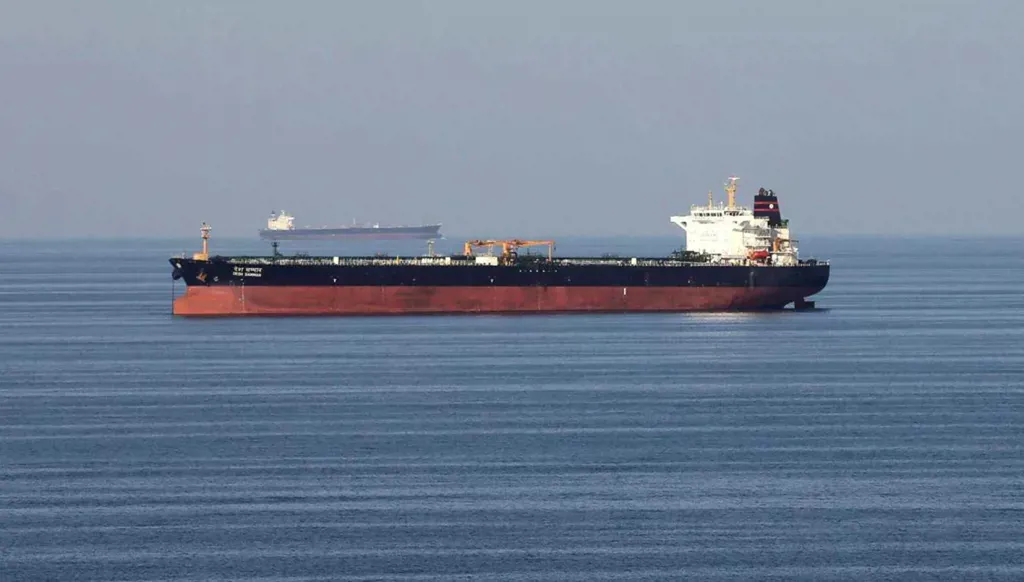
Major events don’t merely disrupt the present; they reshape the future. The COVID pandemic was not just a health crisis; it transformed business models, restructured supply chains, and accelerated the rise of a digital economy whose rapid expansion few had anticipated. The closure of the Strait of Hormuz today is such an event—one that energy markets have anticipated for decades. Now that it is finally happening, it will leave a lasting imprint on how the world perceives energy security and the Gulf’s role in the equation of the 21st century.
The strait, through which 17–20 million barrels pass daily—equivalent to about 20% of global oil consumption and 22% of liquefied gas trade—has today become an open tool of geopolitical blackmail. Its consequences are estimated to range from $330 billion in global GDP losses if the closure is short-lived, to $2.2 trillion if it persists for three to six months. These are not merely theoretical figures, but the price humanity pays for decades of ignoring that energy security is inseparable from the security of sea lanes.
China and America… Energy security above all else
China imported over 11 million barrels per day in 2025, the majority of which travels by sea through international straits, with the Gulf alone accounting for nearly half of these imports. For Beijing, Hormuz is not merely a maritime passage, but the lifeline through which its industry, food security, and development goals breathe. As a result, China approaches the crisis with calculated calm: diversifying its sources between the Gulf, Russia, and Iran; deepening long-term contracts with Gulf countries; and maintaining a diplomatic distance that allows it to avoid openly taking sides in a conflict between Washington and Tehran—both of which would be detrimental to its interests.
The United States, although it has become the world’s largest producer of oil and gas, still views the security of the Strait of Hormuz as a symbol of the international dominance it has maintained since the 1970s. What it seeks today is a delicate balance: enough disruption to justify the presence of the U.S. fleet in the region and to weaken Iran economically and politically, yet sufficient stability to avoid an oil shock that would fuel domestic inflation and politically embarrass the administration before voters. At the same time, Washington is leveraging the crisis to promote its liquefied natural gas exports to Europe and Asia as a “safer” alternative to regional supplies—effectively meaning that each day the crisis persists translates into additional market share for U.S. energy companies.
Iran, Israel, and Russia… Who really wins?
Iran does not seek a complete and permanent closure, but rather a “gradual choking” that keeps 14.8 million barrels per day without clear export routes, while driving marine insurance rates for Gulf tankers up by 300 to 500 percent. Tehran’s strategic objective is to tie global energy security to its own security and survival, forcing Washington and Tel Aviv to calculate the cost of every escalation in real time—not only in terms of tanks and aircraft.
Israel is leveraging the crisis to deepen regional security arrangements and expand its role in regional defense systems, while keeping a close eye on broadening its influence and halting Iran’s nuclear program as a core objective. Meanwhile, Russia stands as the quietest major beneficiary: every sustained rise above its fiscal breakeven price offsets the discounts imposed by sanctions on its oil and gas, directly boosting its war budget in Ukraine. Moscow has neither closed a strait nor fired a single missile toward the Gulf, yet it continues to reap the rewards of a fire ignited by others.
Europe… Economic power, strategic impotence
Europe represents the biggest paradox in this scenario: importing energy from everyone while influencing none. European gas prices (TTF) have surged by 180% since the conflict began, and today the continent debates mechanisms for a “Black Sea model” to diplomatically reopen the passage, even as EU Foreign Policy Chief Kaja Kallas openly stated there is “no desire” to extend the EU naval mission’s authority at Hormuz. Most embarrassingly, Europe’s only feasible option if the closure persists is a reluctant return to Russian gas—a dependence Brussels spent years and vast funds trying to reduce. In short, Europe pays the price for lacking an energy strategy that combines both will and capability.
The Gulf… A loser despite the numbers
The numbers are deceiving. Yes, oil prices have surpassed $100 a barrel, even exceeding $150 for crudes like Oman or Kuwait, but 14.8 million barrels per day remain trapped without export routes. Gulf countries are losing over $745 million daily in oil and gas revenues, while their stock markets have fallen 15 to 35% compared to pre-war levels. High prices mean little when you cannot export what you have.
Saudi Arabia has partial relief through the East-West pipeline, which Aramco is aiming to run at its full capacity of 7 million barrels per day toward Yanbu on the Red Sea. But Kuwait, Qatar, the UAE, and other Gulf producers lack a comparable integrated network, leaving their exports at the mercy of Tehran’s decisions. Additionally, over 30 million people in the Gulf rely on coastal desalination plants, all within range of Iranian drones. Meanwhile, Red Sea desalination facilities continue to supply the rest of Saudi Arabia safely, beyond the reach of potential attacks.
What should the Gulf want from Hormuz?
Two lessons emerge from this foundational event. First: the notion of a “post-oil” world is an expensive illusion. Even the International Energy Agency’s official scenarios, grounded in actual policies rather than aspirations, project rising oil demand until 2050, with fossil fuels remaining central to the global energy mix. Weeks of closure have shown that energy security is not built on speeches, but on pipelines, tankers, facilities, and armed protection.
Second: the region needs two architectures, not one. Infrastructure architecture: expand pipelines toward the Red Sea and the Arabian Sea, interconnect Gulf systems, and establish strategic storage capacity to provide a margin for crisis maneuvering. Security architecture: implement genuine Gulf military coordination with joint air and naval defenses, because with a system governed by a powerful Supreme Leader in Tehran and an ideologically driven Revolutionary Guard, the threat is structural, not merely circumstantial.
The world needs the Gulf—and it always will. The real question is whether the Gulf will use this foundational crisis to set its own rules in the global energy equation, or wait for it to pass and simply return to the status quo.



 Messenger
 Whatsapp
 Threads
 Email
Email
 Print
Print
 X
X
 Facebook