Ramadan advertising in the Arab World set to surpass $2 Billion in 2026: TV holds strong, social media surges
From Egypt’s blockbuster Ramadan dramas to Gulf countries’ booming digital campaigns, the Arab advertising market is undergoing a transformative shift—fueled by social media, AI, and changing consumer habits—making Ramadan 2026 the most competitive season yet.
The advertising market in Arab countries during Ramadan is experiencing rapid growth, driven by increased consumption and changing viewing patterns. Television continues to dominate in some markets, while social media platforms are seeing a strong rise. This reflects a structural shift in the region, combining the strength of traditional television in markets like Egypt with the accelerating digital transformation in the Gulf. As consumption continues to rise and advertising tools evolve, competition for the audience during Ramadan is expected to become more intense, driven by technology, data, and artificial intelligence. How is the advertising market in Arab countries projected to grow in 2026, and which advertising mediums are popular with audiences during Ramadan 2026?
Annahar reviews the size of the advertising market in Arab countries during 2025–2026, with a focus on the market during Ramadan. Data collection relied on consumption indicators from the General Authority for Statistics, official economic data from the UAE released by the Federal Competitiveness and Statistics Centre, Egyptian market data from the Central Agency for Public Mobilization and Statistics, the Global Advertising Forecast report from GroupM, the Global Ad Spend Update report from MAGNA, and Zenith’s Middle East estimates.
Regarding the estimation and analysis methodology, 2025 was used as the baseline reference point, with the expected growth rate for 2026 calculated according to regional growth averages (20%–25%). Expenditure was distributed according to the economic and advertising weight of Saudi Arabia and the UAE in the Gulf market, while the share of television versus digital platforms was assessed based on trends reported in digital transformation studies. Sector growth rates were linked to seasonal consumption data and the increased demand observed during Ramadan.
$2 Billion in Arab advertising spending during Ramadan
The economic expert Amr Wahib, board member of Kaizen Financial Consulting, confirmed that the advertising market in Arab countries is witnessing significant growth during Ramadan, driven by increased consumption and a rise in television viewership, especially in Egypt, Saudi Arabia, the UAE, and other Gulf countries.
He explains that the largest share of advertising spending is concentrated in these three markets, with Egypt leading due to the intense activity of Ramadan dramas. Advertising expenditure in Egypt is estimated at around $500–$600 million for Ramadan 2025, with television ads accounting for approximately 60% of the viewership.
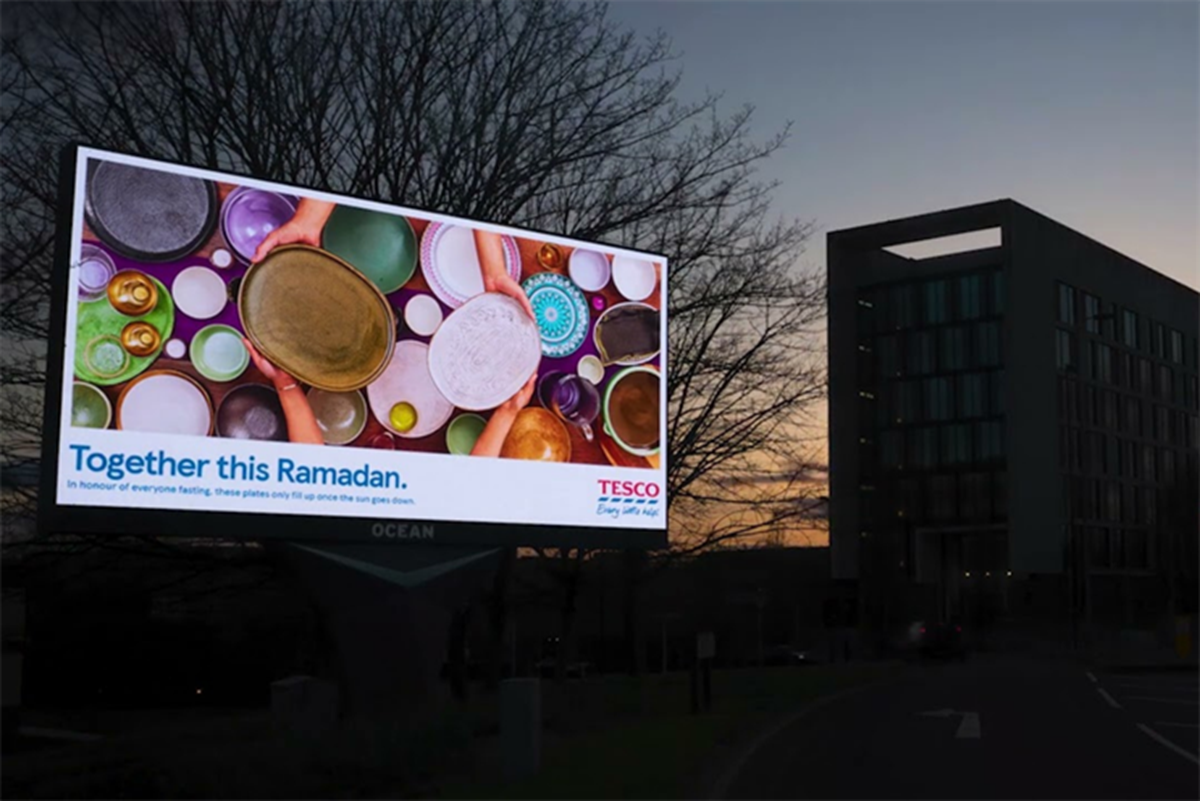
Ramadan advertisements. (Websites)
He points out that Saudi Arabia and the UAE collectively contribute between $400 and $500 million, amid strong growth in the Gulf countries, historically reaching around 46%, with the GCC countries capturing approximately 70% of the Arab advertising market.
The total advertising spending during Ramadan 2026 is expected to reach approximately $1.8 billion, with the potential to exceed the $2 billion mark.
He indicated that Egypt ranked first, with a share ranging between $0.5 and $0.6 billion in 2025, and is expected to grow by about 18% in 2026, followed by Saudi Arabia with a share of approximately $0.3 billion and an expected growth of 20%, then the UAE with around $0.2 billion and growth of 22%. The rest of the Gulf countries are also expected to achieve growth of up to 25%.
25% share for social media in advertising spending
The financial markets expert explains that digital transformation is driving the rise of social media, which is expected to reach about 25% of advertising spending, supported by platforms like TikTok and Instagram. Meanwhile, the share of television is declining to around 55% amid the spread of AI and live streaming technologies. Despite the economic challenges facing Egypt, it still maintains its lead due to its entertainment strength, while the Gulf countries lead in growth, backed by the strength of their economies.
In the same context, Ali Essam, CEO of IContact Advertising, told Annahar that social media platforms have gained a larger share of advertising spending during Ramadan, supporting Arabic drama projects. He expects the share of social media to rise above 25%, as most fans of Arabic drama—from Gen Z to older generations—now prefer following digital platforms over watching TV, thereby boosting the advertising market through social media.
Essam adds that the advertising market on social media platforms during Ramadan is characterized by its wide reach and significantly lower cost—almost 10% of what advertisers spend on other media, whether TV, outdoor ads, or even newspapers, which have the smallest share, not exceeding 5% of total advertising spending during Ramadan.
Which sectors lead advertising spending in Ramadan?
Regarding sectoral distribution, the financial markets expert indicates that real estate and telecommunications top advertising spending in Egypt, with the real estate sector’s spending reaching about 3.5 billion Egyptian pounds during Ramadan 2025, while telecommunications companies contributed between 150 and 300 million pounds, alongside significant growth in the automotive sector. Meanwhile, in the Gulf countries, the food and retail sectors lead, with food advertisements accounting for about 135 million dirhams in the early days of Ramadan 2025, followed by telecommunications and banking.
Advertising spending in the Gulf
Wahib expects advertising spending in the Gulf countries during Ramadan 2026 to reach approximately $1.25 billion, with growth ranging from 20% to 25%, and social media’s share rising to about 30% compared to 55% for television, particularly in Saudi Arabia and the UAE.
Advertising spending in Saudi Arabia is expected to reach approximately $360 million, with a 20% increase, and in the UAE about $240 million, with a 22% increase. Meanwhile, the total for the remaining Gulf countries is projected to reach around $650 million, with significant growth in markets like Kuwait and Qatar ranging from 15% to 18%.



 Messenger
 Whatsapp
 Threads
 Email
Email
 Print
Print
 X
X
 Facebook