

IMF, Lebanon entering a new technical stage ahead of Spring Meetings



 Messenger
 Whatsapp
 Threads
 Email
Email
 Print
Print
 X
X
 Facebook
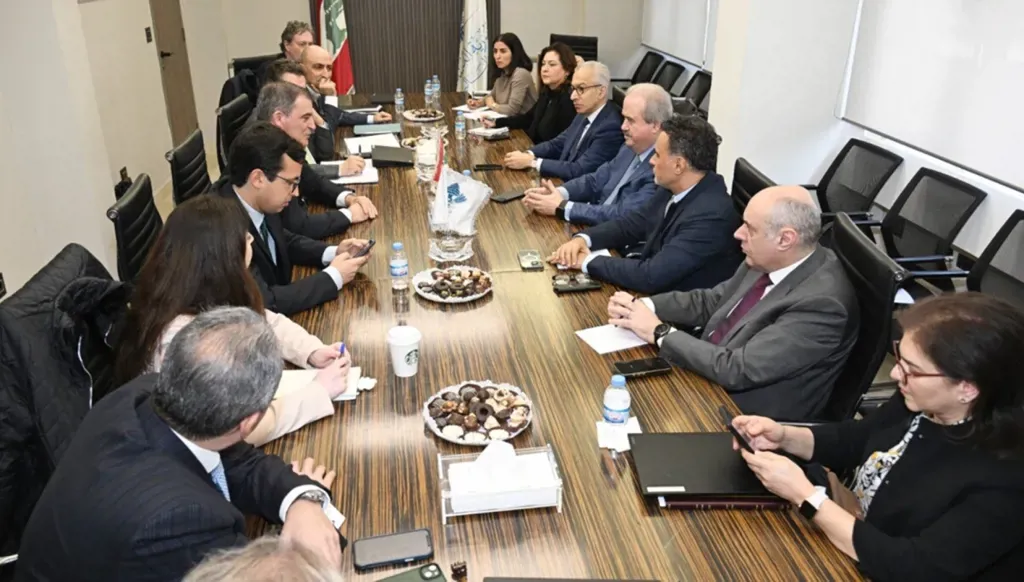


It appears that the latest round of talks between the Lebanese government and the delegation of the International Monetary Fund marked a shift to a more dynamic stage, with discussions now going beyond general positions and into technical details. The upcoming Spring Meetings in Washington represent a pivotal moment to assess the credibility of Lebanon’s commitments. They could lay the groundwork for a final agreement that reconnects Lebanon with the international financial system or prove to be a missed opportunity that sends the country back into a cycle of stagnation.
Two parallel tracks are underway. The first concerns drafting a medium term financial framework to regulate the course of public finances. The second involves amending the banking reform law in response to the Fund’s observations, setting the groundwork for a realistic solution to the financial gap. However, the final decision will ultimately be political. The Spring Meetings in Washington remain a decisive test of the seriousness of Lebanon’s pledges.
Finance Minister Yassine Jaber acknowledged that the previous phase was marked by hesitation and denial, while the current approach aims to move from managing the collapse to establishing a comprehensive reform framework. This framework is based on bringing public finances under control within a medium term vision and restructuring the banking sector in a way that allows for the distribution of losses, addressing the financial gap, and restoring confidence.
Samir Hammoud, adviser to the Finance Minister, places the negotiation process in a broader context than a mere technical discussion. In remarks to Annahar, he said that discussions with the International Monetary Fund have gone beyond procedural details to structural issues that were presented to the Council of Ministers, revolving around two main matters. The first concerns the medium term financial framework MTFF, which has been reintroduced to the Cabinet’s agenda in preparation for approval. The importance of this framework lies in its role as a tool to reorganize public finances over a three year period, enabling a systematic transition from the 2025 and 2026 budgets to the 2027 budget, while formalizing previously unrecorded obligations, particularly Eurobond commitments and other accumulated liabilities. According to Hammoud, the core objective is to shift from temporary annual budgets to financial planning based on a "clear vision of sustainability."
The second track concerns the banking reform law passed by the Parliament. Hammoud explains that the IMF’s observations do not mean rejecting the project but rather making amendments and rewording certain parts to clarify concepts and mechanisms. The proposed path involves completing the review of the observations, redrafting the amended articles, presenting them to the Constitutional Council if needed, and then referring them back to Parliament for final approval. According to Hammoud, “approving both the financial framework and the banking reform together is a necessary condition to enter the Spring Meetings with a solid negotiating position.”
The main point of debate, however, has focused on the “single depositor” principle. In this context, Hammoud offers a different interpretation than the one widely circulated. In his view, the approach in the Fiscal Responsibility Law is based on the principle of “one depositor per bank,” rather than treating a depositor as a single claimant across the entire banking system. This distinction is substantive. Hammoud explains that if a depositor has accounts across multiple banks, each bank’s obligations would be assessed separately, rather than consolidating all accounts into a single system-wide claim. This differs from the common view that repayments are intended to cover "per depositor," which would protect small and medium depositors, not to provide multiple coverage for large depositors with accounts in more than one bank.
Hammoud concludes that there is clear progress in the negotiations with the IMF, allowing Lebanon to participate in the Spring Meetings from a stronger and more coherent position, especially regarding banking reforms, while addressing the financial gap may require more time—a point the IMF also understands. The legislative achievement beforehand is decisive. In this context, Hammoud notes that the Speaker of Parliament is willing to pass the banking reform law before the Spring Meetings, opening a narrow window for the executive authority to turn the commitments into enforceable legislation.