

Can the government bridge a $200 million gap?



 Messenger
 Whatsapp
 Threads
 Email
Email
 Print
Print
 X
X
 Facebook
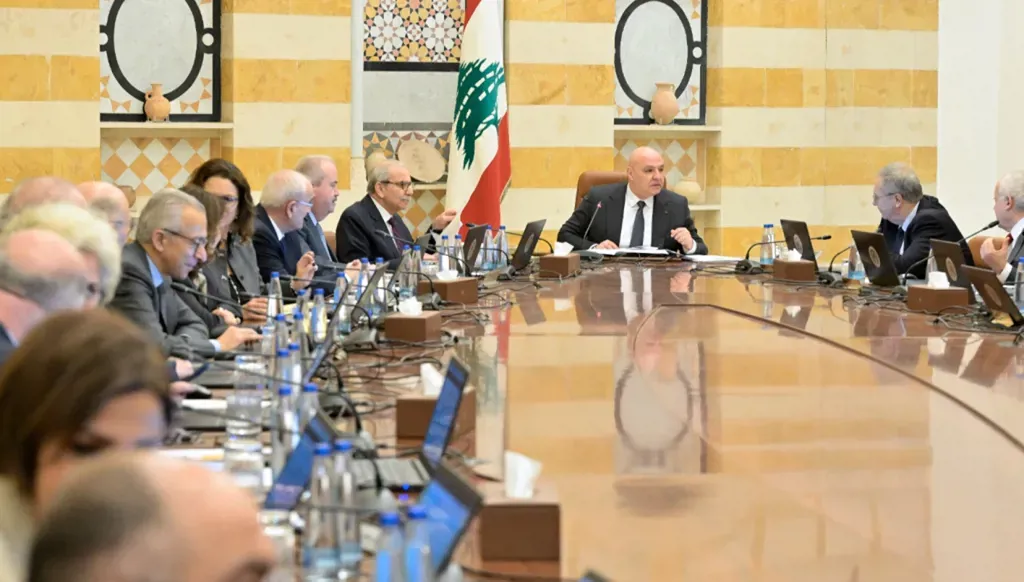


In the years since the financial crisis of 2019, some public sector salaries fell to around $100 a month. The flagging exchange rate also affected the state’s budget, which fell from approximately $19 billion before the crisis to between $4 and $4.5 billion, gradually rising to its current level of about $6 billion.
Facing pressure from public sector employees and retired military personnel in the streets, the government opted for a reform scenario with an annual cost of about $800 million to fund salary increases, estimating additional revenues of around $600 million. This leaves a funding gap of approximately $200 million, which needs to be covered by improving revenue collection.
The decision, as confirmed by Finance Minister Yassine Jaber, is based on the principle that every increase in spending must be met with actual revenues to avoid repeating deficit experiences that led to inflation and monetary collapse over the past six years. This approach is supported by the Bank of Lebanon, whose representative, Deputy Governor Makram Bou Nassar, participated in all meetings, stressing the legitimacy of the demands but pointing out that any spending must be matched by additional revenues to maintain monetary stability and keep inflation under control.
The scenario presented to the Council of Ministers, estimated to cost $800 million annually, is distributed over a number of budget items. Chief among them, the plan seeks to increase public sector salaries sixfold, including those of active military personnel, retired military personnel, retired civilians, general administration employees, teachers, and workers in public institutions (excluding investment institutions), with an estimated annual cost of about $620 million.
The increases approved implement what was previously agreed upon regarding granting employees family allowances similar to those in the private sector. Numerically, the spouse allowance before the adjustment was 60,000 lira, and each child’s allowance was 33,000 lira (up to five children). After the adjustment, the spouse allowance rose to about 2,100,000 lira, and each child’s allowance to about 1,155,000 lira, marking an increase of roughly 35 times, with an estimated annual cost of $150 million.
School grants for retired military personnel increased from $70 million to $100 million, and the school allowance was raised 100% instead of 50% for retired military personnel for the years 2024 and 2025, with an estimated annual cost of about $100 million.
To cover the bulk of the total $800 million cost, the government expects to collect about $600 million, according to Yassine Jaber in an interview with Annahar, including $450 million from the gasoline tax and $150 million annually from raising the value-added tax by 1%. Notably, about 30% of imported goods are exempt from this tax, particularly basic commodities.
While calculating an annual cost of $800 million and direct revenues of $600 million, a gap of about $200 million remains. The Ministry of Finance plans to close this gap by improving tax and customs collection, combating tax evasion, collecting dues from quarries and crushers, and recovering subsidy funds.
Besides the $800 million cost, the state faces additional commitments, including, according to Yassine Jaber, supporting the Bank of Lebanon in returning depositors’ funds, addressing the eurobond issue, paying Iraqi oil dues, and restructuring the banking sector. This means any further slippage in the deficit could put additional pressure on the exchange rate and undermine the relative monetary stability achieved.
In conclusion, the government is striving to balance urgent social corrections with the prevention of an unfunded deficit. The success of the plan will be measured not only by its approval but also by the state’s actual ability to collect the $600 million and reduce the $200 million gap without resorting to printing money or imposing a new inflationary burden on the economy.