Negotiation under fire: How Washington and Tehran wage a war of words
As Trump announces “fruitful talks” and Tehran denies them, the region teeters on a gray zone between escalation and de-escalation—where words now hit as hard as missiles.


شارك على
 مسنجر
مسنجر
 واتساب
 ثريدز
ثريدز
 بريد إلكتروني
 الطباعة
شارك على


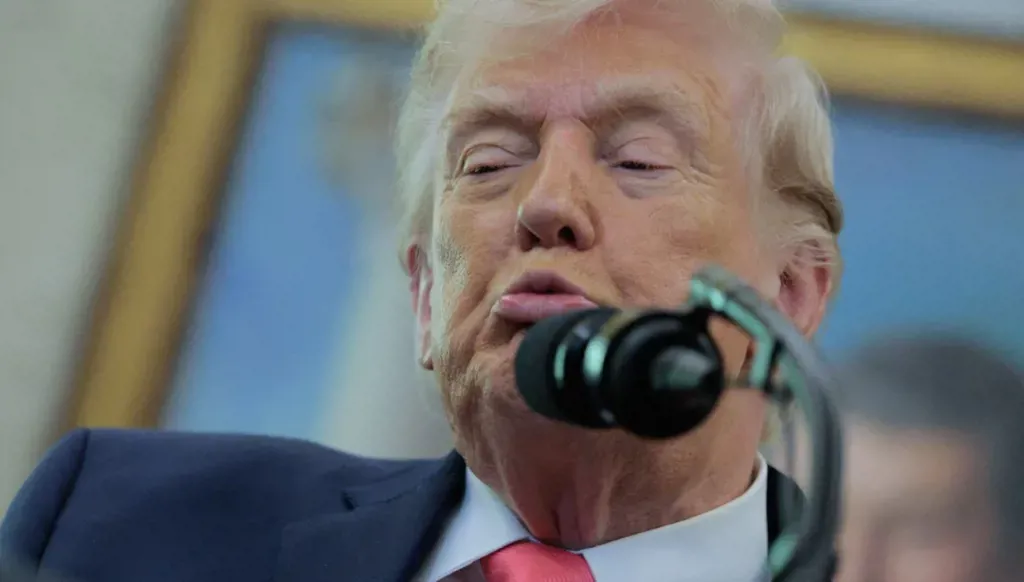


Donald Trump never stops creating surprises. But what happened in the past few days wasn’t just another of his usual surprises—it revealed something much deeper: that the war is now being waged with words as well as missiles.
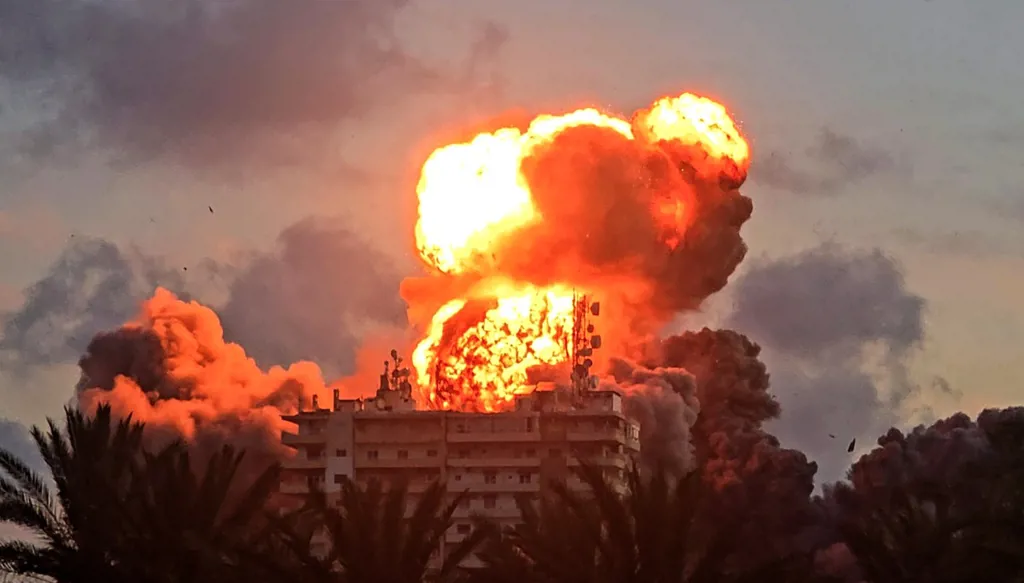
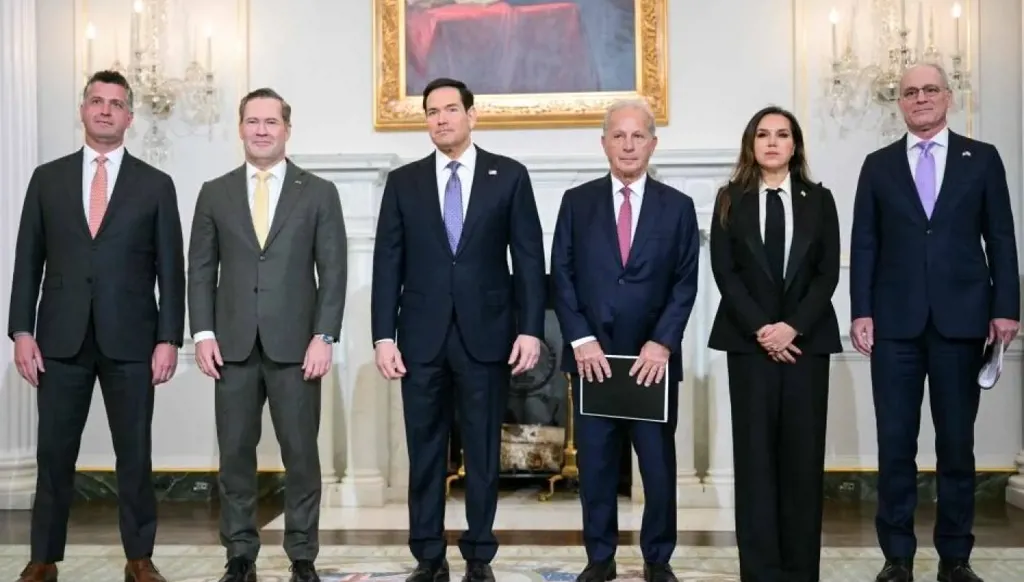
At a time when the region was at the peak of mutual brinksmanship—with ongoing American, Israeli, and Iranian strikes effectively closing the Strait of Hormuz to much of its usual traffic and escalating tensions to the edge of a broader conflict—Trump announced via his platform that the United States had conducted “very good and fruitful” talks with Iran over the past two days, and that he had decided to postpone targeting Iranian energy facilities for five days. Tehran quickly denied the story, calling the reports of negotiations “fake news” and “an attempt to manipulate the market.” Suddenly, the question became not only whether there was a chance for de-escalation, but also who was telling the truth—and why they were saying it this way now.
The scene seems to show a stark contradiction between Washington and Tehran. But a closer reading suggests that we are not necessarily witnessing a clash between "truth" and "lies," but rather a parallel war of messages alongside the military conflict. Trump said what he said because he needs to present himself—both domestically and internationally—as the leader who can escalate to the brink and still open the door to a solution. Tehran denied the claims because it cannot politically appear to have negotiated under fire or responded to an American ultimatum, after making resilience the hallmark of its rhetoric since the beginning of the war. In this context, both sides may be referring to contacts, mediations, or indirect messages, but each chooses the format that serves its political position: Trump amplifies it as “constructive talks,” while Iran denies it to avoid appearing weak at home.
This interpretation becomes more coherent when viewed in the context of Trump’s own behavior during the war. Since the outbreak of fighting, the American president has not presented a fixed narrative or a clear ultimate goal. In recent weeks, his administration has shifted between discussions of destroying Iranian missile capabilities, breaking the military structure, deterring aggression, preventing the closure of the Strait of Hormuz, and then suddenly opening a window for negotiations. The reasons, goals, and timelines announced by Trump and his team for the war have changed repeatedly, making contradiction part of the performance itself, rather than an incidental flaw. Hence, the announcement of “fruitful talks” does not appear to deviate from this pattern, but rather extends a style based on sharp escalation followed by verbal maneuvering while keeping all options open.
Yet the most important development in the last few hours is that the American retreat is partial, not comprehensive. The temporary halt does not cover all Iranian targets but is limited to energy facilities and energy infrastructure, while military, naval, missile, and industrial defense targets remain within the threat and targeting scope. This means we are not witnessing an actual ceasefire, but rather a redistribution of pressure—a softening of the most globally sensitive economic front—while the war continues in other arenas. In other words, Trump hasn’t taken his hand off the war; he has merely paused the most economically explosive blow to the global economy.
Here emerges a fundamental reason for this shift: the markets. Just Trump’s announcement of delaying the strike on energy facilities caused oil prices to drop—and then rise again when Iran denied that talks had taken place—showing that a single word from Washington or Tehran can now move prices and global supply expectations. Therefore, it is difficult to separate political language from economics. Trump speaks not only to the Iranians but also to oil markets, shipping companies, his worried allies in the Gulf, and the American voter who will bear part of the rising price burden. Iran, in turn, knows that denying the American story restores some pressure on the markets and prevents its rival from appearing as the sole holder of the de-escalation key. Hence, the American statement and Iranian response are not merely a diplomatic dispute—they are part of a battle over the price of time, oil, and prestige.
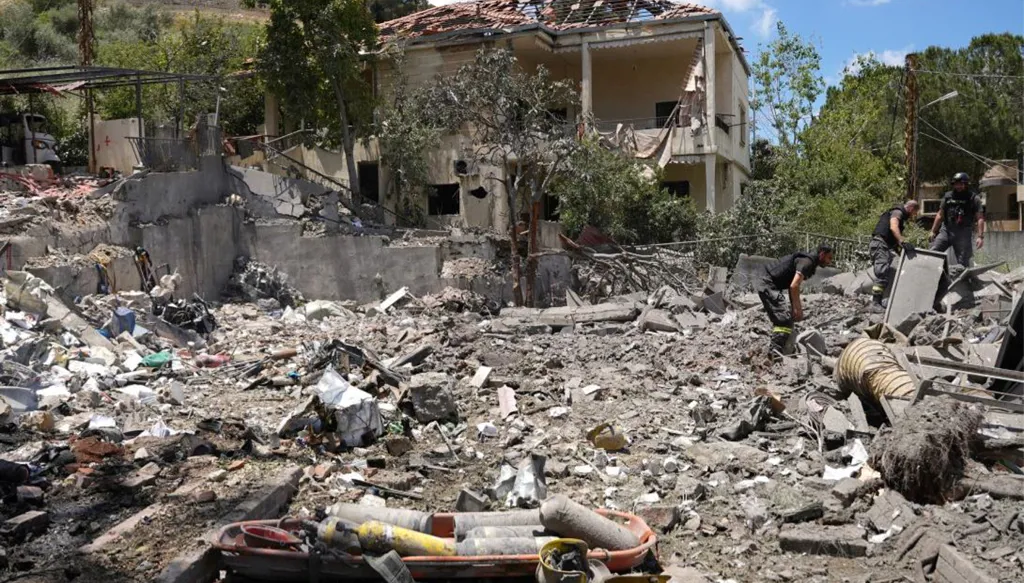
There should be no excessive optimism. The realities on the ground on the same day Trump announced the talks were not of de-escalation, but of open war: Iran launched new waves of missiles at Israel, Israel struck dozens of targets in Tehran, the Revolutionary Guard maintained its deterrence posture, and the markets continued to respond to the ongoing effective closure of the Strait of Hormuz as an active threat. This means that diplomacy has not yet produced any clear behavioral impact on the ground. Thus, talk of a real breakthrough is still premature, and what we are seeing so far is, at best, a partial freeze of the most sensitive issues.
The most likely scenario is one of three possibilities—or a combination of them: either Trump is using the announcement of “talks” to justify a tactical withdrawal driven by calculations of energy and the global economy; or there is indeed an indirect negotiation channel that Tehran does not want to acknowledge at this stage; or both sides are engaging in mutual maneuvering to buy time without either being ready to move toward a settlement. In all three cases, the outcome is the same: the war is not yet broken, but it is no longer following a straight path of escalation. It has entered a gray area—neither confirmed de-escalation nor full-blown explosion.
The chances of this moment succeeding as an actual start to end the war do exist, but they remain weak and conditional. For it to succeed, the back channels must first turn into measurable understandings, not merely messages intended to absorb tension. It also requires both sides to accept the idea of a “mutual stepping down from the tree”: Washington must be able to claim it deterred and reopened the door to a solution, while Tehran must assert that it did not negotiate under duress and did not relinquish its strategic cards. Without this formula, what we are seeing will remain merely a pause to change the rhythm, not a genuine shift in the path of the conflict.
The contradiction between Trump asserting negotiations and Tehran denying them is less a puzzle than an expression of the nature of this phase. What is happening is neither peace nor a simple clash of truth and lies. It is negotiation under fire, paired with denial. And between the two sides, the entire region stands on an open oil barrel, waiting to see whether the coming days will become a bridge toward de-escalation—or merely a brief pause before a more violent round.
Disclaimer: The opinions expressed by the writers are their own and do not necessarily represent the views of Annahar.

العلامات الدالة
الأكثر قراءة