Control of the Strait of Hormuz could decide the war
Over 70% of Gulf oil exports pass through one narrow waterway, leaving global energy flows vulnerable despite partial alternatives.


شارك على
 مسنجر
مسنجر
 واتساب
 ثريدز
ثريدز
 بريد إلكتروني
 الطباعة
شارك على


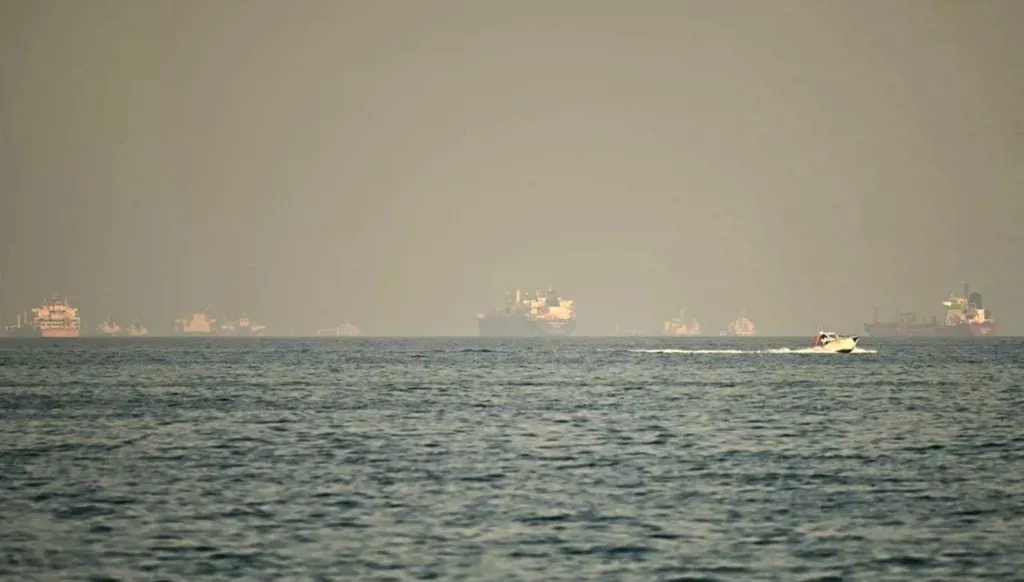


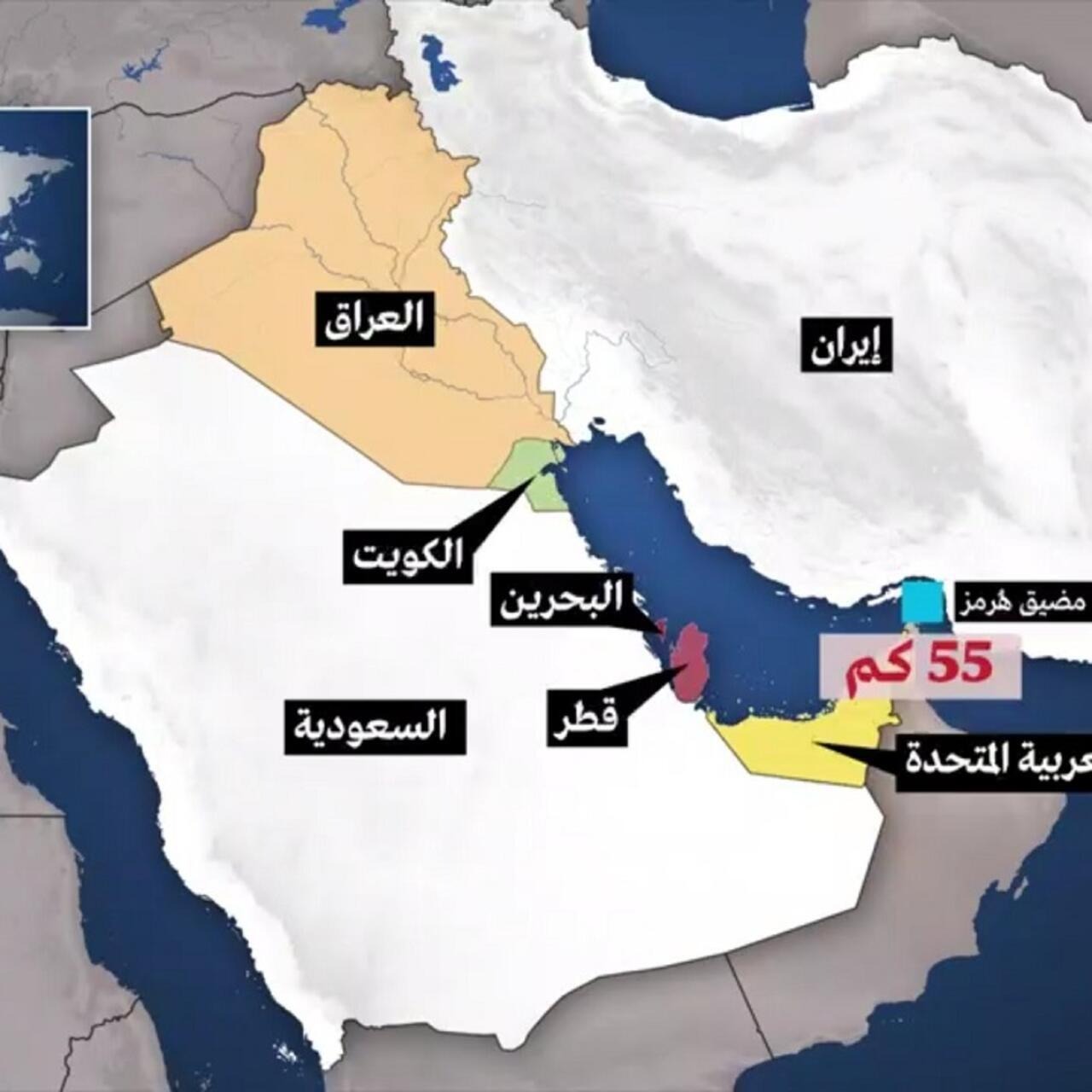
With the outbreak of war in the Middle East, the Strait of Hormuz has returned to the public eye, with discussions focusing on its role in the international energy and logistics markets. This maritime passage, which at its narrowest point has navigable channels of no more than three kilometers in each direction, serves as a vital artery through which approximately 20 to 21 million barrels of oil and petroleum derivatives pass daily—equivalent to one-fifth of global consumption. The current conflict has highlighted the strait’s significance as a bottleneck in Gulf oil exports and as a critical point for the global economy as a whole.
Gulf exports and dependence on the strait
The countries bordering or reliant on the strait collectively produce more than 30 million barrels per day, underscoring the scale of strategic exposure.
The following table illustrates each country’s dependence on the strait:
| Country | Total Oil Production (million barrels/day) | Daily Exports (million barrels/day) | Dependence on the Strait of Hormuz | Notes |
|---|---|---|---|---|
| Saudi Arabia | 10 | 7–8 | 70–85% | Largest exporter via the Strait (~5.5–6 million barrels/day) |
| UAE | 3.5–4 | 3 | 55–70% | Fujairah–Habshan pipeline covers 1.5–1.8 million barrels/day |
| Kuwait | 2.6–2.8 | 2–2.1 | ~100% | There are currently no effective sea or land alternatives. |
| Iraq | 4–4.5 | 3.3–3.7 | ~100% | Exports rely entirely on southern ports |
| Qatar | 1.1–1.2 | 1.1–1.2 | 100% | Includes oil and liquefied gas, no alternatives |
| Bahrain | Relatively small | Depends on the strait | 100% | No alternatives, full dependence on the strait |
| Iran | 3–3.5 | 1.5–2 | 100% | Most of the oil exports pass through the strait |
Recent statistics indicate that Saudi Arabia has been the largest exporter through the strait, averaging nearly 5.5 million barrels per day, or about 35-40% of the total volume. For Kuwait, Qatar, Bahrain, and Iraq, the strait is even more crucial—any disruption in the passage would lead to an almost complete halt in oil flows, exposing these countries to significant economic risks during crises.
Although Saudi Arabia and the UAE hold the largest share of production (together exceeding 12–14 million barrels per day) and have overland transport options, the table shows that the majority of their exports still rely on the strait. This means that alternative routes (pipelines) remain, in practice, supplementary rather than truly alternative, and they do not provide full protection against a navigation stoppage.
Overland pipelines and partial solutions
To reduce strategic pressure on the strait, Saudi Arabia and the UAE have established overland pipelines:
East–West Pipeline (Saudi Arabia): This pipeline links the Eastern Province oil fields to the port of Yanbu on the Red Sea. Its official capacity reaches around 5 million barrels per day in some years, and theoretically it has expanded to nearly 7 million barrels per day at certain times. This pipeline allows the kingdom to divert a significant portion of its exports away from the Gulf, but it does not cover all flows that pass through the Strait. Operating it at maximum capacity requires careful management, as its efficiency is affected by pressure, viscosity, and crude quality, reducing the operational safety margin.
Habshan–Fujairah Pipeline (UAE): Its capacity is around 1.5 to 1.8 million barrels per day, linking the Habshan oil fields to the export terminal in Fujairah, away from the Strait of Hormuz. It is mainly used for Murban crude exports and provides a strategically important outlet for the UAE. However, its capacity is limited compared with the country’s total exports, meaning that a significant portion of oil still depends on transit through the Strait.
Combined, the two pipelines could theoretically transport 8–9 million barrels per day, which partially relieves pressure but does not replace all exports. Moreover, part of the production—especially offshore fields—is tied to ports inside the Gulf, making rerouting to these overland pipelines technically and logistically complex.
Gulf energy security is not simply a matter of diversifying export routes—it is a chronic geographical crisis. In most countries, reliance exceeding 70% means that the Strait of Hormuz is not just a waterway, but the actual engine of the region’s economies, and any threat to it is a direct threat to the continuity of global energy flows. Overland pipelines do not constitute an independent strategic alternative to the maritime route; they are merely partial safety valves that provide a narrow margin for maneuver. The bottleneck remains as a geographical reality that continues to shape global energy security.
This article was written by Dr. Ayman Omar, academic and economics researcher.

العلامات الدالة
الأكثر قراءة