Lebanese elites have a new favorite safe-haven: Foreign real estate
As confidence in local markets collapses, Lebanese investors are flocking to Cyprus, Greece, and Dubai—buying apartments and securing residency abroad, while Beirut transforms into a hub for marketing overseas properties.



شارك على
 مسنجر
مسنجر
 واتساب
 ثريدز
ثريدز
 بريد إلكتروني
 الطباعة
شارك على




Real estate is no longer just an investment for Lebanese capital holders; in recent years, it has become a tool of financial protection and a hedge against an uncertain future. With confidence in the banking sector shaken and local real estate activity declining, capital has flowed abroad in search of security.
The movement of Lebanese capital abroad has accelerated since 2018 with Cyprus, Greece, and Dubai emerging as preferred destinations. The capital outflow has hollowed out business opportunities in Beirut, a city which remains to host exhibitions and forums for those looking to move their funds to more stable and profitable markets.
The shift cannot be isolated to a signal campaign. It is the result of a confluence of decisions by networks of brokers, development companies, real estate exhibitions, and meetings in capital hotels. Ready-made projects, installment plans, and rental yields are presented, promoting the idea of “buying now before prices rise further.”
Interestingly, these external markets continue to be promoted in Beirut-hosted forums. Real estate exhibitions have become a recurrent seen, organized by foreign development companies and Lebanese brokers, showcasing projects in Cyprus, Greece, and Dubai with payment facilities and intensive advertising campaigns through media and social platforms. Closed meetings are also held to present specific investment opportunities, using messaging that emphasizes “escaping local risks,” “diversifying assets,” and “protecting the family,” effectively turning Beirut into a marketing hub for properties outside Lebanon.
Today, Cyprus is the primary destination for Lebanese investors. Since the aftermath of the global financial crisis, and particularly after 2015, the Cypriot market has been gradually recovering. In an earlier phase, the citizenship-by-investment program requiring a $2 million investment attracted many Lebanese seeking a European passport. However, after scandals surrounding the program, the citizenship route was canceled and replaced with permanent residency in exchange for an investment of around $300,000.
This amount has remained attractive compared with Greece, where the minimum investment for a “golden visa” in some areas has risen to €800,000. As a result, Cyprus has remained more cost-competitive.
Apartment purchases are concentrated mainly in Larnaca and Limassol, with prices typically ranging between $200,000 and $300,000 for units of around 100 to 200 square meters.
George Chehwane, Chairman of the Lebanese-Cypriot Business Council, notes that Lebanese own at least 15,000 apartments in Cyprus, though official figures are not available.
According to some observers, the motivation is not only residency but also rental yields, which can reach 7 to 8% annually, in addition to capital appreciation. An apartment purchased in 2017 for about $90,000 may now be worth no less than $160,000.
In contrast, Chehwane estimates that around 300 Lebanese companies operate in the construction sector in Cyprus, though some are beginning to face organizational and structural challenges. He notes that his own company has sold more than 1,100 apartments over the past ten years. Buyers are mainly Lebanese working in the Gulf, who prefer purchasing apartments in installments rather than keeping their money in Lebanese banks, investing instead in rental income or family leisure properties.
In Greece, the market is larger and growth is faster in some areas, but costs are higher and taxes heavier. The residency program, which initially required €250,000, gradually rose to €800,000, slowing the influx of Lebanese investors compared with Cyprus.
Nevertheless, there is still demand, especially from high-net-worth individuals. Apartment prices range from €300,000 to €400,000, reaching €700,000 to €800,000 in some areas depending on location and size. Chehwane estimates that about 100 Lebanese companies operate there, far fewer than in Cyprus.
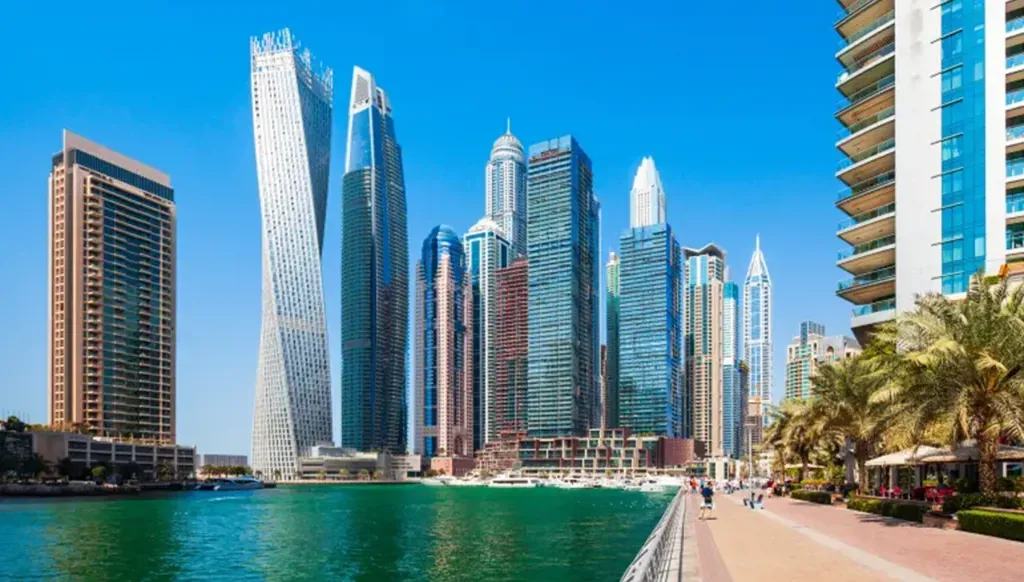
Dubai represents a different model, where investment is not tied to residency or citizenship but rather to high returns and quick real estate speculation. Projects are marketed on the basis of potential profits of 15 to 20% annually, making them an attractive alternative to bank deposits, according to Maroun El Helou, the head of the Lebanese Contractors Association. He notes “frequent calls from Dubai and Abu Dhabi enticing Lebanese investors to put their money into real estate with lucrative returns.”
In Dubai, Lebanese company activity is concentrated in large partnerships or through individual investors working in the Gulf. Chehwane points out, however, that the gap between supply and demand is widening, with construction sometimes outpacing actual market demand, which could pressure prices or rents in the future.
As for the residential real estate market in Lebanon, El Helou notes “a near standstill of around 90% due to the current situation, with only modest activity in small projects, while major projects remain on hold awaiting broader political and financial stability.”

العلامات الدالة
الأكثر قراءة