Hezbollah and Amal double down: Inside Shiite plans for upcoming elections
With alliances firm and incumbents largely preserved, the Shiite duo navigates Druze and Sunni seats while maintaining influence across Baalbek-Hermel, the South, and Beirut II.


شارك على
 مسنجر
مسنجر
 واتساب
 ثريدز
ثريدز
 بريد إلكتروني
 الطباعة
شارك على




No changes have been made to Hezbollah’s candidates for the upcoming parliamentary elections, and the party is acting as if its list will go ahead on schedule, despite talk of a possible postponement. What approach will it adopt? And what promises has it made to candidates outside the current list?
Hezbollah’s electoral machinery is already active, less than three months before the scheduled vote, according to the decree issued by the Ministry of Interior, which set May 10 as the election date in Lebanon, with expatriate voting to take place on May 3.
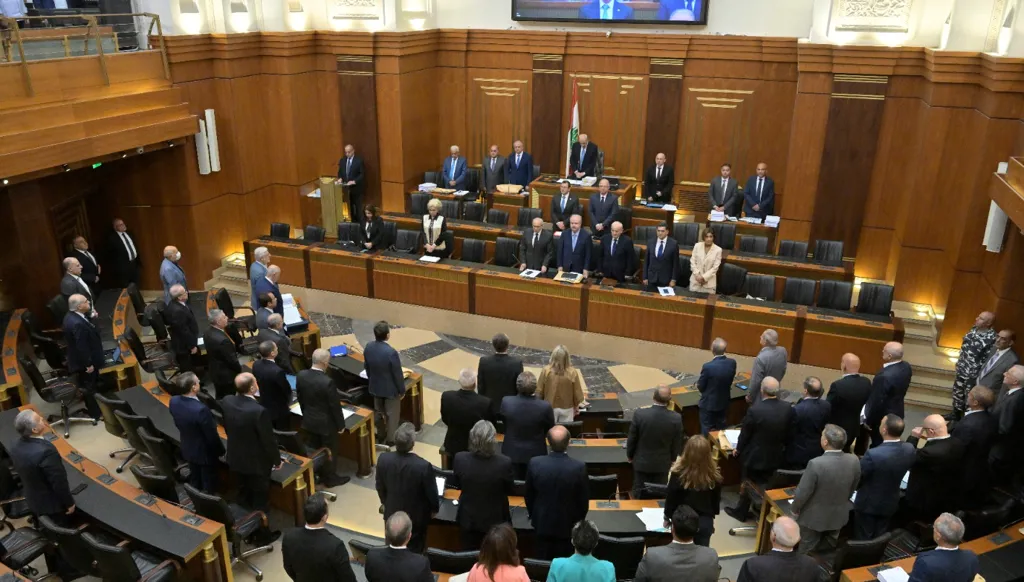
When Speaker of Parliament Nabih Berri opened the nominations on the 13th of this month, it was to reaffirm, along with his ally Hezbollah, that the elections are set to proceed on time.
Following this principle, Hezbollah is moving forward with its electoral operations through a coordinated campaign machine with the Amal Movement, led by former minister Mohammed Fneish, who returns to head the operation. Fneish will not run for parliament himself, as the party has, since the 2022 cycle, emphasized the principle of separating ministerial posts from parliamentary seats. Fneish is, however, a consistent candidate for ministerial positions in governments that include Hezbollah members.
While the Development and Liberation Bloc, the parliamentary bloc affiliated with Speaker Nabih Berri and the Amal Movement, is fielding the most candidates for the next parliamentary cycle, with six of its current MPs running again, the Loyalty to the Resistance Bloc will begin submitting its nominations once official documents are completed, a process expected to unfold this week.
The alliance between Hezbollah and the Amal Movement remains firm. After meeting with a delegation from the Loyalty to the Resistance Bloc, MP Mohammed Raad made the position very clear, stating in response to a question about the elections: “Our stance is fully aligned, and we will face the challenge together, in any direction it takes.”
As for other alliances, there is nothing new from Hezbollah’s perspective. Any adjustments or confirmations of potential alliances remain under the supervision of the “big brother,” especially if the Future Movement returns to support candidates in multiple districts, notably in the South and in Beirut II.
It is no secret that many of Hezbollah’s allies hope to join electoral lists in districts where the party and Amal have a significant voting presence, whether in the Bekaa, the South, Baabda, or Beirut II.
The Baalbek-Hermel district has attracted attention from many potential candidates allied with Hezbollah, but their insistence on keeping current MPs has blocked the path for any new contenders.
One of the Sunni seats may shift from Arsal to Al-Fakiha, following the rotation principle applied in the 2018 and 2022 elections and earlier. Typically, the candidate close to Hezbollah comes either from Al-Fakiha, specifically the Sukkariyeh family, or from Arsal, specifically the Hujeiri family. Reports suggest that one candidate from Arsal does not wish to run again for personal reasons, which would return the seat to Al-Fakiha, the second-largest Sunni-majority town in Baalbek-Hermel.
In the South, specifically in the Second and Third Southern districts, there are no expected changes for the political duo, pending the decision on the Druze candidate. The duo lost this seat in the 2022 cycle to MP Firas Hamdan, and the current trend is to agree on a candidate who does not provoke former Progressive Socialist Party leader Walid Jumblatt while earning the approval of former MP Talal Arslan.
The Orthodox seat, previously held by Asaad Hardan and won by MP Elias Jaradeh, is expected to be included on the duo’s electoral list for several reasons.
Disclaimer: The opinions expressed by the writers are their own and do not necessarily represent the views of Annahar.

العلامات الدالة
الأكثر قراءة