Could postponing Lebanese elections reshape the country?
As discussions over postponing parliamentary elections intensify, the country grapples with a possible move toward the non-sectarian elections promised in the Taif agreement.


شارك على
 مسنجر
مسنجر
 واتساب
 ثريدز
ثريدز
 بريد إلكتروني
 الطباعة
شارك على


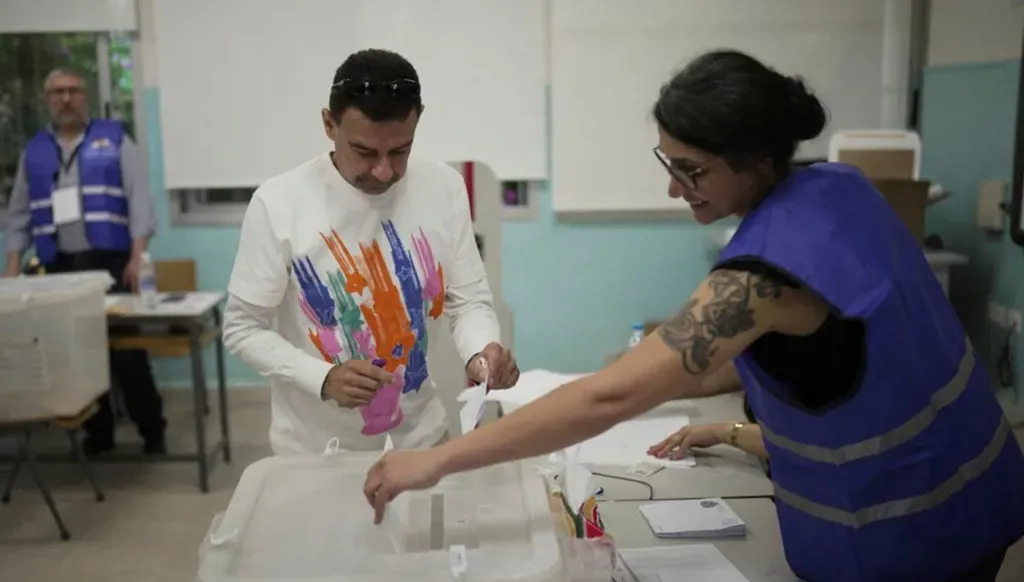


Observers have suggested that Christian support for election postponement may inadvertently lead to a fundamentally different type of elections, where Lebanon is counted as a single district beyond sectarian constraints. In an effort to balance parity between Muslims and Christians, some suggest the establishment of a Senate in accordance with the Taif Agreement.
MP Neemat Frem mentioned that the postponement could open the door to a "deep foundational period," a reference understood as paving the way for a reconsideration of political representation rules.
On the surface, a conspiracy for reorganization seems like conjecture, but in Lebanon, vacuum's tend to raise long-dormant questions. Here lies the essence of Christian concern: the fear that postponement could turn into an opportunity to reconfigure the rules of the game under the pressure of demographic and political balances.
The discussion about Lebanon as a single district without sectarian-based seats is not new. In fact the proposal is part of the philosophy of the Taif Agreement, which stipulated the abolition of political sectarianism in Parliament as a long-term goal, in exchange for establishing a Senate which balanced ethnic factions. However, this path remained theoretical, as the national body for the abolition of political sectarianism was never established, no Senate was constituted, and electoral laws continued to follow sectarian constraints in seat distribution.
The transition to a new system requires broad political consensus and comprehensive legislation, neither of which has shown itself so far. But merely introducing the idea into political discourse at such a sensitive moment gives it the discussion a different dimension.
The notable development is the media's renewed focus on the "issue of numbers," i.e. demographic change, particularly in outlets close to Hezbollah. This rhetoric has been previously employed as a negotiating general tactic, but it now intersects with the issue of disarmament.
The parity enshrined by Taif is between Muslims and Christians as two sects, not among denominations. Even in a system beyond sectarian constraints, it is theoretically possible to maintain 64 Christian and 64 Muslim deputies, but the nature of a single district entails cross-regional lists, major alliances, and greater influence of large voting blocs—such as the unified Shiite bloc—in shaping the results.
Christian concerns do not stem solely from the number of seats, but from how their occupants are chosen and who controls the national alliances that will determine the identity of the blocs within the council.
So far, there is no comprehensive legislative initiative officially proposed to enact a new electoral law before the upcoming elections, nor a clear path for establishing a Senate. However, the political climate suggests that any postponement, if it occurs, will not be seen as a mere technical procedure, but as an indication of readiness to open foundational issues. Here, internal calculations intersect with regional considerations, transforming the election law from a legal text into a negotiation card in a wider bazaar connected to the future of the system, the role of arms, and the boundaries of the state.
Postponing elections might inadvertently move Lebanese parliament toward a political restructuring without sectarian constraints, but the decision is far from settled. What remains certain is that any interference with electoral laws will re-raise the larger question: Are we witnessing the fulfillment of the promises of Taif or the creation of something fundamentally new?
Disclaimer: The opinions expressed by the writers are their own and do not necessarily represent the views of Annahar.

العلامات الدالة
الأكثر قراءة
اتّسمت الحلقة الثانية من مرحلة المواجهات بأجواء حماسية، مع استمرار النجوم المدرّبين رامي صبري وداليا مبارك والشامي في اختيار الأصوات المتأهلة إلى المرحلة المقبلة.