The fragile strongman: Why authoritarian regimes are vulnerable from within

Opinion 24-02-2026 | 13:02

The fragile strongman: Why authoritarian regimes are vulnerable from within

Stephen Kotkin’s analysis in "Foreign Affairs" reveals that real power in autocracies is conditional, and stability depends more on adaptability and trust than on fear and control.
The fragile strongman: Why authoritarian regimes are vulnerable from within
Stephen Kotkin – Scholar of Modern Authoritarianism.
Smaller Bigger

Analyses in international politics often portray authoritarian regimes as strong and decisive, dominated by powerful individuals who wield control over state institutions, command security forces, and suppress opposition. However, as an article in "Foreign Affairs" illustrates, this view conceals a more complex reality: these regimes are highly fragile internally, and the true danger stemming from their excesses.


Stephen Kotkin, who authored an article in the influential Foreign Affairs magazine, issue January–February 2026, is a renowned scholar specializing in the history of contemporary authoritarianism. An overview of the article’s content can provide us with valuable insights.


The author observes that power in an authoritarian system is personalized and highly concentrated rather than institutional. It relies on fear rather than trust, loyalty instead of competence, and obedience over accountability. While this model may offer short-term stability, it sows the seeds of gradual erosion within, reducing the state’s ability to adapt to crises. Over time, apparent stability gives way to political and economic stagnation, leading to state decline and social unrest.


The article suggests that the greatest threat to the strong man in such a system comes not from the street, but from within the small ruling elite itself. In Russia, Vladimir Putin’s security grip appears strong, yet the system suffers from a lack of trust both within the narrow circle of power and at institutional levels.


Officials and businessmen understand that proximity to power is fleeting, and no one can predict what they might face tomorrow from the wrath of the "master." Even minor mistakes carry heavy consequences, prompting excessive caution, discouraging initiative, and delaying decisions. This creates a stifling bureaucracy where people’s interests are stalled—exactly what the introduction of Javad Zarif’s book The Rise of Diplomacy described as the game of musical chairs in Tehran.


This climate does not generate genuine stability; instead, it produces a paralyzed system, fearful of action, which ultimately paves the way for the regime’s violent downfall.


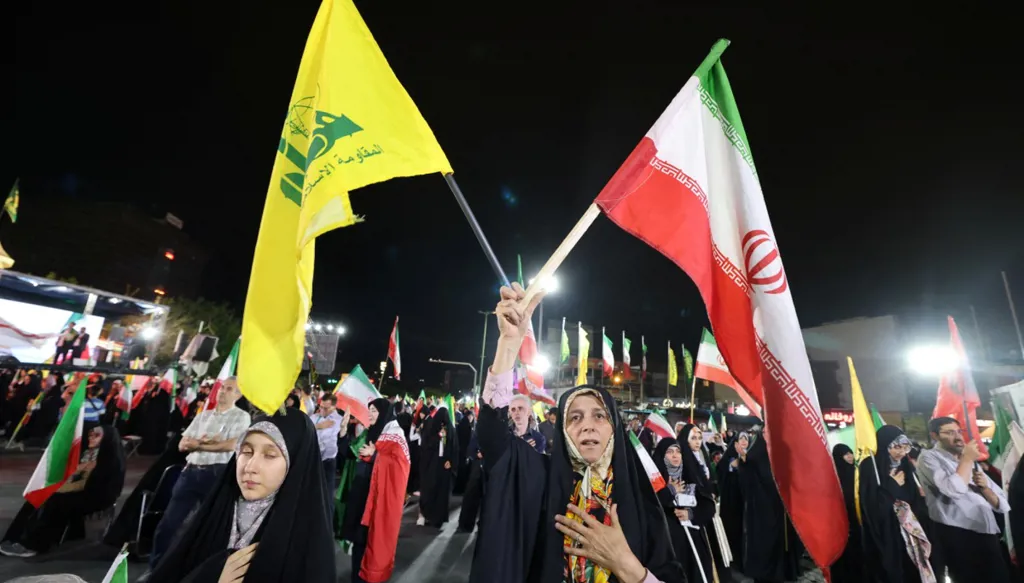
In Iran, fragility is reflected in a structural contradiction between a closed security state and a young society connected to the wider world. Repression may prevent a sudden explosion, but it also obstructs political and economic reform. With each wave of protests, the regime does not collapse, yet it loses further legitimacy. A troubled economy, sanctions, and declining public trust increase the cost of repression and limit the decision-makers’ maneuvering space. Over time, the regime’s fragility becomes apparent, and the street enforces a corrective measure, even if it comes at a high cost.


China offers the most complex example. The regime has achieved massive economic growth, but in doing so has concentrated power in the hands of the president, weakening internal mechanisms for critique. In a country as large as China, the absence of honest feedback poses a strategic risk. Major decisions are made in a vacuum, so when mistakes occur, they are widespread and deeply consequential. Here, power appears strong but is conditional on the accuracy of decisions rather than their mere firmness.


The article highlights the economy as the Achilles’ heel of authoritarian regimes. Growth can be enforced temporarily, but innovation requires freedom, and sustainability depends on independent institutions. When economic activity slows, legitimacy declines rapidly, as the regime lacks flexible political tools to absorb social discontent. At that stage, repression ceases to be a tool of control and becomes a heavy burden on the system itself.


The analysis offers a partial comparison with the United States during Donald Trump’s era. While America is not an authoritarian regime, populism, attempts to sideline institutions, challenges to media independence, and the emphasis on personal loyalty revealed how any system weakens when institutions are replaced by individuals. The key difference is that democracies retain self-correction mechanisms, even if delayed—as when the U.S. Supreme Court ruled the president’s tariff decisions unconstitutional—whereas authoritarian regimes deliberately shut down these mechanisms.


In the Arab context, these conclusions take on particular significance. The region has seen various experiments with centralized rule, under both national and Islamist slogans, all relying on repression rather than persuasion. Experience has shown that stability based solely on repression is short-lived. Countries that invested in building institutions, improving governance, and expanding economic participation were better able to absorb shocks than those relying only on security control. Despite their differences, these experiences indicate that economic modernization without administrative and institutional reform remains incomplete, and genuine stability requires a balance between power, competence, and societal trust.


Authoritarian regimes do not collapse because they are weak in the traditional sense, but because they prevent themselves from adapting. They deny themselves two mechanisms essential for survival: review and accountability. They fear criticism, lose their sense of direction, resist participation, erode trust, and avoid admitting mistakes—allowing errors to accumulate until they escalate into an existential crisis. Power that forbids correction is not true power but merely a temporary tool to postpone collapse, leaving the strong man trapped in a system more afraid of itself than of its opponents.


The article provides an agenda for interpreting the changes around us and encourages readers to approach phenomena carefully.


Disclaimer: The opinions expressed by the writers are their own and do not necessarily represent the views of Annahar.

العلامات الدالة

الأكثر قراءة

كتاب النهار 3/1/2026 1:11:00 PM
التهديد السابق الذي أطلقه قاسم بأنّ حزبه لن يقف على الحياد في الموضوع الايراني، كان موقفاً سياسياً مستنداً الى ترجيح نجاح المفاوضات، أكثر من قيام الحرب.
النهار تتحقق 3/2/2026 10:43:00 AM
نبأ منسوب إلى وكالة "رويترز"، وتصريحات مزعومة للرئيس الروسي. و"النّهار" تقصت صحّتها.