Peace, paradoxes, and power: Inside Trump’s Global Council

Opinion 20-02-2026 | 15:12

Peace, paradoxes, and power: Inside Trump’s Global Council

From ending decades-long conflicts in minutes to billion-dollar plans for Gaza, the U.S. president’s dramatic diplomacy sparks praise, paradoxes, and controversy worldwide.

Peace, paradoxes, and power: Inside Trump’s Global Council
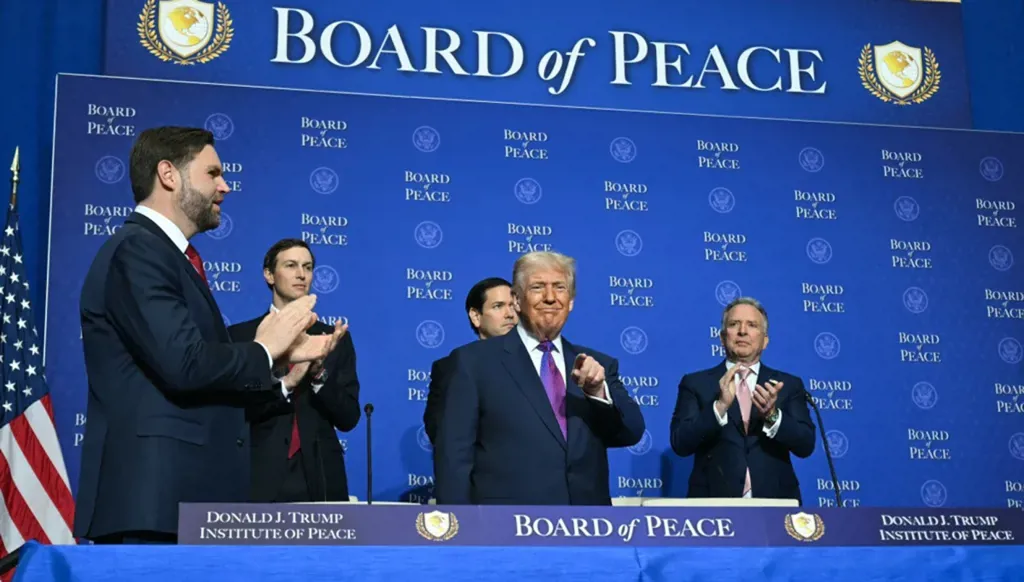
U.S. President Donald Trump arrives for the inaugural "Peace Council" meeting in Washington. (AFP)
Smaller Bigger

The President of Azerbaijan, Ilham Aliyev, and the Armenian Prime Minister, Nikol Pashinyan, stood up at President Donald Trump’s request while he explained how he ended a 32-year war between their countries in minutes. In the Oval Office, he had them initially stand apart, then gradually moved them closer until they embraced and signed a peace agreement.
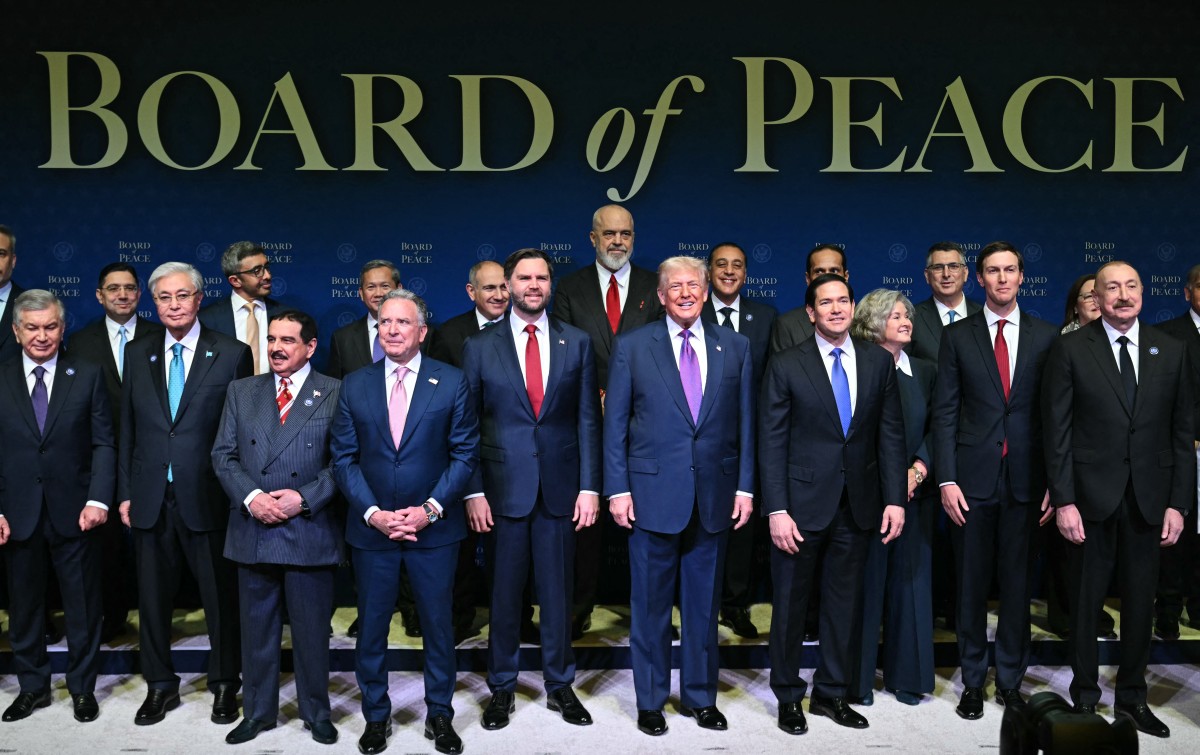
The request for the two leaders to stand came during Trump’s speech at the inaugural Peace Council meeting in Washington, D.C., on Thursday. As usual, his long address blended prepared remarks with improvisation, praise for the leaders and their representatives, jokes tailored to each country’s character, and extensive commentary on his accomplishments over the past year. Notably, he emphasized ending eight wars, with the ninth—presumably the Russian-Ukrainian conflict—still unresolved.

Although the leadership present fell short of Trump’s expectations—he had hoped to be surrounded by top-tier leaders, particularly America’s supposed allies in Europe—he did not for a moment downplay the historic significance of the meeting or the near-absolute importance of the council.

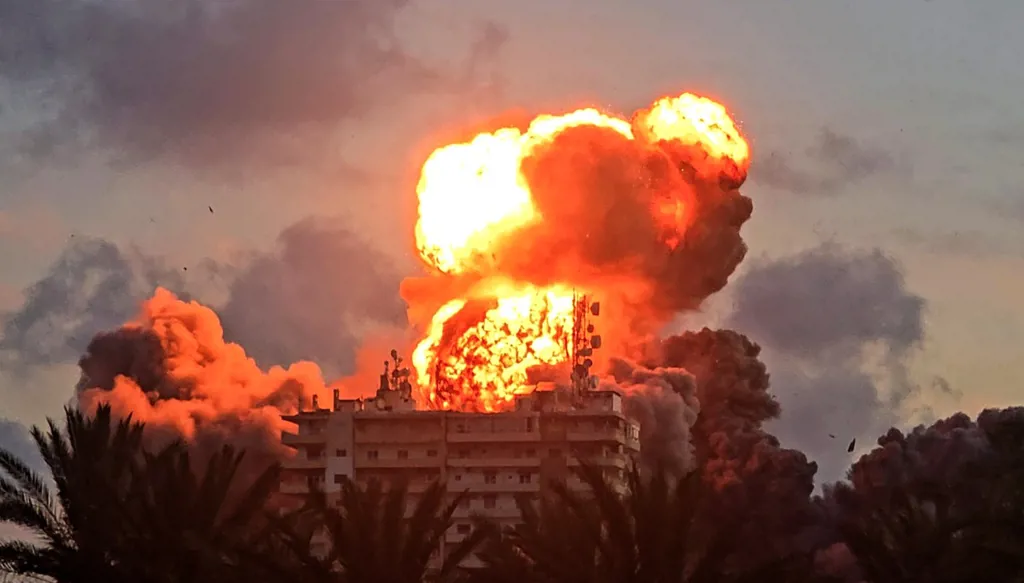
Trump, after a lengthy PR-focused preamble, shifted the discussion to Gaza, promising $7 billion from various countries, including the UAE, Qatar, and Morocco, along with thousands of international troops to join the stabilization force. He also mentioned FIFA, which will raise around $750 million and bring famous football players to Gaza, thanking its president, Gianni Infantino, who was seated among the representatives of the countries.


Participants in the inaugural meeting of the Peace Council take a commemorative photo. (AFP)


Peace and war 

The Peace Council meeting was marked by numerous paradoxes. Just last Wednesday, the media buzzed with speculation about an imminent attack on Iran, with the most dramatic predictions suggesting it could occur within hours.

This peace-war paradox highlights the distinctive way the American president handles crises—domestic or foreign—treating them with the same approach.

In his speech yesterday, he gave Tehran ten days to reach a "meaningful deal" in the ongoing negotiations or face "bad things."

A second paradox lies in the council itself, established by a UN Security Council decision to protect Gaza and its residents after the prolonged war there. Its inaugural session came after the Israeli government approved a draft decision allowing large areas of the West Bank to be registered as state lands. While Arab countries warned of the dangers of this move, the Trump administration completely ignored it, focusing solely on achieving peace in Gaza, leaving the West Bank as a separate issue.

The third paradox lay in the size and nature of the meeting’s attendance and the symbolism of the representation. The United States invited leaders from sixty countries, and Trump had previously claimed that "all world leaders" would attend. In reality, forty countries were officially represented. The UK, France, Germany, and the European Commission refused to participate in protest. Meanwhile, some countries attended as observers, and in other cases, it was unclear why they were part of the council—except that their leaders maintained good relations with Trump, such as Hungary and Argentina.

The council itself resembles a club requiring a permanent membership fee of a billion dollars annually, with the first three years free for temporary members. Officially launched from the "Donald Trump Institute for Peace" (formerly the United States Institute for Peace until last December), it has raised concerns among UN and European bodies that Trump might promote it as an alternative to the United Nations, potentially undermining the UN’s mechanisms in conflict zones—especially since Trump presents it as a platform to tackle global conflicts, from the Russian-Ukrainian war to any future disputes the council could resolve with its "unlimited potential."

The American president is set to continue promoting the council as a tremendous success, highlighting its foundation, launch, and anticipated achievements in peace, development, and prosperity in Gaza. It will likely feature in his State of the Union address next Tuesday in Congress, where he will review a year of governance and his tireless efforts on all fronts—from restoring America’s leadership role politically, militarily, and economically on the world stage to the massive military buildup in the Middle East. If this force fires in the few days before the speech, it would create an unprecedented fourth paradox for Trump: “President of Peace” on Thursday and “President of War” on Tuesday.


Disclaimer: The opinions expressed by the writers are their own and do not necessarily represent the views of Annahar.


العلامات الدالة

الأكثر قراءة

فن ومشاهير 6/26/2026 8:57:00 AM
بحسب مصدر مقرب من العائلة، فإن جورج "كان يرغب دائماً في السير على خطى والده".

فن ومشاهير 6/27/2026 9:21:00 AM
محطات من حياتها الشخصية السابقة، وعلى رأسها خطبتها الشهيرة من المطرب محمد عطية عام 2020.
فن ومشاهير 6/28/2026 1:12:00 PM
إقامة ملكية تجمع هاري وميغان ببريطانيا بعد سنوات من الخلاف.
رياضة 6/27/2026 8:05:00 AM
منتخب الرأس الأخضر يصنع المفاجأة في كأس العالم 2026 ويتأهل إلى دور الـ32 بعد إنهائه الدور الأول بثلاثة تعادلات مع إسبانيا وأوروغواي والسعودية... من هو هذا المنتخب؟