Syria’s controversial General Amnesty: Legal debate and political ripples under president Ahmad Al-Sharaa

Middle East 20-02-2026 | 12:11

Syria’s controversial General Amnesty: Legal debate and political ripples under president Ahmad Al-Sharaa

A sweeping decree granting pardons for past crimes sparks constitutional questions and raises concerns over power consolidation during Syria’s transitional phase. 
Syria’s controversial General Amnesty: Legal debate and political ripples under president Ahmad Al-Sharaa
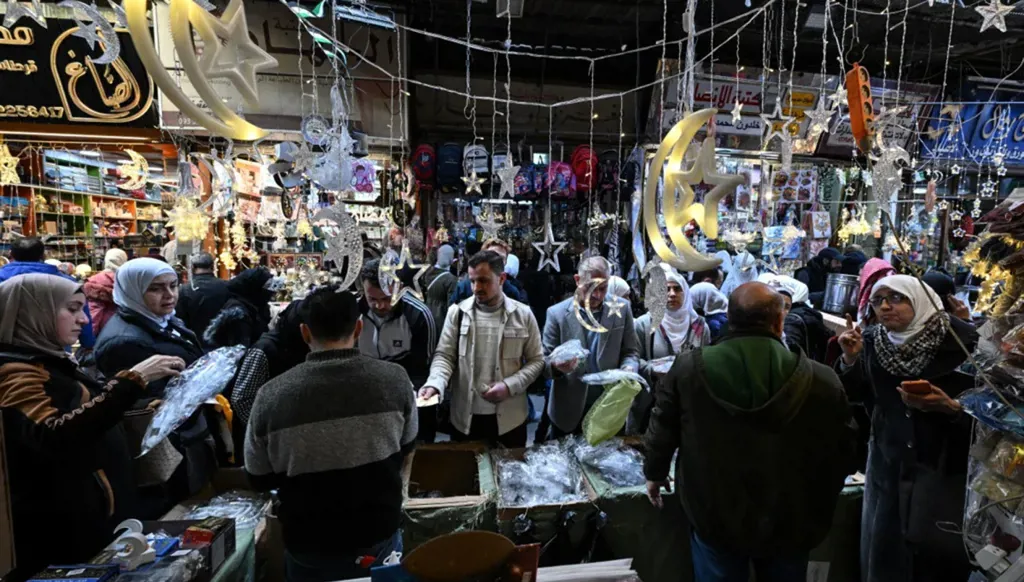
Syrians shop at a market in Damascus. (AFP)
Smaller Bigger

On Wednesday evening, Syrian President Ahmad Al-Sharaa issued Decree No. (39) for the year 2026, granting a general amnesty for crimes committed prior to its issuance, in accordance with the provisions of the constitutional declaration and the requirements of the "higher national interest" as stated in the decree.
The decree includes reducing life imprisonment or detention to twenty years, except for felonies resulting in personal harm unless the affected party waives their personal rights. It grants a three-month period to file claims if they have not been previously submitted. Additionally, it provides a complete pardon for those sentenced under a final judgment who have reached the age of seventy or suffer from an incurable fatal disease, regardless of the nature of the offense, while observing general conditions and exceptions.

The amnesty covers all penalties for misdemeanors and violations, as well as several felonies outlined in laws concerning drugs, smuggling, regulation of exchange professions, dealing in currencies other than the Syrian pound, and smuggling subsidized materials. It also applies to a range of crimes under the general and military penal codes, and the cybercrime law, provided that some of these offenses occurred before December 8, 2024.

The decree grants a conditional amnesty for kidnapping offenses if the offender voluntarily releases the kidnapped person without seeking compensation or causing permanent harm, or hands them over to a competent authority before the decree’s issuance or within one month thereafter. It also provides conditional amnesty for weapons and ammunition offenses upon surrendering the weapon within three months.

Conversely, the decree excludes crimes of torture and human trafficking, certain drug offenses, prostitution-related crimes, theft of electricity and communications networks, exam fraud, as well as crimes involving "severe violations against the Syrian people," in addition to a broad range of offenses specified in the penal code.


Constitutional debate over authority

The decree has sparked widespread legal debate, beginning with questions regarding its constitutional basis.


Lawyer Almoutassim Al-Kilani argued that a general amnesty is inherently a legislative act, as it establishes a general rule applicable to an unspecified group of people, effectively removing the criminal nature from the acts it covers. Al-Kilani contended that the provisional constitutional declaration of 2025 did not authorize the President to issue a general amnesty, limiting presidential powers to special amnesties and rehabilitation. Therefore, issuing a general amnesty decree without explicit constitutional text raises a constitutional issue regarding jurisdiction and the principle of legality.

Al-Kilani also noted that, in constitutional jurisprudence, exceptional powers are interpreted narrowly and should not be extended by inference or analogy. He emphasized that the absence of explicit legislative authorization places the decree’s legitimacy under serious legal scrutiny.

Meanwhile, lawyer Michel Chammas emphasized that the constitutional declaration clearly delineates powers, noting that legislative authority is exercised by the People's Assembly, while the President’s powers are limited to proposing laws, issuing what the assembly approves, and granting special pardons. Chammas argued that political necessity, regardless of its nature, does not confer unarticulated constitutional powers, and that general amnesty falls exclusively within the jurisdiction of the legislative authority.

Judge Hussein Hamada clarified the essential distinction between general amnesty and special pardon, noting that a general amnesty is a law issued by the legislative authority that removes the criminal nature of the act itself, whereas a special pardon is an individual decree affecting only the penalty without altering the criminal characterization. Hamada highlighted the paradox that the abrogated Syrian constitution granted the President the power to issue legislative decrees in the absence of the People's Assembly, while the current constitutional declaration contains no similar provision.


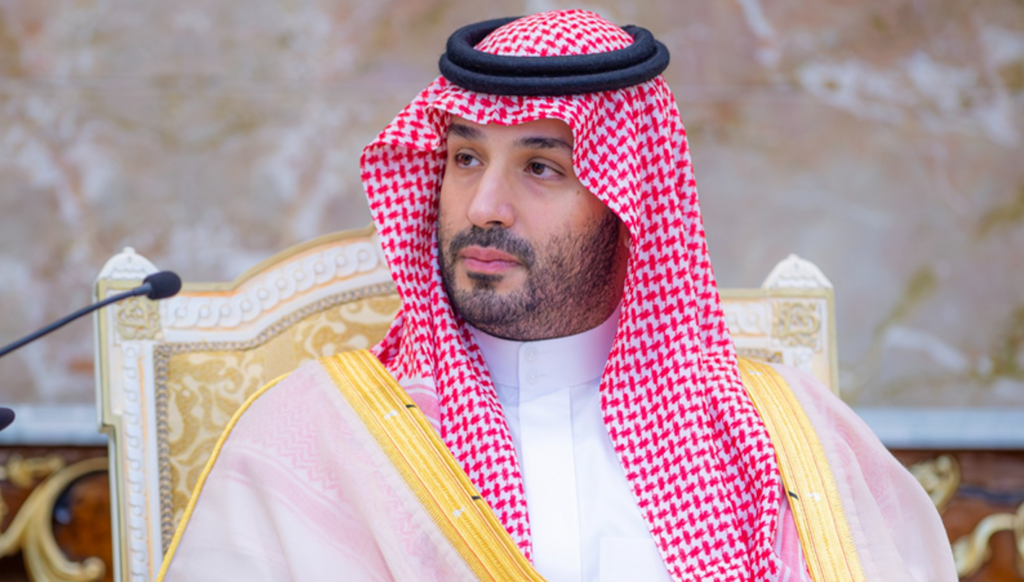
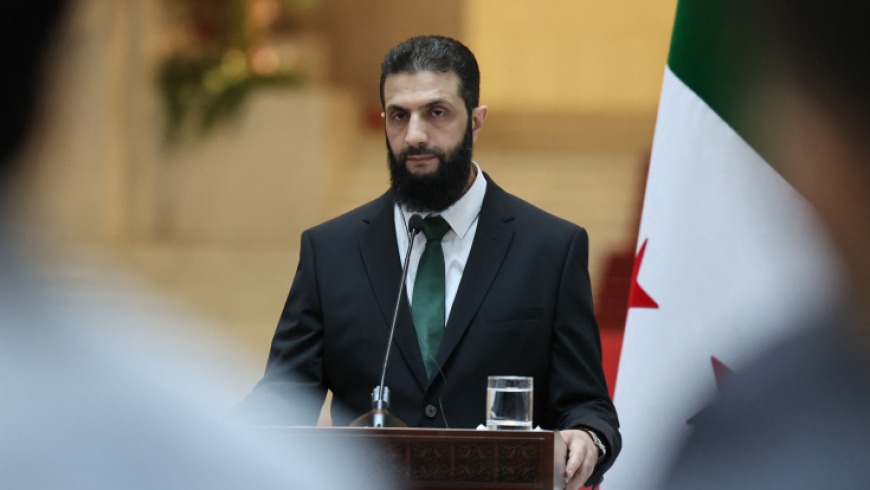
President of Syria Ahmad Al-Sharaa. (AFP)


Potential political ramifications

The debate extends beyond legal classification to broader implications concerning the very nature of the transitional phase itself.

Critics argue that the issue goes beyond merely violating a provision of the constitutional declaration. They contend that the authority stemming from the Victory Conference—the same body that drafted and approved the declaration with the President’s signature, without a popular referendum—cannot be bypassed. Ignoring the framework established by this authority to organize the transitional phase, they assert, sends a message that adherence to the constitutional text is conditional on the authority’s discretion rather than a binding constraint.

Some legal experts and observers note that the absence of a fully constituted People's Assembly and an active constitutional court creates what they describe as an "interpretive vacuum," allowing for diverse readings of the presidential action—from viewing it as a political measure to ease social tensions, to accusing it of using amnesty as a tool to reshape security balances in certain communities.

Critics point out that the peculiarity of this violation lies in its effect on one of the few areas where the constitutional declaration maintains a measure of separation of powers, as general amnesty is reserved for the legislative authority. They view the President’s exercise of this power as a direct crossing of the boundary between executive and legislative functions, further reinforcing the concentration of power in the presidency.

They argue that violating the principle of separation of powers during a transitional phase—intended to be temporary—raises concerns about future safeguards, including the drafting of a permanent constitution and the organization of elections to conclude the transitional period. They caution that the risk lies not in a single decision, but in the potential for such actions to set precedents that accumulate over time, particularly in a transitional phase that spans several years.

Some warn that repeating such practices could result in what they describe as a "practical expansion of powers," even if the constitutional text formally remains intact, leaving the remainder of the transitional phase open to a wide range of possibilities.


Disclaimer: The opinions expressed by the writers are their own and do not necessarily represent the views of Annahar.

الأكثر قراءة

الخليج العربي 2/20/2026 7:38:00 AM
غراهام: إذا استُبدل نظام إيران بالشعب الإيراني، فسيؤدي ذلك إلى مستقبل مشرق لإيران ويفتح مساراً جديداً للتطبيع
تحقيقات 2/20/2026 6:41:00 AM
خلال الحرب المستمرة على غزة، تبخرت جثامين ما يقارب من 3000 فلسطيني دون أثر.
المشرق-العربي 2/20/2026 9:14:00 AM
حماس: أي مسار سياسي أو ترتيبات تناقش بشأن قطاع غزة ومستقبل شعبنا الفلسطيني يجب أن تنطلق من وقف كامل للعدوان 
لبنان 2/21/2026 2:00:00 PM
الجيش الإسرائيلي: تم القضاء على عناصر من الوحدة الصاروخية في حزب الله في غارات أمس على منطقة بعلبك