Israel and the West Bank: Six decades of occupation and gradual annexation
From Oslo to today, Israeli policies have steadily undermined Palestinian authority, expanded settlements, and reshaped the West Bank’s political and demographic reality, leaving Palestinians with little control over their own land.


شارك على
 مسنجر
مسنجر
 واتساب
 ثريدز
ثريدز
 بريد إلكتروني
 الطباعة
شارك على


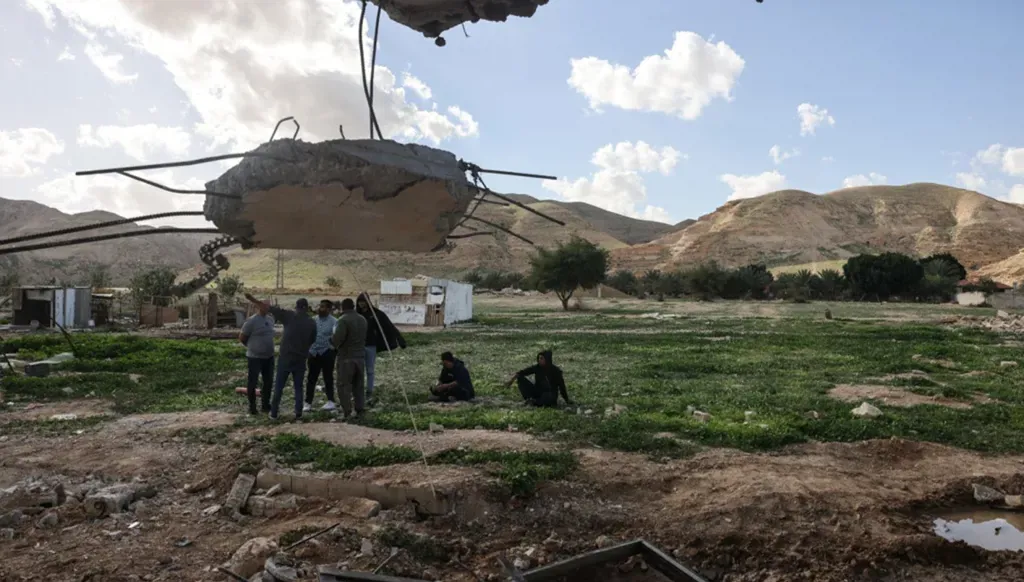


It is obvious that Israel occupied the West Bank (along with the Gaza Strip) as a result of the June 1967 war, almost six decades ago. However, Israel has never fully withdrawn from these territories, despite the Oslo Accords and the establishment of the Palestinian Authority in 1994.
Contrary to popular perception, Israel is not “reoccupying” the West Bank today. One of the main shortcomings of the Oslo Accords was that they did not recognize Israel as an occupying power, nor did they officially define the West Bank and Gaza as occupied territories.
Therefore, Israel’s measures to solidify its dominance over the West Bank cannot be considered new or surprising. The reason is simple: Israel has never stopped—politically, legally, or in practice—doing everything possible to reinforce its control over the West Bank and cement its occupation.
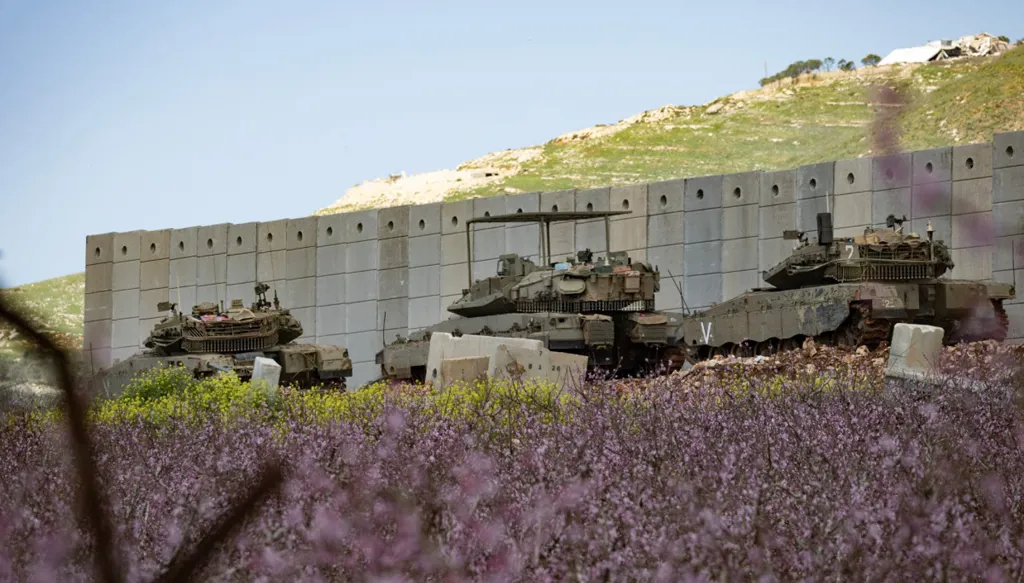
This includes land confiscation, house demolitions, construction of bypass roads, and building the separation wall, which cuts through the West Bank and limits movement between Palestinian villages, camps, towns, and cities. It also includes building new settlements and expanding existing ones, particularly around Jerusalem.
It is well known that Israel has consistently refused to withdraw from all the Palestinian territories occupied in 1967, especially the West Bank, which covers 5,680 km², or 21% of historic Palestine. Israel cites its national security, the protection of settlements, and the preservation of Jewish holy sites as justification.
Consequently, the Oslo Accords divided the West Bank into three areas: Area A, under full Palestinian Authority control (though this control has been limited); Area B, under joint Palestinian-Israeli control; and Area C, under full Israeli control, which constitutes 60% of the West Bank.
Only five new developments can be observed, but they all follow the same pattern:
Israel’s extremist government has announced a complete break with the Oslo Accords and seeks to minimize the Palestinian Authority as much as possible. The Authority now governs Palestinians only, without sovereignty over the land, resources, crossings, or settlers.
The creation of settler militias, effectively forming a parallel army to confront Palestinians, enforce Israeli security, alter the West Bank’s demographics, and restrict Palestinian living conditions.
The expansion of the Israeli civil administration in the West Bank. Previously, Israel contested the Palestinian Authority only over land, resources, and crossings while leaving it to manage the population. Today, Israel challenges the Authority even in managing the Palestinian population itself.
Attempts to impose alternative governance structures to replace the Palestinian Authority in managing the West Bank, similar to the model established in Gaza. This aims to assert Israeli oversight over the Palestinian population, advancing Israel’s goal of controlling Palestinians “from the river to the sea” and removing the Palestinian dimension from peace negotiations.
Following all of the above, Israel is also attempting a gradual annexation of the West Bank, either by isolating Palestinian towns and cities as separate “islands” or by other means. This is reflected in the recent Knesset decision to expand Israeli authority in the West Bank, allowing land purchases to enlarge settlements and extending the application of Israeli law in Areas A and B. It also includes measures that make it easier for settlers to acquire land, effectively changing the political and legal reality of the West Bank. This contradicts the historical and legal status of the occupied Palestinian territories, as recognized under successive authorities before Israel’s establishment and after the occupation of the West Bank. Israel is now treating the West Bank as if it were not occupied, similar to the territories it controls from 1948.
From this, two main conclusions can be drawn:
First, the last two points are the most significant changes among the five developments in Israel–West Bank relations since 1967, and the most important shifts after the Oslo Accords.
Second, the Palestinian Authority now serves little purpose for Israel beyond managing the Palestinian population in the West Bank, with Palestinian security forces effectively serving Israeli security policies.
Israel maintains the Palestinian Authority to bear the political, financial, security, and ethical responsibilities of controlling Palestinians under occupation. Clearly, Israel would not have pursued these policies without an extremist government in power, a fully aligned U.S. administration, and the current regional and international context.
The situation in the West Bank is no better than in Gaza. This is the reality for Palestinians today under these circumstances.
Disclaimer: The opinions expressed by the writers are their own and do not necessarily represent the views of Annahar

العلامات الدالة
الأكثر قراءة

قصة "محروك إصبعه" التي تعكس تجارب الفقر والصعوبات التي عاشها كاظم الساهر في طفولته.