The State as a countercurrent: Rethinking Rafic Hariri’s vision for Lebanon
What was the project Lebanon’s former Prime Minister, Rafic Hariri, carried? Why did it seem, at a moment of regional turmoil, like a counterpoint to the prevailing trends? And is it still viable today?


شارك على
 مسنجر
مسنجر
 واتساب
 ثريدز
ثريدز
 بريد إلكتروني
 الطباعة
شارك على




Mustafa Al-Awik
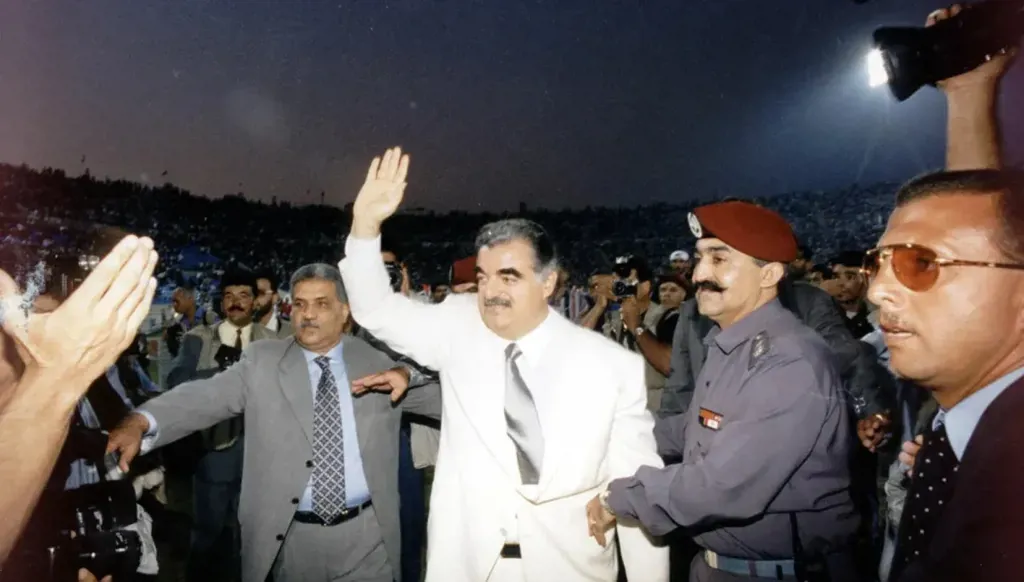
Twenty-one years after the assassination of the martyred former Prime Minister of Lebanon, Rafic Hariri, the question has shifted from the crime itself to its deeper meaning: What was the project he carried? Why did it seem, at a moment of regional turmoil, like a counterpoint to the prevailing trends? And is it still viable today?
Rafic Hariri’s vision was rooted in the Taif Agreement, not merely as a constitutional text, but as the ultimate framework for building a balanced state. He placed his trust in institutions and sought to gradually restore sovereign decision-making from within constitutional legitimacy, rather than through risky ventures or open confrontations.
He did not propose a confrontational project, but a project to consolidate the authority of the state. In a time when some countries were eroding from within or reduced to tools in the struggles of regional axes, this approach was a clear departure from the dominant context.
Hariri treated the economy as a distinctly political instrument. He rebuilt Beirut as a message: Lebanon should be a center, not a periphery; a state that attracts and produces, not a field of depletion.
He linked monetary stability to attracting investments and sought to reinforce Lebanon’s image as a service and financial hub open to both the Arab world and the wider international community. His goal was not merely reconstruction but reintegrating Lebanon into the regional and global economy, giving it a chance to enter the new world after emerging exhausted from civil war and the Israeli invasion.
However, the deep transformations Lebanon and the region underwent after his assassination, coupled with the internal financial collapse, undermined this distinctive advantage. Other capitals advanced to fill the void, and Lebanon lost a position it had been close to achieving.
Hariri was keen to position Lebanon within its Arab environment, not as a subordinate but as a partner. He envisioned it as a bridge between the Arab and Western worlds, not merely a point of contact in a closed axis.
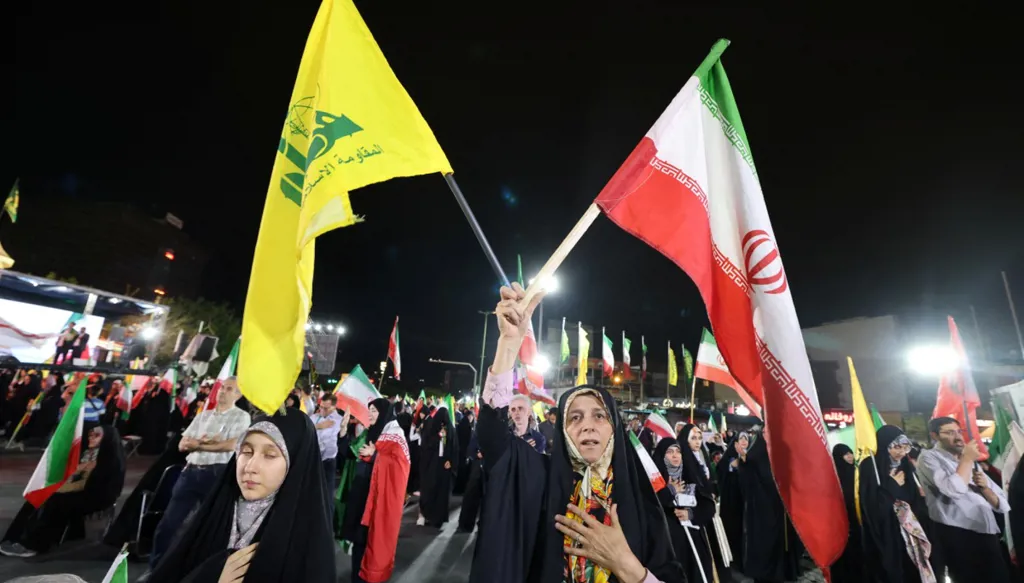
With the rise of regional alignments after his assassination, Lebanon’s positioning became increasingly ambiguous. This tension affected its Arab relations and left its mark on subsequent political and economic crises. The state became dominated, leaning closer to the “resistance axis,” and its Arab identity faltered in conferences and summits, even at the peak of Iranian targeting of Saudi Arabia.
The experience shows that Rafic Hariri’s project was a continuous effort to strengthen the idea of the state in a turbulent and rapidly changing regional environment.
His assassination did not just end a man; it reopened the struggle over the very meaning of the state in a region increasingly drawn toward militarization, fragmentation, and the supremacy of power over institutional logic.
Today, the importance of recalling him lies not in nostalgia, but in revisiting his foundational question: Do we want Lebanon to be a viable, open, stable state, with Arab depth and balanced international relations? Or will we accept it as a playground for competing projects, managed from outside its institutions?

العلامات الدالة
الأكثر قراءة