Guardians of power: The Iranian Revolutionary Guard’s reach at home and abroad
From Tehran to Beirut and beyond, uncover how the Guard’s Quds Force projected Iran’s influence across borders, shaping wars, politics, and regional alliances.


شارك على
 مسنجر
مسنجر
 واتساب
 ثريدز
ثريدز
 بريد إلكتروني
 الطباعة
شارك على


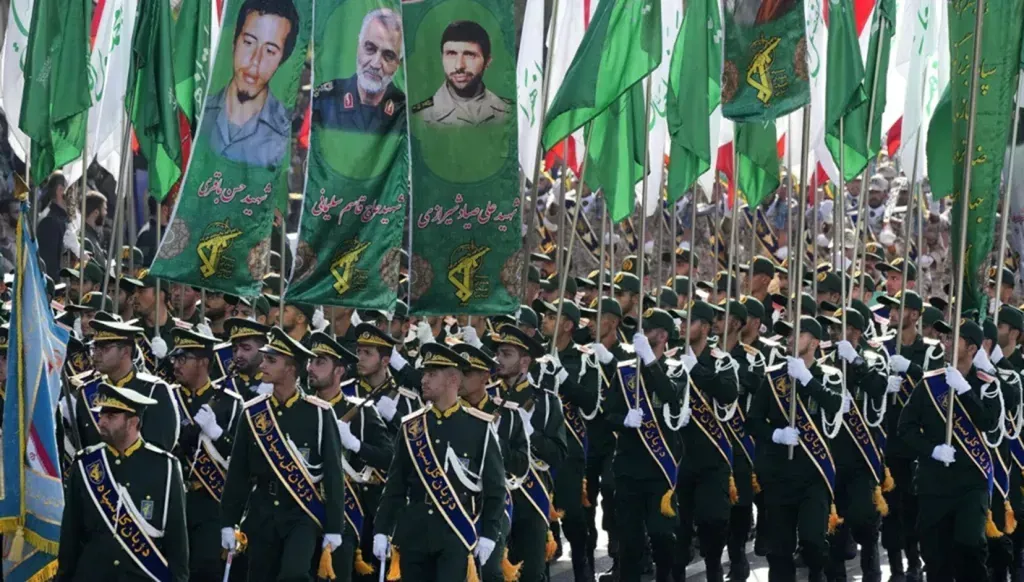


Those who followed the establishment of the Islamic Republic of Iran in 1979 assert that this would not have happened without the widespread popularity gained by its late founder, Ayatollah Khomeini, as well as the emergence of a strong popular sentiment—transcending sects, communities, nationalities, and ideologies—among the diverse Iranian population, driven by both national reasons and factors related to each of its components.
They also claim that the final success of Khomeini's revolution would not have been possible without his initiative to establish the 'Islamic Revolutionary Guards,' in collaboration with other security and military forces in the country, to gradually—but violently—eliminate the allies of the revolution from various ethnicities, peoples, and parties (Mujahedin Khalq), who were initially necessary for Khomeini and his revolution's success.
Their eradication or weakening was deemed necessary for the revolution’s continuation and to achieve significant successes, most notably transforming Iran into a state with Shiite and Middle Eastern influence, as well as an Islamic dimension that could not have been realized without politically and operationally adopting the Palestinian cause and attracting Hamas and Islamic Jihad, which returned to using weapons to resist Israel.
How did the "Iranian Revolutionary Guard" successfully execute the aforementioned policy?
Regional and international research entities believe that the 'Guard' had two functions: internal repression and establishing regional external influence. Initially, this enabled it to use Yemen, Iraq, Syria, and Lebanon to consolidate its role in the region, which later expanded internationally by involving Russia—initially forming and unifying with the United States the two biggest adversaries to the peoples and freedoms in the region and the world, who had to be confronted.
In addition, it involved positively engaging with the People's Republic of China, which has been quietly and cunningly working to leverage every American adversary to apply pressure on the U.S., prompting it to practically—perhaps officially—recognize that it is no longer the sole world leader after the Soviet Union's collapse, and that China may rival or partner in global leadership.
What were the functions of the Iranian Islamic Revolutionary Guard?
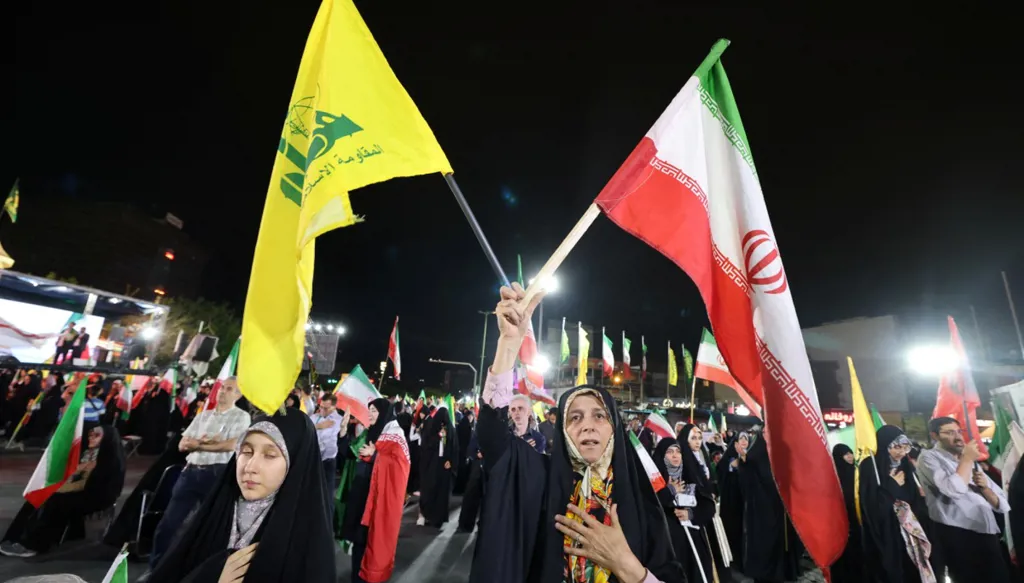
According to regional entities precisely informed about Iran's internal situation, as well as the regional and international contexts, the "Guard" had two functions. The first was internal: to protect the system of the "Guardianship of the Islamic Jurist" through repression and the management of parallel apparatuses, as well as by attracting supporters committed to religious thought and providing them and their leaders with benefits. The external function of the 'Guard' was to export influence through arms and proxies, with the Quds Force at the forefront. In this sense, Lebanon serves as an example of the 'Guard's' working method and the implementation of the Guardianship strategy.
Hezbollah was established after rigorous and prolonged training and cooperation, supported by ongoing alliances, and provided with substantial funding necessary to expand among the Shiite community in Lebanon, building a quasi-military force tasked with resisting Israel to end its occupation of parts of Lebanon.
Later, Hezbollah gained control of Lebanon and engaged in significant cooperation with Syria under Hafez al-Assad and his successor Bashar, enhancing this control and later collaborating with their forces and intelligence to preserve the regime after the popular uprising against it in 2011. All legitimate and illegitimate means were used in this effort, and Russia was enlisted after it proved impossible for Hezbollah, its Iranian founders and experts, and the non-Arab Shiite militias it had established from the beginning to succeed alone. This is all reported by informed parties, both domestic and international, analyzing the working methods of the Islamic Republic and its crown jewel, the "Revolutionary Guard." The latter's practical function was to wield influence through arms and proxies, headed by the Quds Force, with Hezbollah in Lebanon alongside similar entities across the Islamic world, both Arab and non-Arab.
Building on this, the same regional sources indicate that the external function of the "Guard" was—not only to export proxies—but also to establish Hezbollah, along with training networks, funding channels, and certain operations attributed to it in Lebanon during the 1980s and beyond. In short, the sources add, the mission of the Revolutionary Guard was to protect the authority of the Guardianship of the Islamic Jurist, which its opponents and enemies consider a dictatorship, within Iran.
Abroad, its task was to expand influence through the Quds Force and a variety of local agents. The Quds Force was established as an external arm to project influence, power, and—according to Iran’s adversaries—terrorism. This effort was supported by training centers, funding networks, and arms supply channels, successfully turning multiple regional areas into arenas for its Islamic revolutionary activity, particularly in Iraq, Syria, Yemen, Lebanon, Bahrain, Saudi Arabia, Palestine, Turkey, and other countries.
What are the actual and final objectives of the Revolutionary Guard?
According to the same informed regional sources, it was the establishment of a "dictatorship" in Iran based on the "Guardianship of the Islamic Jurist," with the Revolutionary Guard transformed into a major instrument for its preservation. This included the creation of the Quds Force to expand the export of the revolution, a decisive role in shaping the regime’s foreign policy, and ownership of domestic and international training centers linked to the Quds Force. The Guard is credited with igniting wars and intervening in Iraq, Syria, and Yemen, as well as in Bahrain, Saudi Arabia, Palestine, and Turkey, with its activities extending to other countries such as Egypt, Jordan, Kuwait, Qatar, and the United Arab Emirates.
How was the Lebanese Hezbollah founded?
Its establishment began in 1979 through the institutions of the "Guardianship of the Islamic Jurist," adopting the principle of the Guardianship and the leadership of Khomeini, followed later by Khamenei. Salaries and funding were provided by the Quds Force. The Bekaa Valley served as a center for training and armament between 1980 and 1983, and subsequently, Mohsen Rafighdoust, then commander of the Guard, boasted of the Islamic Republic’s involvement in major operations carried out in Lebanon. Naturally, the operations attributed to Hezbollah in 1983 and 1984 were likely "joint," including the kidnapping of Westerners and diplomats. Most of this information is known by the Lebanese and has been reported by various media outlets. Nevertheless, recalling it may be useful for Iran’s adversaries, its opponents in Lebanon, and perhaps Western political and diplomatic entities.
Disclaimer: The opinions expressed by the writers are their own and do not necessarily represent the views of Annahar.

العلامات الدالة
الأكثر قراءة