Silwan under siege: Excavations, demolitions, and the struggle to survive
From the City of David claims to mass evictions, Palestinian residents face daily threats to their homes, heritage, and existence, fighting to remain in a neighborhood targeted for displacement.


شارك على
 مسنجر
مسنجر
 واتساب
 ثريدز
ثريدز
 بريد إلكتروني
 الطباعة
شارك على


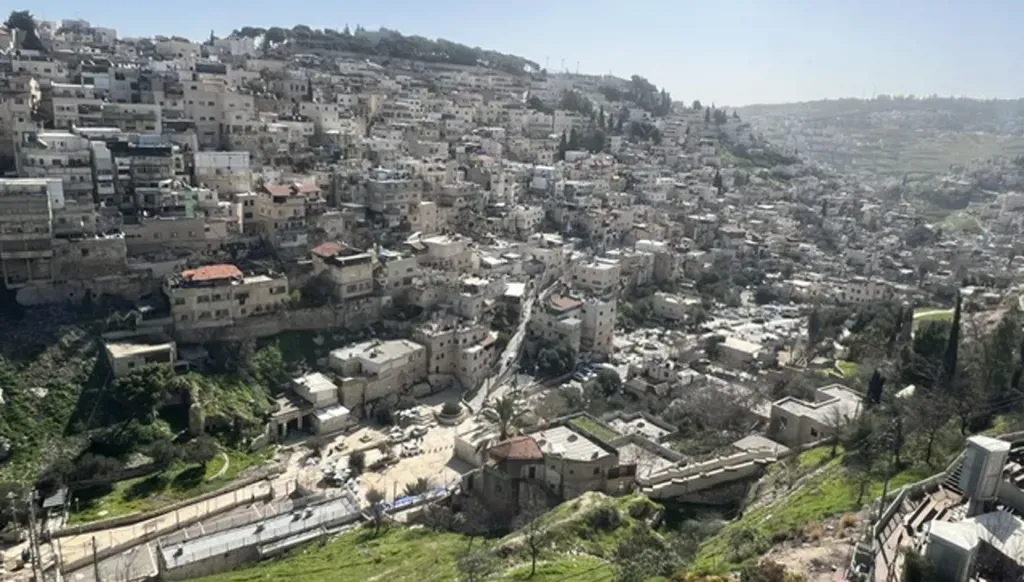


Since the occupation of Jerusalem in 1967, the town of Silwan has been subjected to the most severe forms of persecution and racist practices aimed at preventing its natural development and prosperity. This is carried out through the systematic confiscation of land under various pretexts, as part of a policy intended to Judaize the area and displace its Palestinian residents. Israeli authorities exploit building laws and the “Absentee Property Law,” amid the absence of official urban plans for the neighborhood, classifying the area as a green zone and part of national park projects, while claiming to be the sole authority entitled to manage it.
In this context, settlement associations exploit this situation to seize Palestinian property and demolish homes to implement their settlement plans and projects, which has reduced the town’s area to about 6,000 dunams, down from an estimated 73,000 dunams.
Silwan is located in the southeastern part of the Old City walls and the Al-Aqsa Mosque compound, and it holds strategic importance as well as significant historical and geographical value. It is bordered to the east by the Kidron Valley, which separates it from the Mount of Olives. Its population is estimated at around 60,000 Palestinians, compared to roughly 2,800 Israeli settlers.
Silwan is one of the oldest inhabited areas in Jerusalem, as it has been a main water source, making it a vital area and suitable for settlement for around 5,000 years, according to historical research. It also contains remains from the Bronze and Iron Ages, the Roman and Byzantine periods, as well as the Umayyad, Abbasid, and Fatimid Islamic eras, followed by the Mamluk and Ottoman periods. Archaeological excavations indicate that the Jebusites dug a primitive water system to bring water from the spring into the Old City walls.
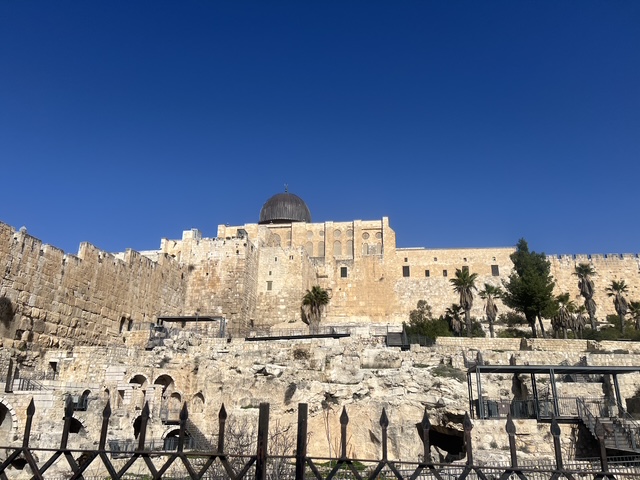
Archaeological excavations driven by settlement
Palestinians in Silwan live in 12 neighborhoods, while settlement associations, primarily “Elad” and “Ateret Cohanim,” claim that the Wadi Hilweh neighborhood is the site of the “City of David,” which, according to the Israeli narrative, was established by King David. Historical research, however, has not proven that King David was a real or historical figure. Since the 1990s, Israeli authorities and settlers have engaged in a project to create a Jewish settlement accompanied by a biblical-themed archaeological tourist park.
To achieve this project, Israeli policy follows two main approaches: conducting large-scale archaeological excavations to uncover remains from Jewish eras, particularly those attributed to the time of King David, and seizing dozens of Palestinian homes, demolishing them, and forcibly displacing their residents to replace them with Jewish settlers. The goal is to create a Jewish demographic majority and enforce Israeli control over the area.
The alliance between the Israeli government, the Jerusalem Municipality, and the settlement associations violates and generally distorts the city’s history, and Silwan in particular, by targeting places, times, names, and artifacts, thereby altering the authentic Palestinian identity and supporting the biblical narrative. According to Palestinian and Israeli archaeologists from the new generation, settlers rely on fake artifacts as foundations for their narrative while systematically erasing and removing Palestinian Arab artifacts, ignoring the historical value of every stone or artifact.
Excavations conducted as horizontal tunnels are not a legitimate scientific archaeological method, as they make it difficult to understand the multiple soil layers and historical periods in which they were used. This method has been scientifically replaced by vertical stratigraphic excavation, which starts from the surface down to deeper layers, allowing researchers to understand the sequence of discoveries and prevent damage.
Settlement associations carefully select excavation sites to emphasize Jewish presence, focusing on the oldest layers, particularly those from the 10th century BCE, while ignoring and removing other layers. Archaeological excavations are concentrated in the area known as the “Holy Basin,” located between the Old City and the Mount of Olives, including the neighborhoods of Silwan, Wadi Hilweh, Al-Bustan, and Valley of Hinnom/Wadi Rababa, and extending north toward Sheikh Jarrah, covering an area of approximately 2.5 km².
Any archaeological discovery is linked to the Torah and given a biblical name, and any archaeological evidence is used as a tool for Israeli control over the land rather than for neutral scientific purposes. The main motive is not scientific or historical research but a deliberate effort to reinforce the Jewish biblical narrative, connect the settlers’ present to the region’s history in a constructed way, legitimize Israeli control, and tie it to political ideology. Archaeology thus shifts from being an objective, neutral science to a component of political conflict, contributing to its transformation into a religious struggle and serving as a key instrument for Judaizing Palestinian geography and history and enforcing the Zionist narrative.
Israeli authorities also aim to build underground tunnels, known as the “Pilgrims’ Route,” connecting the Silwan pool to areas near the Al-Aqsa Mosque compound.
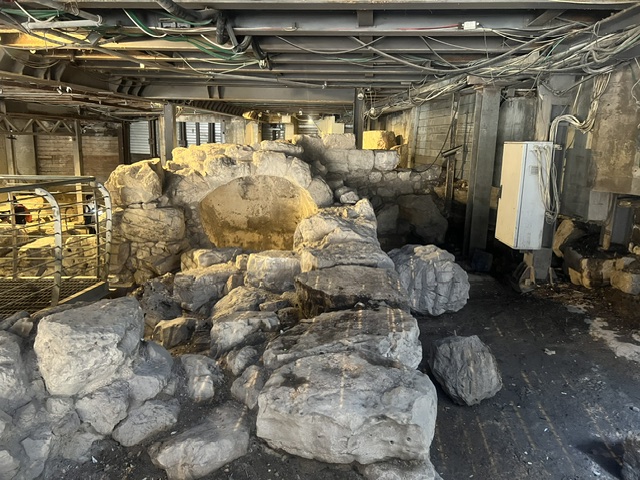
The impact of excavations on Palestinian homes
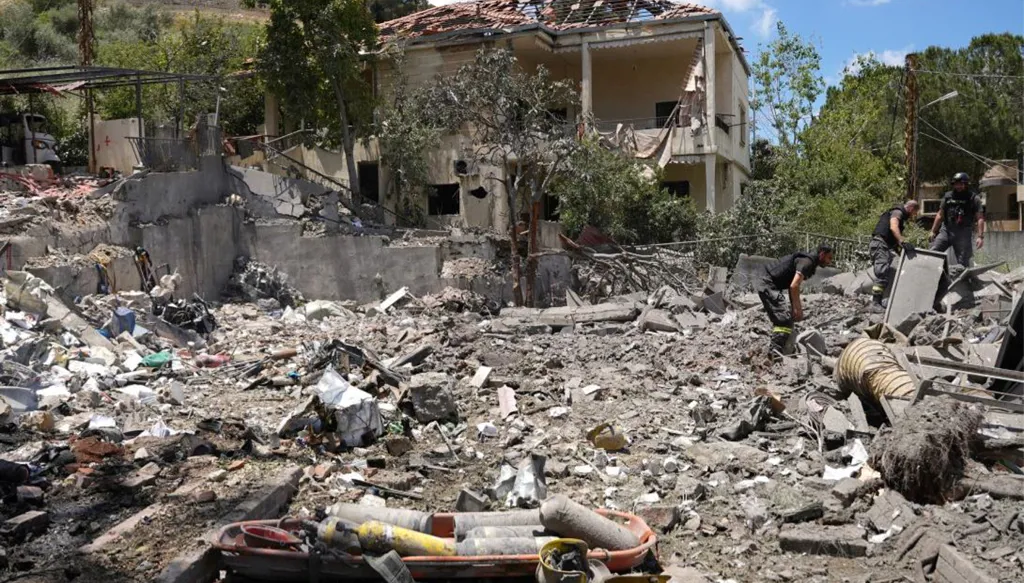
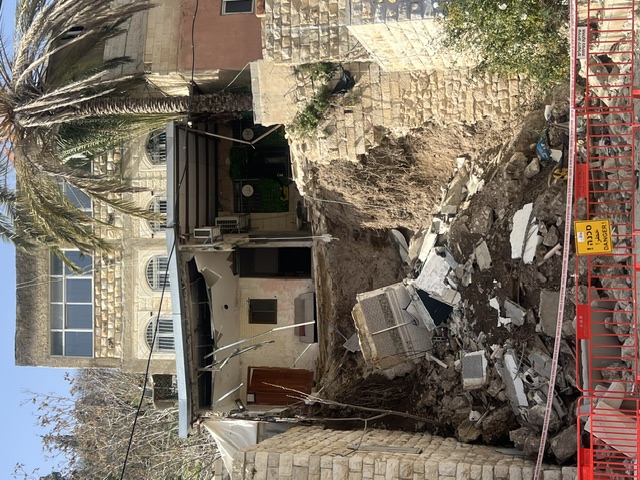
The Israeli organization “Emek Shaveh” documented that Palestinian homes have suffered cracks and structural damage due to ongoing excavations beneath them, in addition to the damage to entire housing units. This has forced many families to leave their homes, which have become dangerous and unfit for habitation. The excavations and gradual removal of soil have caused partial collapses, extensive cracks, and ground subsidence, which the Jerusalem Municipality classified as hazardous and uninhabitable, issuing evacuation orders to their residents.
Annahar visited the Abu Sbeih family in their two-story home in the Al-Ain neighborhood, which houses more than 50 people, including grandparents, eight children, and grandchildren. Two weeks ago, part of the house collapsed due to years of ongoing excavations, and the family received evacuation orders, forcing three of the children to relocate their families. According to the family, the municipality even prevented them from approaching the collapsed section to inspect it or attempt to find solutions.
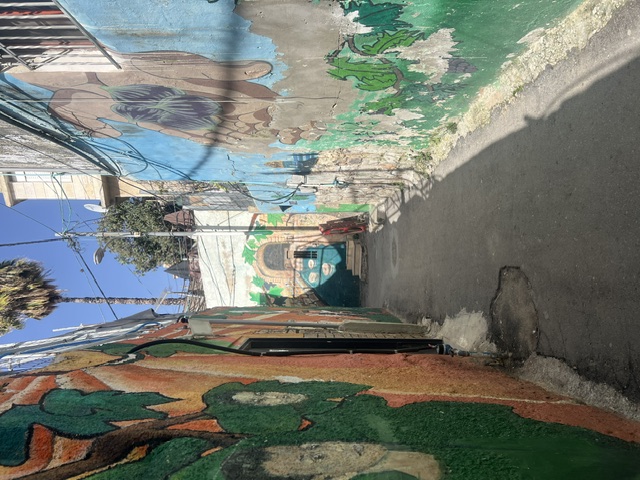
Mass evacuation in the Al-Bustan neighborhood
Around 1,500 residents of Jerusalem live in the Al-Bustan neighborhood, in approximately 120 homes, about 80% of which are at risk of demolition. Israeli authorities have issued demolition orders for 14 homes, housing around 120 people, as part of a series of measures that included the confiscation of large areas of the neighborhood’s land, estimated at about 5,700 dunams. Landowners have incurred tens of thousands of dollars in fines imposed by the Jerusalem Municipality, amid an organized campaign and immediate demolition orders under the “Kaminetz Law.”
Annahar spoke with Omar Rajab (Abu Murad), 59, who built his dream home in 2017, covering 150 square meters, but municipal bulldozers demolished it after only six months, citing the lack of a building permit. He was fined over $30,000, in addition to the cost of the bulldozers that carried out the demolition.
Abu Murad then returned to the family home, where he has since lived with his wife in a space of no more than 48 square meters, surrounded by his seven children and grandchildren. About a week ago, the municipality, accompanied by the Israeli army and police, delivered new demolition orders to the family to be executed within 21 days. The painful irony is that the same municipality had previously sent him a notice to pay the annual property tax (Arnona) of $3,200, in an area suffering from near-total lack of municipal services and severe infrastructure deficits.
With tears in his eyes, Abu Murad says: “The eighth possible miracle is for a Jerusalemite to obtain a building permit. As for me, I will not leave, no matter what they do. The amount I will have to pay will double to $60,000 after the new demolition, but if necessary, I will put up a tent on the ruins of my home—there are no other solutions for us.” He adds: “All we want is to live in peace and security, and for them to stop harming us.”
Abu Hassan from Silwan has lived with his wife, daughter, and three children with special needs for 24 years. He was notified of the demolition of his house when it was built, but he managed to freeze the decision in 2023, before it was renewed last week and issued as a final demolition order.
Abu Hassan tried, through lawyers, to extend and postpone the order for humanitarian reasons, hoping that his children’s special health conditions would give him more time, but his request was denied. His lawyer informed him that if he paid $10,000 in cash, they might grant a delay of only a few weeks. He refused this extortion entirely, as he did not have the money, was still searching for a suitable alternative for his children, and would not allow them to destroy his dream. He therefore decided to demolish his home with his own hands to avoid fines of thousands of dollars.
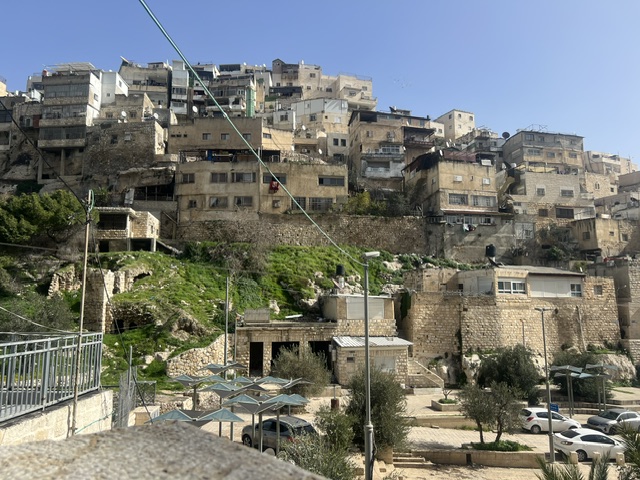
It is the story of a homeland whose tragic tales never end. Each neighborhood has its own character and significance within the settlers’ plans, directly reflecting on the daily suffering of its residents. In Silwan, excavations, demolition orders, heavy fines, and systematic restrictive policies intersect to form integrated tools in a project aimed at emptying the area of its original inhabitants. Amid the constant fear of collapses or demolitions and the ongoing threat of losing their homes, residents cling to their right to remain and continue their lives, facing the harsh reality imposed by Israeli authorities in an open struggle over land, memory, and existence.

العلامات الدالة
الأكثر قراءة