Iran at the edge: Trump’s multi-track pressure and the end of strategic certainty


شارك على
 مسنجر
مسنجر
 واتساب
 ثريدز
ثريدز
 بريد إلكتروني
 الطباعة
شارك على


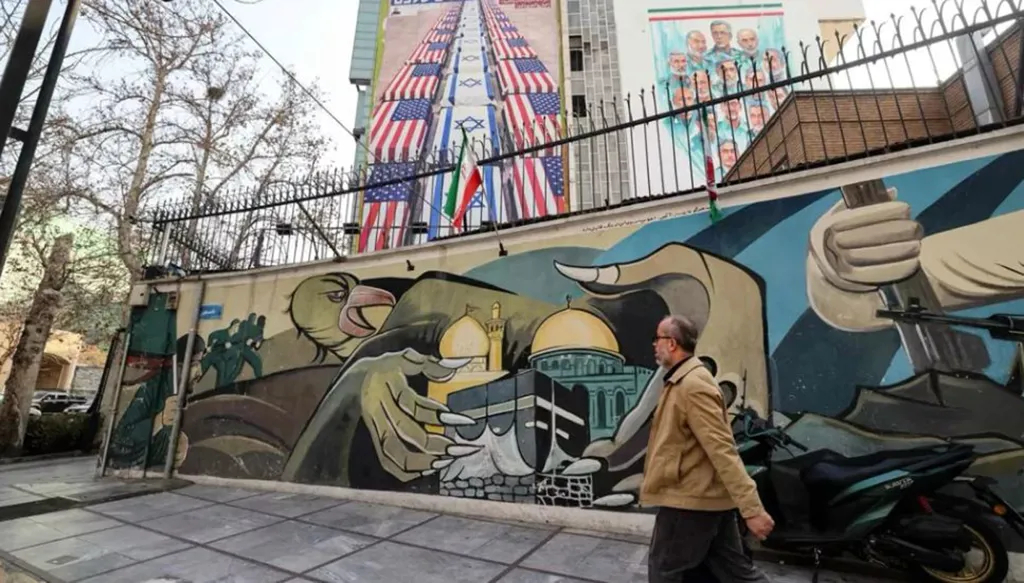


If President Donald Trump decides not to topple the regime in Tehran, or if he fails. If he launches military and cyber attacks aimed at fully crippling the regime's structures, or if he substitutes the strike with a deal. If he is confronted by the Iranian opposition with accusations of betrayal, or if this is a necessary transitional phase leading to an internally supported explosion that could be decisive later. Whether he succeeds in applying the Venezuela model to Iran or discovers its impossibility. Under any of these scenarios, it is clear that the Islamic Republic of Iran's regime has shaken and destabilized, and destabilization has prospects and implications no matter how the Revolutionary Guard and other regime pillars weave tales of defiance and illusions of victory.
This fracture in Iran's regime structure did not come from nowhere, but is the result of an escalating path of multi-tool American pressures, designed to operate in parallel, not sequentially. The American administration, led by Donald Trump, dealt with Iran not as a nuclear file alone but as a regional influence system and internal security and political economy based on the Revolutionary Guard. Hence, the American decision was to separate "Iran the state" from "Iran the regime", targeting the latter without getting drawn into a comprehensive war with the former.
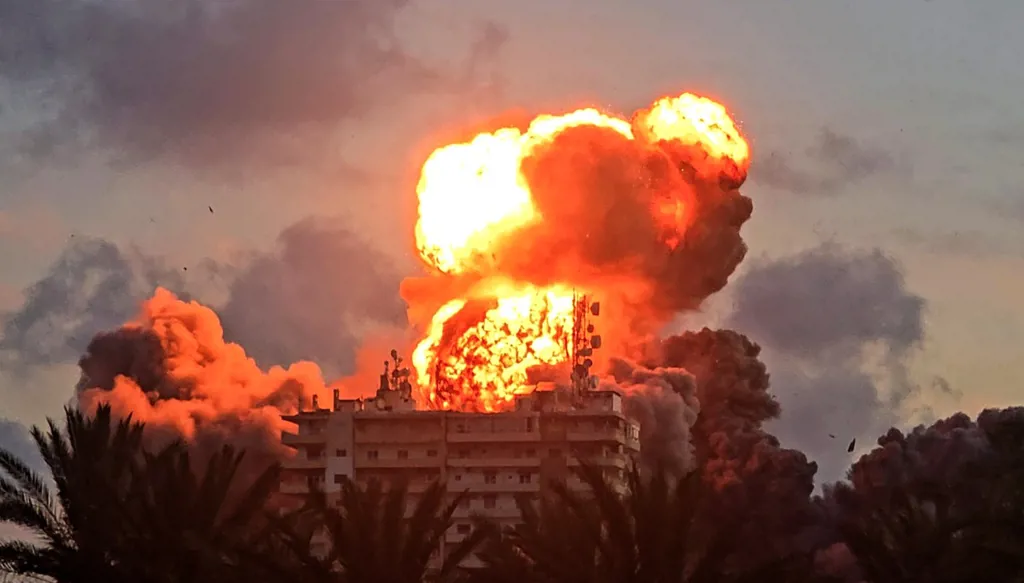
The actions taken were not spontaneous. On the military level, Washington repositioned its forces in the region, increased aerial and naval readiness, and activated joint operations rooms with regional allies. On the cyber level, operations targeting communication networks, the financial infrastructure, and command and control capabilities expanded, limiting the regime's ability to manage internal crises at the moment of confrontation. This type of strike, although staying away from the headlines, formed a central pressure element as it hits the regime's "deep state" not just its façade.
In parallel, Washington did not close the door to negotiation. It kept it open but with conditions radically different from those governing the previous nuclear deal under Barack Obama. The potential deal, if achieved, would not be technical nor limited to the nuclear issue. Its elements, as read in diplomatic corridors, include: long-term restrictions on the nuclear program, dismantling parts of the missile infrastructure, clear commitments regarding Iran's regional roles, and controlling the behavior of its affiliated militias. In return, phased sanction relief may be offered, not a comprehensive lift, allowing the testing of Tehran's intentions rather than rewarding them in advance.
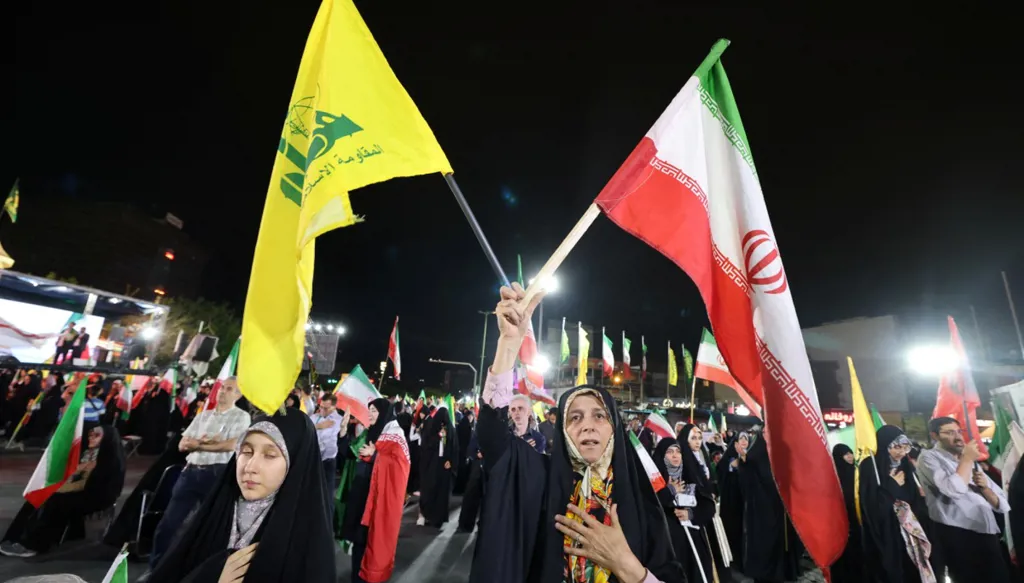
This negotiation path remains fragile because the Iranian regime is not negotiating from a position of confidence but from a position of fear. The fear here is not only of military strikes but also of an internal explosion beyond the security apparatus's containment capacity. This makes any potential deal a point of contention within the regime itself, between those seeing it as a lifeline and those considering it an existential threat to the regime and its creed.
Turkey has entered as a mediator with a nod from Donald Trump. However, Ankara is trying to position itself as a communication channel, not a traditional mediator. On one hand, it does not want an Iranian collapse that would unsettle its regional balances, and on the other, it cannot oppose Washington nor ignore European concerns. Therefore, Turkey is engaged in undeclared negotiations aimed at exploring ways to prevent explosion rather than producing a grand deal. This role, though limited, reflects Turkish fears that any broad conflict with Iran would rebound on Turkey internally, economically, and securely, especially from the migration route.
The Arab stance is not unified but converges on a key point: not rushing into an open military confrontation. Major Arab states fear that any strike on Iran would immediately translate into direct retaliatory responses against their territories and through regional proxies, from the Gulf to the Levant. Therefore, these countries prefer a policy of maximum pressure coupled with deterrence, not breaching red lines all at once. This does not mean rejecting confrontation, but managing its timing and boundaries.
Europe, for its part, is indeed walking a tightrope. It acknowledges the Revolutionary Guard's danger, but it fears the implications of complete collapse. Therefore, the classification of the Revolutionary Guard on terrorist lists, accompanied by precise sanctions, came as a political and security deterrent message more than a prelude to war. The European message is clear: the Revolutionary Guard is the problem, it is the target, and it is the weakest link at the moment of internal erosion.
This entity that formed the regime's backbone is now at the heart of the storm. It is the primary target, accused internally of squandering resources and ironically, it is the party that may try to tighten its grip on power under the banner of "saving the revolution." But this scenario contains seeds of internal explosion, as militarizing the rule entirely may hasten division rather than prevent it. Thus, the Revolutionary Guard itself is the essence of the dilemma.
The regime in Tehran does not view its fate as facing a singular decisive blow, nor does the United States see only one option ahead.
We are on a path of gradual dismantling, where military pressures intertwine with negotiation, and deterrence meshes with containment.
What is certain is that the Islamic Republic has entered a phase of strategic uncertainty, and the era of crisis management as before has ended. What remains undecided is the form of the end: military and cyber strikes that cripple the regime, a conditional deal, an internal explosion, or the reproduction of a weaker and more isolated regime that gradually decays along with an ancient state named Iran.

العلامات الدالة
الأكثر قراءة