Lebanon’s tourism sector faces turmoil as Ministry cancels dollar-pricing circular
The abrupt reversal of 2022’s Circular No. 9 sparks fears of economic instability, operational challenges, and renewed uncertainty for businesses in a dollarized economy.



شارك على
 مسنجر
مسنجر
 واتساب
 ثريدز
ثريدز
 بريد إلكتروني
 الطباعة
شارك على


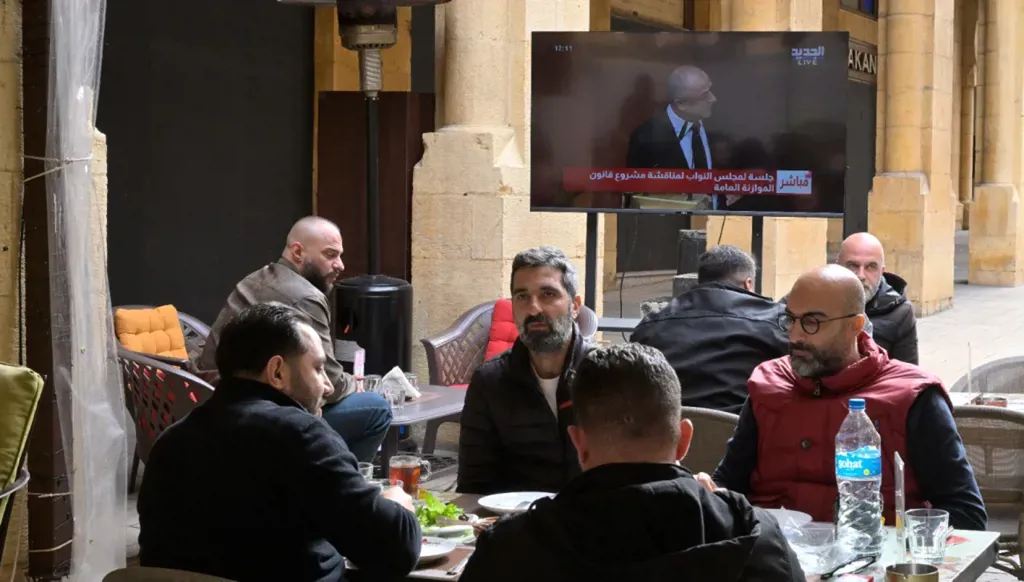


The cancellation of the Ministry of Tourism’s 2022 Decision No. 9 has reignited the debate over whether tourism and restaurant services should be priced in U.S. dollars or revert to the Lebanese Lira, sparking renewed discussion between industry stakeholders and the Ministry, which initially issued and later rescinded the decision.
As a result, owners of tourism establishments saw no convincing reason for the Ministry of Tourism to abruptly revoke a decision that, when issued, had been a bold and well-founded attempt to break free from deadly stagnation and the chaos of fluctuating prices driven by exchange rate variations.
While the Lebanese state continues to pay salaries, wages, and benefits to its presidents, ministers, deputies, employees, military and security forces, and retirees in U.S. dollars, it suddenly experienced a "sovereignty shock" and abruptly canceled Decision No. 9—without prior consultation with industry stakeholders or an assessment of the economic and financial implications of the move.
Amid financial collapse and the absence of any comprehensive remedial strategy, every regulatory decision affecting vital sectors becomes a litmus test of the state’s seriousness in managing its crises and failures—far from a mere technical or administrative measure insulated from real consequences. In this context, the cancellation of Circular No. 9 cannot be seen as just a regulatory adjustment; it raises fundamental questions about vision, policy continuity, and who ultimately bears the cost of fluctuations in a country already exhausted by contradictory decisions.
Circular No. 9, issued on June 2, 2022, was neither a luxury nor an ideological choice for the tourism sector; it was a necessary response to unprecedented monetary chaos, during which the Lebanese Lira lost its market function, leaving tourism and other businesses to bear the daily brunt of exchange rate fluctuations.
At the time, the government’s allowance of pricing in U.S. dollars provided a vital lifeline for tourism and restaurant establishments. It ensured that dollars flowed directly into businesses rather than being siphoned off by money changers, allowing them to pay salaries in hard currency, stabilize the local workforce, and maintain a minimum level of transparency and consistency in pricing.
Data confirmed that the 2022 tourism season—at the time of the decision’s issuance—was the most successful after years of collapse and losses. The tourism sector became a model later followed by other productive sectors, which were effectively forced into dollarization as an economic reality.
The cancellation of this circular through Circular No. 1, issued in January 2026, reopened a wound that had yet to heal. Reinforcing pricing in Lebanese Lira—without restoring financial stability, unifying the exchange rate, or providing protective measures for businesses—essentially recycles the crisis, exposing tourism establishments to operational and financial risks, administrative and tax disruptions, and threatening the sector’s remaining role as a driver of the national economy.
This situation raises a pressing question: who will bear the cost of this regression?
The process behind the decision is even more concerning than its content. Issuing such a major circular without prior consultation with the relevant unions—key partners in crafting solutions during the height of the crisis—reveals a fundamental flaw in the economic governance approach.
When productive entities are marginalized and experienced professionals are excluded, decisions risk becoming administrative improvisations rather than carefully considered policies, leaving institutions once again at the mercy of measures whose authors failed to account for their economic and social consequences.
The position of the Restaurant, Cafés, Night-Clubs and Pastry Owners Syndicate reflected these concerns. In an emergency meeting, the syndicate clearly rejected the new circular, viewing it as a reversal of a crucial decision that had previously supported the tourism sector and safeguarded the national economy during the peak of the currency crisis.
Syndicate President Tony Ramy did not conceal the strength of his stance, noting that "while dollars were accumulating with exchangers, establishments were struggling. Circular No. 9 revived the sector, enabled salaries to be paid in dollars, and stabilized the workforce." He asked, "What has changed today? How can a meal or a hotel reservation be priced in advance when values reach millions of Liras and fluctuate constantly?"
Echoing other economic and labor stakeholders who viewed the decision as ill-timed, Ramy called on the Minister of Tourism, via Annahar, to retract her decision. He also hinted at the possibility of convening a general assembly "to act accordingly," particularly since the circular was issued without consultation with the relevant tourism unions or the Ministry of Economy.
The syndicate reaffirmed its commitment to the Lebanese Lira as the national currency but stressed that its safe circulation depends on "restoring the state’s financial and monetary order, not imposing additional burdens on productive sectors." It also argued that invoking consumer protection is legally untenable, since the competent authority is the Ministry of Economy and Trade. Decision No. 33/1/A.T., issued by the Ministry in March 2023, remains in effect, allowing dollar pricing under a clear mechanism approved by the State Council.
From both an economic and operational perspective, the syndicate argues that enforcing pricing exclusively in Lebanese Lira invites price manipulation, harms consumers rather than protecting them, and forces businesses to turn to money exchangers to obtain dollars—raising operational costs and putting additional pressure on the currency exchange market. This approach clearly contradicts Banque du Liban’s policies, which aim to regulate dollar demand through formal channels.
Conversely, the Ministry of Tourism sought to clarify its position, stating that it does not ban dollar pricing but requires businesses to submit basic Lira price lists and notify the ministry of any parallel dollar pricing under a system of "notification and approval." However, this explanation did little to ease concerns, instead reinforcing the perception that the decision imposes additional administrative and financial burdens on institutions operating in a largely dollarized economy.
Disclaimer: The opinions expressed by the writers are their own and do not necessarily represent the views of Annahar.

العلامات الدالة
الأكثر قراءة