Between life and death on Gaza’s yellow line
The yellow line starts from northern Gaza, passing through central areas, reaching the outskirts of Rafah to the south.


شارك على
 مسنجر
مسنجر
 واتساب
 ثريدز
ثريدز
 بريد إلكتروني
 الطباعة
شارك على




As attention turns to the Palestinian technocratic government announced in tandem with the launch of the Peace Council at the Davos Economic Forum, there is a state of anticipation and concern about its ability to manage the upcoming phase amidst escalating field complexities, most notably what is happening on the ground in the Gaza Strip.
These developments come within the framework of the start of the second phase of the ceasefire agreement, which has been in effect for 100 days. This phase is based on a plan by U.S. President Donald Trump consisting of 21 points, expected to extend until the end of 2027. However, on the ground, the reality points to the opposite as Israel continues to impose new facts, most notably the so-called "yellow line."
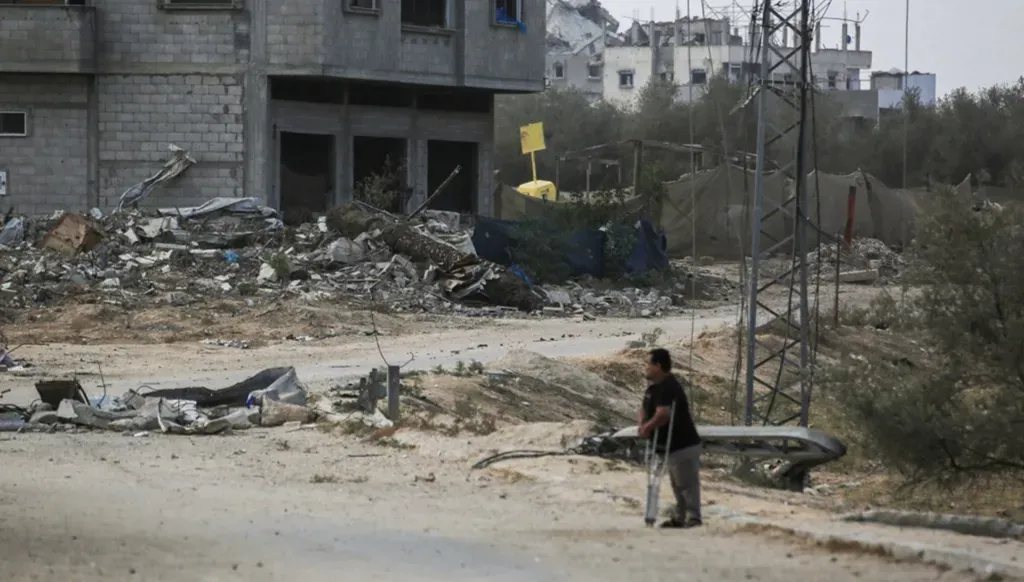
Despite the agreement, Palestinians are prohibited from entering residential and agricultural areas located behind this line, which constitutes between 50 and 58% of the sector's area according to Israeli military maps, and any approach to it is met with direct targeting.
The Yellow Line
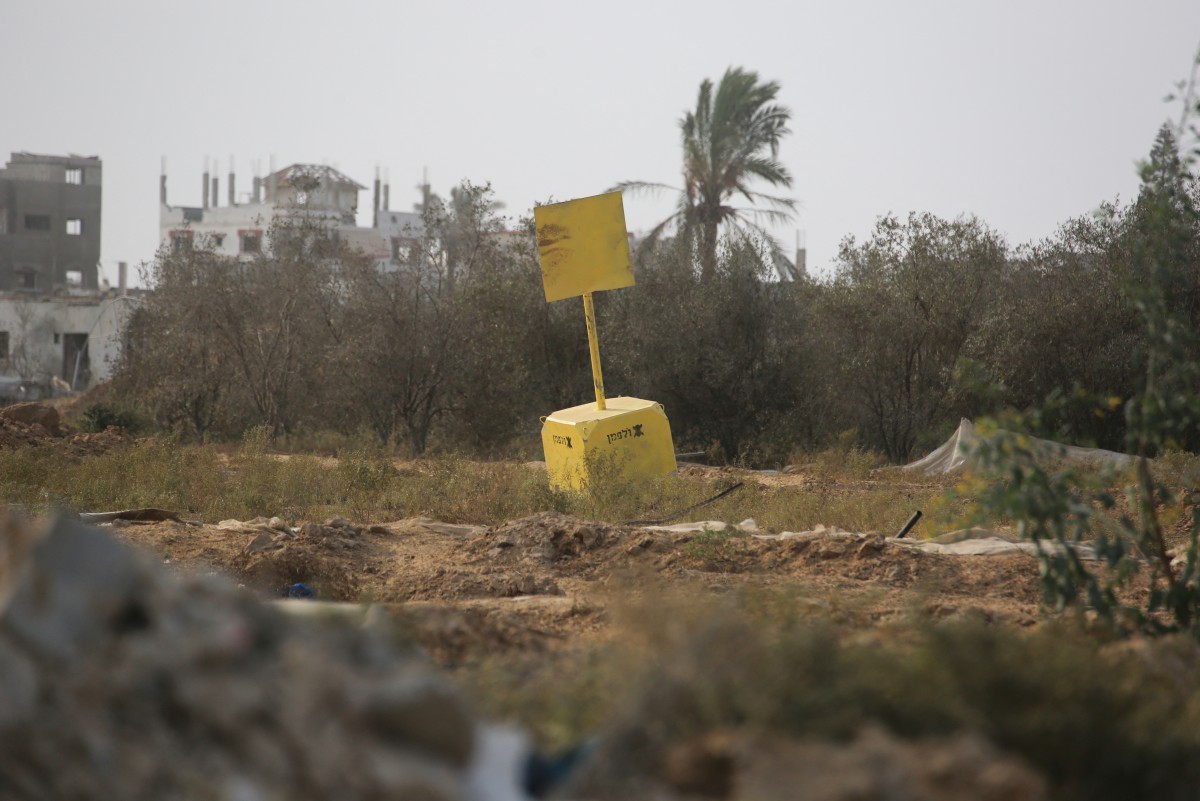
The yellow line stretches along the Gaza Strip with a depth ranging from two to seven kilometers and is classified as dangerous combat zones under the control of the Israeli army. Despite being a virtual line, the army has placed large yellow concrete blocks to demarcate it on the ground.
The line starts from northern Gaza, passing through central areas, reaching the outskirts of Rafah to the south. Behind this line, the Israeli army is stationed in areas including Eastern Gaza City and the neighborhoods of Shuja'iyya, Tuffah, and Zeitoun, in addition to towns in the north of the sector such as Beit Hanoun and Beit Lahia, and southern areas in Rafah and Eastern Khan Younis.
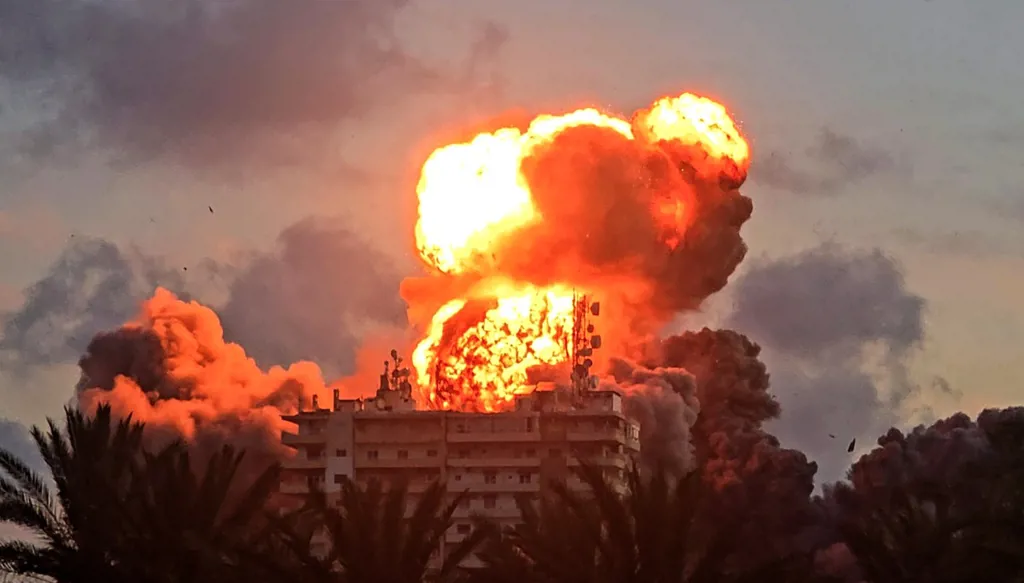
The Israeli army's expansion of the line by about 300 meters into residential neighborhoods has resulted in besieging Palestinian families who could not evacuate in November 2025. Violations of the ceasefire have been documented, including direct shelling, fire belts, and the use of tanks and vehicles stationed at the edges of neighborhoods, as well as warplanes and drones targeting civilians.
The Israeli channel "i24 News" reported that the Israeli army has been digging a deep trench over the recent weeks, several meters deep, to form an obstacle along the "yellow line" to prevent crossing and disrupt the movement of Palestinians and vehicles heading towards the Israeli side.
This barrier is being dug along several kilometers both north and south of the sector. According to operational planning and force protection necessities, at least one and a half kilometers have been dug in the southern sector, in addition to creating artificial hills at other points.
The Armed Militias
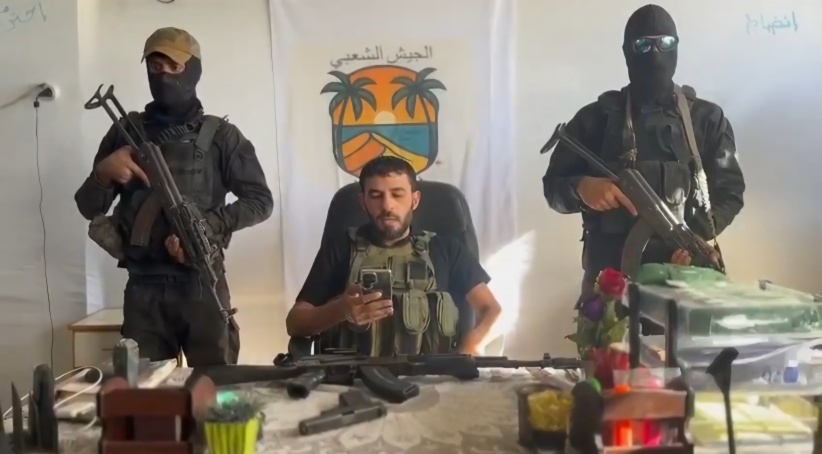
The Israeli policy of division and control over parts of the sector has led to the emergence of armed militias cooperating with Israel, especially in Eastern Gaza, particularly in Shuja'iyya, where a group led by Rami Adnan Halles has emerged.
Ashraf Al-Mansi, also heads what is known as the "People's Army" in Beit Lahia and Beit Hanoun. His group enjoyed direct support from Yasser Abu Shabab before his killing.
In the Khan Younis area, a militia affiliated with Hossam Al-Astall, in cooperation with Ghassan Al-Dahini, is active. Al-Astall is a former Preventive Security officer accused of collaborating with Israel since 1996, and he played a prominent role in the assassination of Palestinian university professor Fadi Al-Batsh in 2018 in Kuala Lumpur, Malaysia, upon official assignment from Mossad.
Israeli media revealed that these groups receive direct support and guidance from the Israeli General Security Service (Shin Bet) and Unit 8200 of the army. Furthermore, "The Wall Street Journal" published a report on the aid, information, and supplies, whether via airborne support or through combat means or intelligence provided by the Israeli army to these groups.
Between Life and Death
Palestinian families living close to the yellow line face extremely difficult security conditions due to continuous shelling. Since the start of the ceasefire, 484 Palestinians have been killed by Israeli air force shootings and bombings, as it continues to target civilians despite the established borders.
Annahar contacted Palestinians residing in areas adjacent to the yellow line, who spoke about the nightly terror they experience with their families and the difficulty in obtaining water and humanitarian aid as international organizations refrain from reaching these areas out of fear of being targeted.
Even water trucks do not reach them, prompting many families to relocate again.
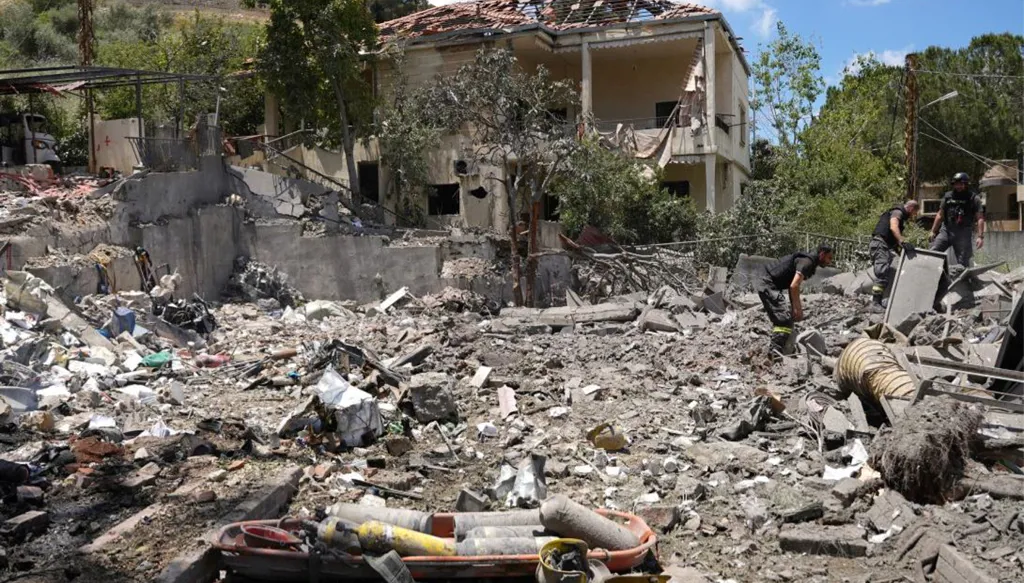
In Tuffah, the expansion of Israeli control is evident. What was once a historic neighborhood in Gaza City has become a barren land filled with destroyed buildings and metal debris due to shelling. After the ceasefire, it was supposed to witness an Israeli withdrawal, but the army placed concrete blocks inside the Palestinian side, advanced an additional 200 meters, and leveled the area, destroying at least 40 buildings.
Mustafa Salah, a resident of Tuffah, told Annahar: "We fled the area more than once due to the occupation army's advance in violation of the agreement. But the situation became more dangerous after the advance of militias collaborating with the Israelis led by Rami Halles and Abu Shabab, who fired on us, forcing us to move towards the Salah al-Din Junction - Shuja'iyya amid intense gunfire and continuous shelling."
He adds: "The biggest problem is the daily injuries resulting from direct fire from quadcopter drones. There were more than 200 families living in indescribable conditions."
Mustafa continues: "The area is extremely dangerous, and our home, which we inhabited before the war, was shelled. We were forced to live in partially destroyed houses, then had to relocate again after the army completely blew up the residential block, significantly extending the yellow line."
He explains that families moved to a relatively less dangerous area, but it is still unsafe, as the basic necessities of life are lacking amidst ongoing shelling, poor weather conditions, and flooded tents, with no protection from bullets or the cold, especially for children and the elderly.
The area also suffers from a lack of water and sewage networks, disease outbreaks, and a complete halt in services, as aid trucks fear reaching due to the continuous gunfire.
In Shuja'iyya, quadcopter drones fire directly, with few Palestinians living in tents that do not protect them from shelling or cold, amidst severe water and food shortages and the absence of any semblance of life.
Mahmoud Nasser tells Annahar that his family of 12 suffers daily from shelling and gas bombs, describing the recent days as the hardest since the start of the war. He adds: "We leave in the morning and don't know if we will return alive. There is no other option and nowhere else to go."
Mahmoud points out that he is forced to go to work at 6:30 in the morning, walking through side roads to avoid danger and struggles to secure water and supplies, using damp cloths to protect his children from gas.
He concludes by saying: "Shooting continues day and night, with car bombs exploding, and the suffering continues without a clear prospect for survival."

العلامات الدالة
الأكثر قراءة