Egypt’s stock exchange accelerates modernization with Nasdaq system and new offerings in 2026


شارك على
 مسنجر
مسنجر
 واتساب
 ثريدز
ثريدز
 بريد إلكتروني
 الطباعة
شارك على


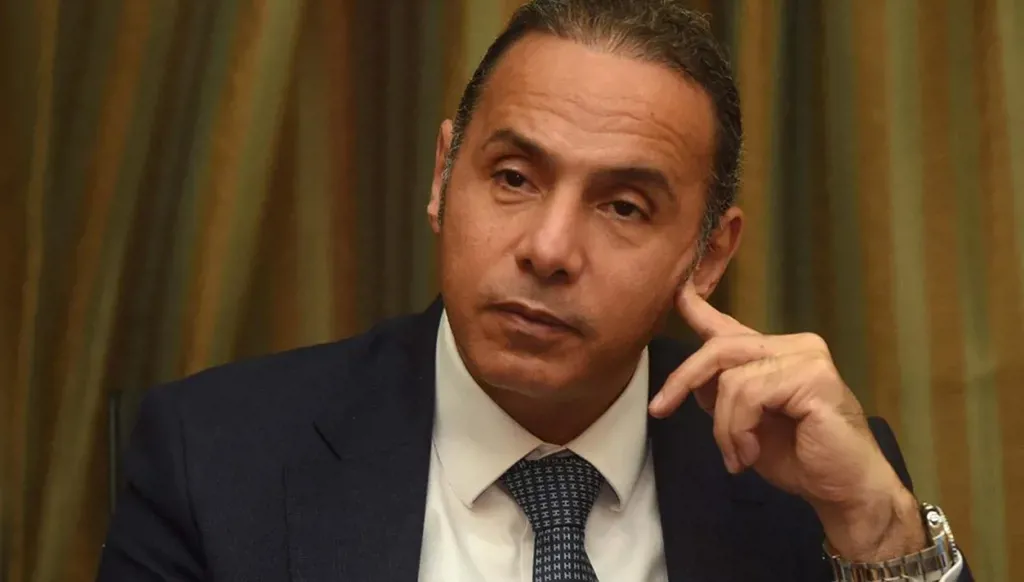


Egypt’s stock exchange ended 2025 with a positive performance that reflects the market’s resilience and its ability to adapt to economic changes. The main indices recorded strong gains, market capitalization and trading values increased, the number of new investors grew, and the market’s role in financing economic growth continued to expand.
In 2026, Egypt’s stock exchange is moving rapidly toward a more advanced phase, during which it aims to carry out several new listings, complete the modernization of its trading system, and activate advanced financial instruments such as derivatives, market making, and short selling, in addition to studying the launch of new markets that meet the needs of various categories of investors.
The Chairman of the Exchange, Dr. Islam Azzam, presents to Annahar the results of 2025, the key indicators and regulatory decisions, the plans for listings and admissions, as well as the market’s future outlook for 2026.
Below is the text of the interview:
To begin, how do you evaluate the performance of Egypt’s stock exchange at the end of 2025, and what are the key indicators that reflected this performance?
The exchange’s performance in 2025 was strong and diversified. The main index EGX30 continued its upward path that began on 5 July 2022, achieving an annual return of 40.65 percent, bringing the total return since the start of this trajectory to around 383.15 percent.
The other indices also succeeded in recording noticeable gains, most notably the EGX70 EWI index (equal-weighted index) which achieved a return of 61.19 percent by year-end. At the sector level, the building materials sector topped the list of highest-yielding sectors with a return of 238.4 percent, which reflects the diversity of growth opportunities within the market.
What about the development of market capitalization and trading values and volumes during the year?
Market capitalization recorded noticeable growth in 2025, rising to around 3 trillion Egyptian pounds, with an increase of 38.2 percent compared to 2024. This is equivalent to about 16.5 percent of GDP, reflecting the increasing weight of the capital market within the overall economy.
As for trading values and volumes, daily activity indicators reflected a clear state of activity. The total value of trading in listed and unlisted securities reached about 17 trillion Egyptian pounds in 2025, compared to 14.3 trillion pounds in 2024, with a growth rate of 19.2 percent. Trading volumes rose to 473 billion securities in 2025, compared to 266.5 billion securities in 2024, recording a notable growth rate of 77.5 percent.
How did the market’s performance reflect on the structure of investors and the participation rates of individuals and institutions?
Individual investors continued to dominate trading, accounting for about 68 percent of total transactions in 2025, compared to 32 percent for institutions. There was an increase of 2 percent in institutional trading compared to 2024, which reflects the growing role of institutional investment in the Egyptian market.
And how many new investors entered the market during 2025?
The base of new investors saw the entry of around 299.1 thousand new investors, both individuals and institutions, in 2025. Individual investors held the largest share at 297.6 thousand investors, compared to 228.5 thousand in 2024, with a growth rate of nearly 30 percent, which reflects the expanding participation base in the capital market.
The data also shows that the age group from 18 to 45 years represents about 79 percent of all new individual investors, which reflects the growing investment awareness among young people and their rising interest in market instruments.
With the growth in the number of new investors, how did the regulatory decisions of 2025 contribute to strengthening market transparency and efficiency?
At the regulatory level, the decisions taken in 2025 focused on developing the market structure and enhancing its efficiency by improving the quality of disclosure. An electronic disclosure form specific to bonds and sukuk (Islamic financial instruments) was introduced, in addition to updating the disclosure report form in accordance with Article 30 of the listing rules, which provides greater transparency regarding major shareholders and related parties. These efforts also included activating the full use of the electronic disclosure system by all listed companies.
Continuous assessment operations were intensified to ensure compliance with listing rules, while requiring companies to set clear, time-bound future plans for generating revenues, as well as periodically reviewing the transfer of companies between different markets according to the nature of their activities.
In light of the results of 2025, what are the most prominent offerings and future plans for the market in the coming year?
The beginning of 2025 was active in this regard, as 7 new companies were admitted, including 5 companies on the main market and 2 companies on the small and medium enterprises market. Three companies also offered shares with a total capital of 2.28 billion Egyptian pounds, which reflects the continued appetite for public offerings in the market.
The market also witnessed the highest number of capital increases in a single year over the past five years, as the number of increases reached 71 with a total value of 69.6 billion pounds, achieving a growth rate of 172 percent compared to 2024, which reflects the growing reliance of companies on the capital market as a main source of financing.
Looking ahead to 2026, we aim to implement around three new public offerings, as part of an integrated plan that seeks to diversify the base of listed companies, enhance market depth, and increase its attractiveness to local and foreign investors.
What are the main features of the targeted future development plans?
Work is currently underway to implement a package of strategic projects, foremost of which is an agreement with the global company Nasdaq to develop a new trading system regarded as one of the best internationally. The system will allow the trading of various financial instruments and support market making activities, representing a qualitative leap in the technological infrastructure of the market.
Work is also underway to activate a number of advanced mechanisms, including financial derivatives and short selling, in addition to launching the market making and liquidity provision mechanism. These measures will contribute to increasing liquidity levels, deepening the market, and improving its competitive efficiency.
Are there plans to launch new markets and instruments?
We are currently studying the establishment of several specialized markets, including a market for trading gold ownership certificates (EGRs) and a market for listing and trading startups, especially those operating in financial technology. This comes within a strategy that aims to diversify investment products and meet the needs of different categories of investors.

العلامات الدالة
الأكثر قراءة