Taliban rule and the return of Al-Qaeda: A new security risk for Asia and the West
As militant factions reposition from Kunar to Helmand, Afghanistan is becoming a staging ground for regional and international extremist groups.


شارك على
 مسنجر
مسنجر
 واتساب
 ثريدز
ثريدز
 بريد إلكتروني
 الطباعة
شارك على


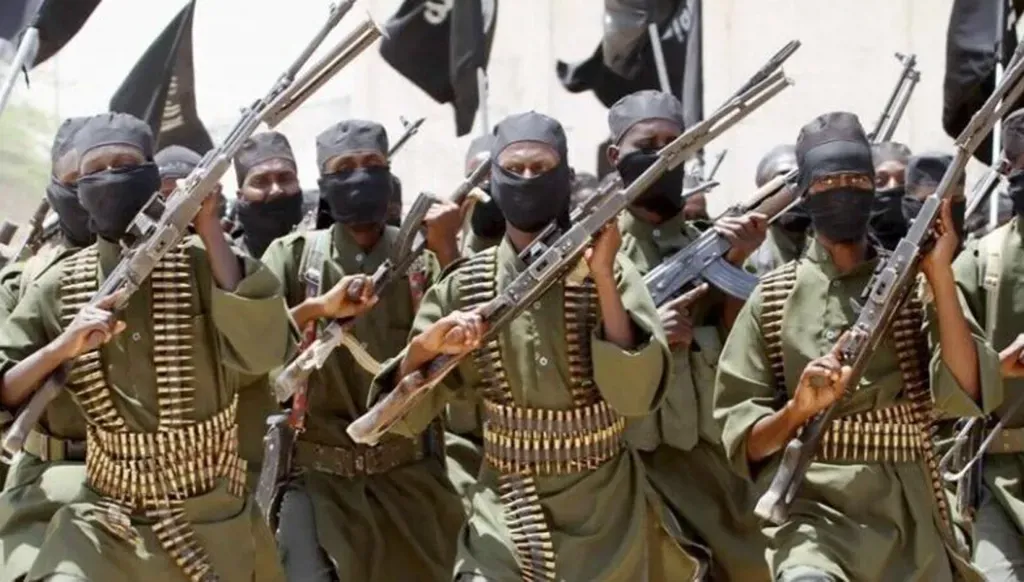


The presence of U.S. forces in the Arabian Peninsula had been a convincing justification for Al-Qaeda to conduct its extremist activities against the United States and its allies. Its fight against what it viewed as an imperial power helped transform it into a multinational global organization leading what it perceives as a sacred war.
This was reflected in the movement of its leadership’s center between Afghanistan, Pakistan, and Sudan. This explains why the organization did not disappear after the killing of its leaders Osama bin Laden in 2011 and Ayman al-Zawahiri in 2022, as its operations are still recorded in African states, and the United States continues to pursue its members to this day.
Returning to Afghanistan, the organization’s first stronghold, which took part in the “jihad” against the Soviets in the 1980s, then later focused on the concept of an Islamic caliphate and the war against Western domination, the Taliban’s return to power in Kabul after the U.S. withdrawal in 2021 appears to be a safe haven and a real opportunity for Al-Qaeda to revive its activities in a country that has become fertile ground for regional and transnational militant organizations.
Despite the Taliban’s pledge under the Doha Agreement (the 2020 agreement signed with the United States) to prevent Afghan territory from being used in international terrorism, evidence is increasing that Al-Qaeda elements are reorganizing and recruiting new members under the movement’s supervision. Washington’s repeated calls for the Taliban to cooperate in combating Al-Qaeda can be understood in this context, as any decision to lift sanctions remains tied to genuine assurance regarding the movement’s stance toward extremist groups. Despite the Taliban’s repeated denial of any cooperation, Russian reports indicate the presence of twenty transnational extremist groups with more than 23,000 fighters concentrated in northern and eastern Afghanistan.
The U.S. National Counterterrorism Center warned in September 2025 that Al-Qaeda still constitutes a persistent threat to the United States. This warning goes beyond a security alert and reflects the organization’s attempt to return once again, with Afghanistan emerging as a primary base for its operations. A United Nations report in July 2025 confirmed this trend, noting the activity of Al-Qaeda fighters in several provinces such as Ghazni, Helmand, Kandahar, Kunar, Uruzgan, and Zabul.
This spread can be explained by the nature of Taliban rule, as the movement does not govern Afghanistan alone but relies on armed groups that helped it fight U.S. forces. There is a division of roles between the Taliban, which assumes authority and provides ideological cover and executive infrastructure; the Haqqani Network, known for its harsh military operations and logistical role; and Al-Qaeda, which offers global coordination capabilities and represents a symbol of continuity with the legacy of Osama bin Laden. This symbiotic relationship allows Al-Qaeda to rebuild its capabilities away from public view in a pattern similar to its development before the events of September 11.
This renewed rise raises serious questions about the effectiveness of the security structure in Afghanistan after 2021, in light of the absence of international military presence and the resulting intelligence gaps that have limited Western monitoring capabilities. In addition, the Afghan Taliban’s support for its Pakistani counterpart (the Pakistani Taliban, which is allied with Al-Qaeda) and its granting of freedom of movement to other extremist groups such as the Turkistan Liberation Army has made Afghanistan appear like an open jihadist base, with the Taliban leading an Islamic army composed of multiple factions. According to the United Nations report, Al-Qaeda runs no fewer than ten training camps that contribute to preparing combatants and leaders for other organizations, which reinforces concerns that Afghanistan could become a potential base for the next wave of global terrorism.
This means that the current Afghan environment provides political, security, and ideological conditions conducive to reproducing transnational networks of violence, especially since Al-Qaeda’s justifications still exist in light of what it sees as extremist U.S. policy during the presidency of Donald Trump. It should also be noted that a country with escalating tensions with the United States, such as Iran, was accused of hosting Al-Qaeda members and providing support to the organization and could in the future benefit from its return.
Disclaimer: The opinions expressed by the writers are their own and do not necessarily represent the views of Annahar

العلامات الدالة
الأكثر قراءة