Deposit recovery in Lebanon: Pragmatism over paralysis
Amid legal disputes, IMF negotiations, and a crippled banking system, the new draft law proposes a balanced path to deposit recovery after years of waiting.


شارك على
 مسنجر
مسنجر
 واتساب
 ثريدز
ثريدز
 بريد إلكتروني
 الطباعة
شارك على


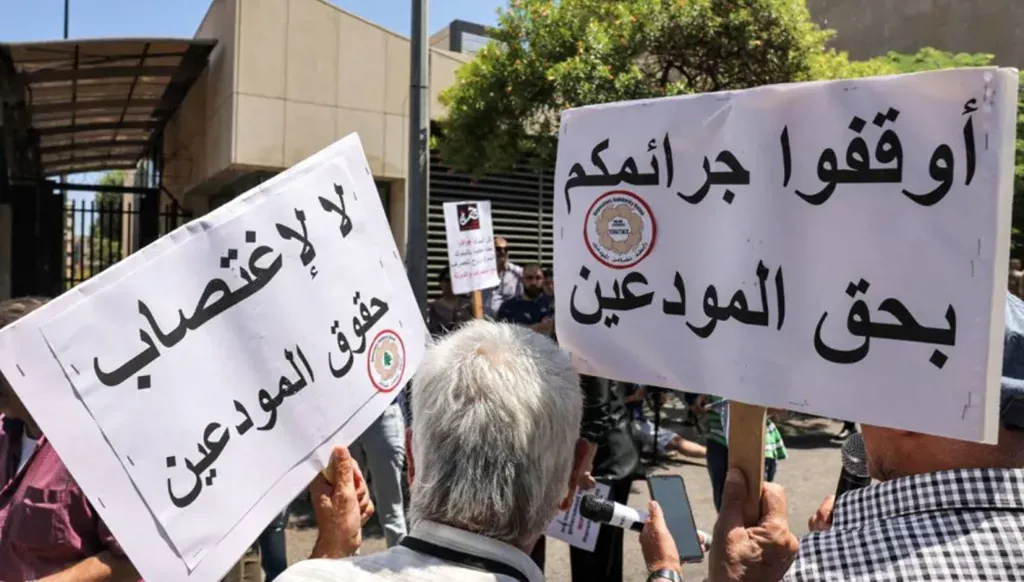


Minister of Economy and Trade Amer Bisat
Depositors in Lebanon have suffered enough.
After years of frozen accounts, accumulated losses, and the absence of a clear plan to exit the crisis and end this paralysis, the government has approved the Draft Law for financial regularization and deposit recovery.
Therefore, the real discussion now is not between this draft law and some hypothetical ideal solution, since there are no perfect solutions to a crisis of this magnitude, but between adopting a realistic and workable path and continuing in the current situation that has offered depositors nothing but open-ended waiting.
There is no doubt that some of the criticisms raised about the draft law financial regularization and deposit recovery contain serious points and deserve debate. But rejecting the draft must be accompanied by presenting a clear alternative, because opposing without proposing a practical plan does not change reality; it only prolongs the crisis.
What is the feasible plan that would lead to restoring deposits more quickly and more inclusively?
There are many proposals that may seem appealing when viewed on their own, but they do not form comprehensive solutions. Burdening the state with additional liabilities places it before an unsustainable level of public debt, the cost of which will fall on taxpayers and future generations. Demanding that the Banque du Liban (Lebanon’s Central Bank) cover the entire losses threatens monetary stability and would lead to using assets that belong to the economy as a whole, not to the banking sector alone. As for bank shareholders, although they bear a definite and unavoidable responsibility for absorbing losses, their capital alone is not enough to close the gap. And while accountability and asset recovery are essential components of any solution, they require time that depositors do not have.
From here came the government’s choice to adopt a balanced and integrated approach. The draft law distributes responsibilities among the banks, the Central Bank, and the state, while preserving financial stability and protecting the wider economy.
Small depositors are at the core of this draft law. They represent the overwhelming majority of account holders, and under the law they would recover their deposits in full at a pace many times faster than what currently exists. It also guarantees every depositor, regardless of the size of their deposit, the recovery of the first one hundred thousand US dollars within four years.
As for holders of larger deposits, the draft law provides them with a clear and defined path for gradual recovery, instead of the ambiguity and implicit haircuts that prevail today. Holders of these deposits will receive tradable financial instruments that generate annual cash flows and are backed by more than fifty billion US dollars in returns and profits from the assets of the Central Bank.
A serious question was raised about the feasibility of the draft law in securing the liquidity needed to pay out the rights of small depositors. The answer is clear: yes, the draft law is realistic and feasible. On one hand, it obliges the banking sector and the Central Bank to return around 20 billion US dollars to depositors over the next four years, while this sector, including the Central Bank, currently has available liquidity estimated at around 15 billion US dollars. As for the remaining gap, we have firm confidence in the ability of the Lebanese economy to generate sufficient external inflows in the coming years, including official inflows from international institutions such as the International Monetary Fund, the World Bank, and Arab funds.
It is worth noting that the Lebanese state, through its financial participation, will be responsible for injecting liquidity into the Central Bank to be used to supply the deposit recovery account.
Questions were also raised about the type of backing behind the financial instruments designated for large depositors, and some went as far as saying that the draft law is making “empty promises”. This description is incorrect and misleading. First, issuing asset-backed securities is common practice in most advanced and emerging economies. Second, the draft law clearly stipulates the creation of a special account at the Central Bank dedicated exclusively to servicing these instruments, to be gradually funded from the returns of Central Bank assets estimated at around 50 billion US dollars, in addition to the proceeds from selling these assets when any such sales take place. Proper and efficient management of these assets will be sufficient to secure the liquidity needed to service the bonds. We are even confident that realistic and balanced scenarios may allow these bonds to be repaid before their maturity date.
In this context, a legitimate question is raised about the possibility of using gold reserves. The legal answer is clear and not subject to interpretation. Under the 1986 law, the government is prohibited from disposing of this asset or touching it in any manner.
This prohibition is explicit and binding, but it does not mean closing the door to a national debate in the future on whether gold could play a role in supporting development or stimulating growth. In any case, estimates indicate that assets other than gold are capable of generating sufficient returns, over the coming years, to service the bonds.
Accountability constitutes a fundamental pillar of the draft law. Under it, the Banque du Liban (Lebanon’s Central Bank) and all banks will be subject to international financial and forensic audits, as well as comprehensive asset quality reviews, including the examination of past irregular operations, financial engineering schemes, excessive profits, and suspicious transfers. These procedures complement the existing judicial and official processes; they do not replace them nor diminish their role.
Furthermore, the draft law sets a clear framework for banks to exit their current state of paralysis and near clinical death. It will require a reassessment of banks’ asset quality according to international standards, while containing each bank’s losses within its existing capital base and avoiding falling into negative equity. The Central Bank will also be tasked with drafting five-year recapitalization plans in order to return to compliance with Basel III standards.
Here, it is worth noting that the government reiterates its strategic choice to seek an agreement with the International Monetary Fund, given that such an agreement represents a key entry point for restoring international partners’ confidence in Lebanon. As is well known, the Deposit Recovery Law is one of the remaining files under discussion with the Fund. These discussions will continue in the coming weeks at a fast and constructive pace. There are clear indications that the IMF considers the approach adopted in the draft law to be consistent with international standards.
Finally, there are claims that the draft law exempts the state from its responsibilities. This is absolutely incorrect. Although the size of the debt owed by the Central Bank of Lebanon is still under legal discussion, the draft law reaffirms the state’s commitment to contributing through interest-bearing financial instruments and to recapitalizing the Central Bank when necessary. Therefore, the scale of the state’s contribution will not be negligible or marginal.
More importantly, this draft law is not the end of the process, but its beginning. It is a framework that can be debated and further developed during the legislative and implementation phases. What is no longer acceptable is to continue without any plan at all.
Thus, after years of paralysis, Lebanon now faces a clear choice: either proceed along a practical path or remain in a state of waiting. Depositors deserve a clear way forward.
Disclaimer: The opinions expressed by the writers are their own and do not necessarily represent the views of Annahar

العلامات الدالة
الأكثر قراءة