The illusion of multipolarity: Why the US still sets the global agenda
Despite Russia and China’s ambitions, Washington continues to decide wars, negotiations, and global power maps - and under Trump, American dominance is reshaping the world on U.S. terms.


شارك على
 مسنجر
مسنجر
 واتساب
 ثريدز
ثريدز
 بريد إلكتروني
 الطباعة
شارك على




Months after Russia launched its war on Ukraine in February 2022, Russian President Vladimir Putin began preaching the end of the unipolar system and the beginning of a multipolar world.
His message found resonance with Chinese leader Xi Jinping who, even if he does not openly state what Putin hopes for, seeks through action to entrench his country’s dominance in the South China Sea and the broader Asian sphere, while quietly and steadily expanding China’s presence worldwide to impose it as a strong pole competing with the single dominant pole.
In recent years, ideas have spread worldwide predicting the inevitable decline of the American era and the retreat of the “empire” led by Washington, just as other empires vanished and dynasties disappeared. Meanwhile, the well-known American thinker Francis Fukuyama had settled on the idea of the “end of history” after the collapse of the Soviet Union, proud of the superiority of a world led by the United States “forever”.
However, history did not end, and despite the recovery of Russia and China under Putin and Xi, the United States did not lose its leadership of the unipolar international system, at least for now.
It is easy these days to imagine the disappointment of Russia and China, two powers historically in competition and always aspiring to regain a lost “realm” in which the Cold War once stood as witness to roles and spheres of influence. Russia, the world’s leading nuclear state, which was once assumed to possess immense power that made decision-makers in Washington tremble, appeared unable to settle a “special military operation” in Ukraine, a medium-power state, relying instead on the expectation that President Donald Trump would understand and use America’s influence to convince Kyiv to swallow hard and accept terms that would end the war.
When Trump launched his tariff war, it seemed that the world woke up and went to sleep according to what the sole global pole decided. Based on the mood of the American president, economies were shaken and stock markets were seized by panic, while the world’s major powers watched what the White House and the financial elite in America were deciding. And even though voices rose from China expressing irritation at Trump’s supposed right to build walls that protect American markets, that complaint was itself an acknowledgment that the decisions of the world are still in the hands of Washington and the occupant of the White House.
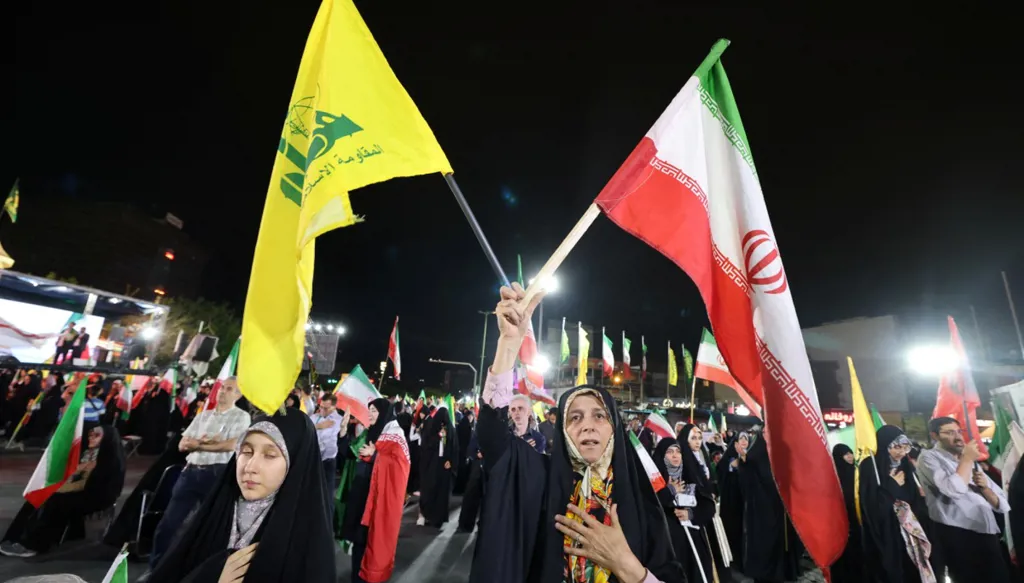
A few days ago, China and Russia lost a loud sphere of expansion in Latin America. Venezuela has moved into a camp that may be the opposite of the China-Russia camp. “Delta” transported the country's president to a jail cell in New York, amid objections that carried the taste of defeat for both Russia and China. Before that, the Bashar al-Assad regime in Syria collapsed under Moscow’s watch and under the supervision of the Russian base in Hmeimim. Today, Russia and China are watching the streets of Iran, anticipating the worsening weakness of their “strategic” ally in Tehran, and perhaps even its fall.
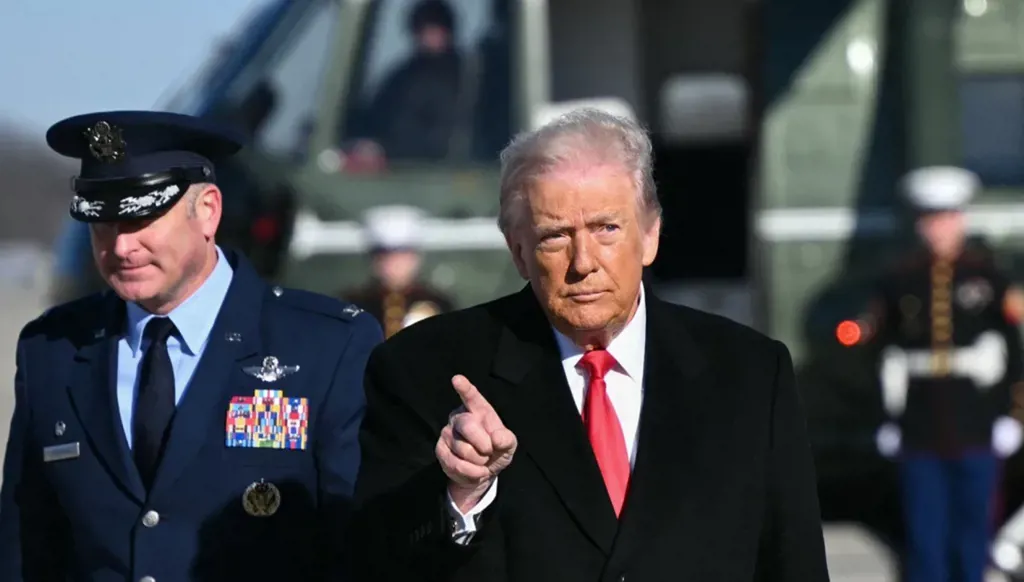
Donald Trump is not only affirming his country’s leadership of the world, but also asserting that American unipolarity is strengthening, determining on its own, and with full privilege, the world’s directions and compass. Washington alone decides the nature of the next phase in Iran, whether through a decision of military intervention or a decision to grant Iran the “fav - decides the nature of the maps and the zones that are off-limits or permitted for the continuation of Russian-Chinese influence that is barely managing to find footholds on an American playing field that keeps expanding.
The world is changing in a direction that does not resemble the scene of the Berlin Wall’s fall in 1989 and the disappearance of the camp behind it. Back then, the West defeated the East in its communist forms and leftist extensions. Today, the United States appears to be adding a reversal within that liberal West, abandoning the extension of its umbrella to defend Europe and disowning an Atlanticism that has grown outdated, to the point that Trump is closer to Putin in Russia and Kim Jong Un in North Korea than to the leaders of Canada, France, and Germany.
Trump no longer distinguishes between ally and adversary, for both have become equal before America, which alone decides - according to the mood of its leader—the direction of the world and the maps of its conflicts.
Disclaimer: The opinions expressed by the writers are their own and do not necessarily represent the views of Annahar

العلامات الدالة
الأكثر قراءة