The end of political Islam’s Iranian moment


شارك على
 مسنجر
مسنجر
 واتساب
 ثريدز
ثريدز
 بريد إلكتروني
 الطباعة
شارك على




When Islam is discussed as a political project, that discussion takes on meanings that take religion out of its spiritual realm and into a realm where a partisan ideology is marketed with the goal of seizing power, enjoying its material benefits, and possessing the capacity for repression and violence. This ultimately undermines the values of tolerance upon which faith in the existence of a Creator rests, a Creator responsible for the spiritual path of His creatures according to religious belief.
Here we must draw a clear line between religious practice and political Islam. On the practical behavioral level, we must distinguish between sectarian Shiism, which derives its particularity from the views of jurists who sought to create a populist vision for performing religious rituals, and political Shiism, which can only place Iran at the top of its priorities as the patron of Shiites in the Islamic world. In contrast, Sunni jurisprudential schools, which are the product of the four well-known Sunni jurists, are innocent of political Sunnism, whose modern face has become the Muslim Brotherhood movement and all its branches.
Thus, Islam is one thing, and political Islam is another. Because attempts to align them have harmed the Mohammedan faith when it was turned into a focal point for producing terrorists, the global political circles that remain attached to colonial visions, despite the end of its era, found in this attempt an unprecedented opportunity to reclaim what they had lost after national liberation movements succeeded in tying Muslim-majority states to the process of national independence and self-determination.
The political Islam project, with its sectarian Sunni and Shiite expressions, has proven in practice that it can strike at the foundations of the civil state. This is what happened in Tunisia when the Ennahda movement, also known as the Renaissance Party, an Islamic democratic political party in Tunisia, came to power, and it is what is happening in Iraq where the Islamic Dawa Party monopolized authority. In this sense, political Islam becomes a façade for a new form of colonialism.
One goal with different coverings
Iran imposed its agenda on the region in the name of political Shiism, which Khomeini endowed with a state he inherited from the Shah, the monarch who ruled Iran before the 1979 Islamic Revolution. Meanwhile, the Muslim Brotherhood worked within its Sunni legal tradition to deploy its fighting branches across the Arab world, operating under the ideas of the Egyptian thinker Sayyid Qutb regarding loyalty and disavowal and the concept of God's exclusive sovereignty.
I am not exaggerating in the comparison when I affirm, with knowledge, that the theoretical foundations of the Islamic Dawa Party (in Iraq) are derived from Qutb's writings at a time when Khomeini was still just a religious man in exile living in Karbala.
There is no contradiction. The goal of political Islamist groups is one and the same, regardless of their different sectarian coverings.
Political Islamists seek to attain power by declaring civil governance invalid on the grounds that it is a human-made system, using this argument as a means to dominate societies in the name of divine mandate. And although the Shiite Islamic Dawa Party, which originated in Iran, possesses no theoretical foundation other than the idea of clinging to a sense of historic victimhood, that did not prevent it from drawing on the ideas of the Sunni thinker Sayyid Qutb to affirm the necessity of its existence within a legitimate framework.
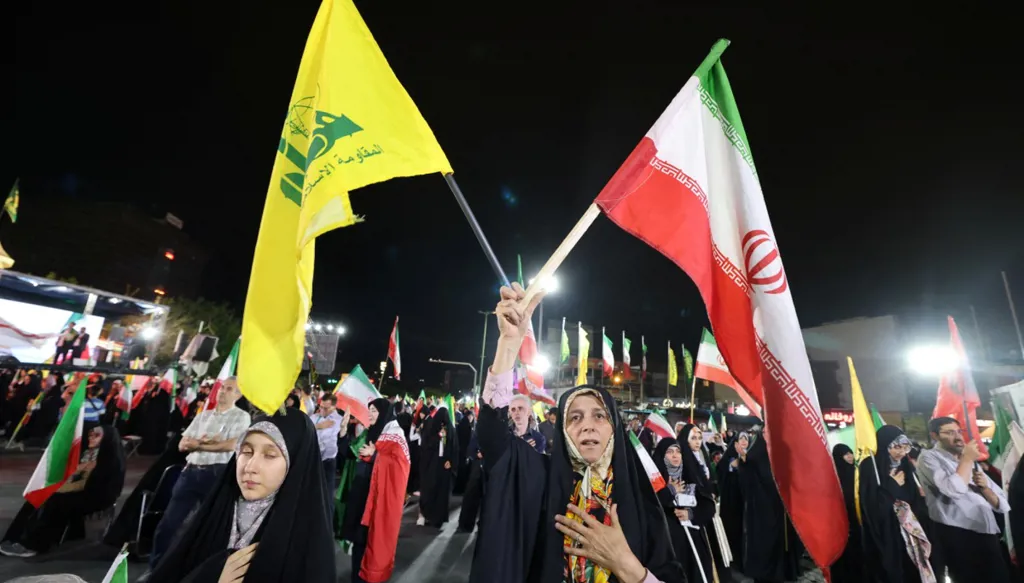
In later periods, Shiite Iran saw no reason to refrain from providing logistical support to extremist religious organizations entering Iraq after the American occupation, under the pretext of confronting the shared enemy known as the Great Satan.
Regardless of its faith-based character, the slogan "Islam is the solution" carries within it a deep desire to isolate Muslim-majority societies from the world by establishing theocratic systems that enslave people by subjecting them to the illusion of a glorious past, adorned with narratives that glorify the ancestors and praise their moral values, for the purpose of condemning a present that has become the prey of evil globalization. All of this is done by spreading fear of the outside world as if it were responsible for conspiracies targeting Muslims by weakening their attachment to their religion. Not far from this is the repeated saying that Muslims lost their strength of will when they distanced themselves from their religion.
Iran's striking power
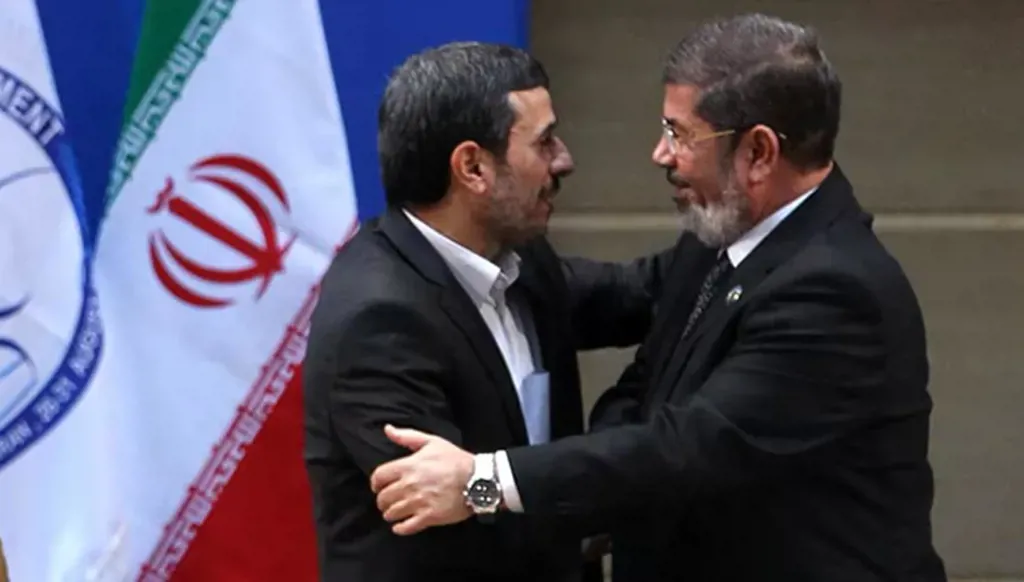
When the Muslim Brotherhood ruled Egypt (for only one year), Iran received the Brotherhood president Mohamed Morsi Al-Ayyat as an exceptional guest. And it was not surprising that Ismail Haniyeh, the leader of Hamas, was killed in Tehran and not in Gaza, because the man was keen on implementing the Iranian agenda in Gaza as part of a broader expansionist project.
Both men are Sunni Muslims, but their ideology opposing the national state's project, seeking to distance itself from the Arab environment, qualified them to represent political Islam in its Arab version. Iran, for its part, directly worked to produce its Shiite version of this project in Iraq, Lebanon, and Yemen in the form of militias whose primary goal was to destroy the structure of the national state and enable Iran to dominate the region.
Despite the suspicions linking political Islamic movements to Western intelligence agencies in the post-colonial era, following the advice of Colonel Thomas Edward Lawrence, known as Lawrence of Arabia from the famous film, who lived in the Arab East between 1910 and 1918 in his book "The Seven Pillars of Wisdom," Iran was the sole beneficiary of the destructive activities of these movements in the Arab world.
Had Iran not committed its fatal mistake in the Gaza war and its support operations, its internal situation would not have deteriorated after the failure of its expansionist project. Its external victories used to cover up the failure of its regime on the internal front, and it was close to convincing the Western world to accept it as a regional power that would be viewed as a regulator for political Islamist movements that are relied upon to obstruct the emergence of a modern political system in the Arab world.
Disclaimer: The opinions expressed by the writers are their own and do not necessarily represent the views of Annahar

العلامات الدالة
الأكثر قراءة

الصغير ترى أنها "السائقة الماهرة" التي تستطيع قيادة سيارة الحقوق والحريات عكس اتجاه السير الذكوري للمجتمعات العربية، وتستطيع أن تبلغ بها بر الأمان، أما بقية النساء في الشارع، فحمقاوات وبطيئات ولن يُجدن التراقص بين المسارات.