Trump’s warnings shake Tehran: Is Hezbollah next?
Observers warn that mounting external pressure and internal unrest could push Tehran to rethink its decades-long proxy strategy.


شارك على
 مسنجر
مسنجر
 واتساب
 ثريدز
ثريدز
 بريد إلكتروني
 الطباعة
شارك على




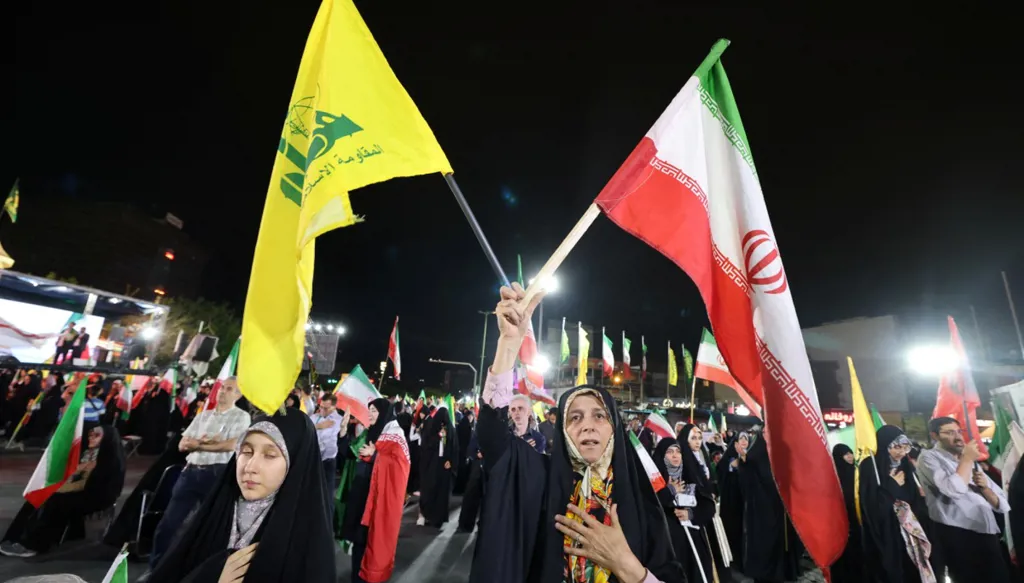
In recent days, Iran has taken U.S. President Donald Trump’s threats seriously, even though Ali Larijani, Secretary of Iran’s Supreme National Security Council, sought to downplay them. Speaking at a pro-regime demonstration in Tehran, Larijani said that Trump “often makes such statements and should not be taken seriously.”
Diplomats say Iran fully understands the approach Trump took with Venezuelan President Nicolás Maduro—contacting him by phone, issuing warnings and threats, and then sending U.S. forces that captured him and brought him to the United States. Tehran also perceives Trump’s threats regarding Greenland and the challenges he poses to his European partners, often disregarding their objections. Many see this momentum as difficult to restrain, both externally and even within the United States.
Diplomatic observers have been closely monitoring not only the downsizing of foreign missions in Tehran but also the positions and statements of European officials—not American or Israeli ones—who have largely abandoned caution in discussing the possibility of regime change in Iran.
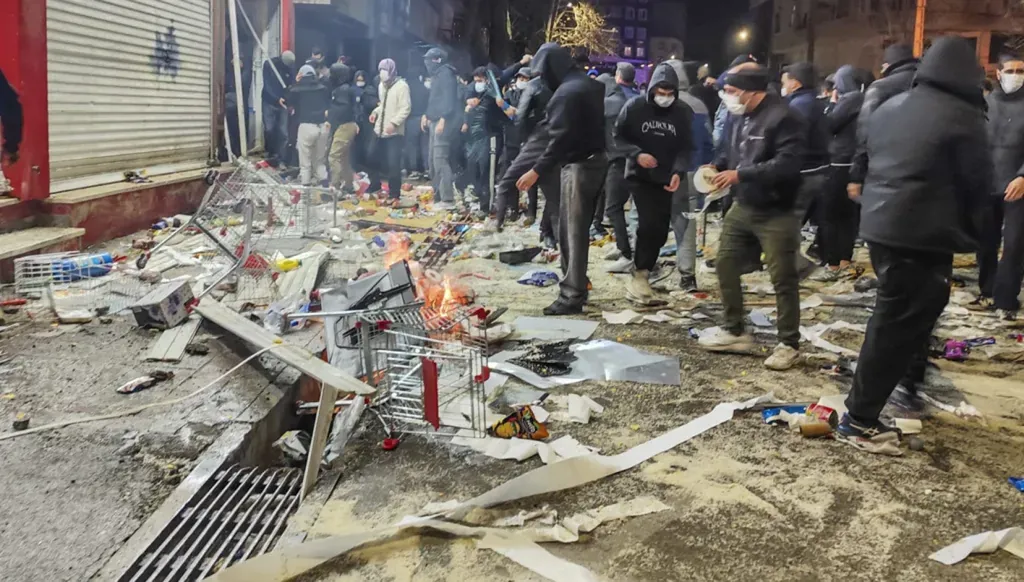
Observers viewed the regime’s call for its supporters to take to the streets not merely as a demonstration of loyal versus opposing crowds—which could be interpreted as affirming the regime’s legitimacy—but as a serious threat. They saw it as signaling the regime’s willingness to provoke or justify civil conflict, claiming the need to act forcefully on the pretext of rooting out spies and terrorists.
In parallel, Iranian authorities signaled their willingness to resume nuclear negotiations with the United States, based on direct contacts by Foreign Minister Abbas Araghchi with U.S. envoy Steve Witkoff, as well as indirect communications through Oman. This comes despite statements from some American officials portraying Iran’s outreach as a possible tactic to delay or prevent Trump from taking punitive measures, and warning against allowing Tehran to buy time. Tehran has not yet indicated readiness to return to negotiations under the conditions outlined by the U.S. president, including limits on enrichment levels, ballistic missiles, or regional military support. It is clear that Iran is carefully managing Trump’s warnings and the potential for U.S. involvement in the protests, while seeking non‑violent ways to quell demonstrations that have reportedly resulted in hundreds of deaths. These efforts, led by President Masoud Bezeshkian’s administration, appear aimed at easing tensions with Washington without triggering further escalation.
In reality, Iran’s threats to prepare for all contingencies—including potential war with the United States or Israel—no longer provoke the same level of concern as before and are not taken as seriously as they were prior to the 12-day war last June. In these circumstances, can traditional Iranian tactics still achieve their intended effect?
At the very least, these observers expect that American threats, combined with European expectations—such as the German chancellor’s statement that “we are witnessing the last days and weeks of the Iranian regime’s rule”—will exert strong pressure on Tehran, potentially forcing concessions or exchanges that the regime may rush to implement before facing further losses or delays. Consequently, it is not premature to consider the possibility that Tehran could begin abandoning its “Hezbollah card” in the coming months, even though it currently remains firm on it. If the regime feels genuinely threatened in its existence or continuity, it may start letting go of assets it currently holds and boasts about, from Hezbollah and support for the Houthis to backing Iraqi factions. Even if discussions focus solely on resuming nuclear negotiations, such moves could reflect early shifts—especially if the overall Iranian landscape continues to change.
Many observers attach significant weight to what Lebanese President Joseph Aoun said on the first anniversary of his election, emphasizing the need for the party—and the Iranian influence behind it—to act rationally in assessing regional conditions. This follows years of dialogue that Aoun has maintained with the party and parallels similar messages conveyed to the Iranian foreign minister during his visit to Lebanon last week. Equally important is Aoun’s insistence that Lebanon should not serve as a platform for stabilizing other states—a principle that applies not only to Syria but also to Israel.

العلامات الدالة
الأكثر قراءة